
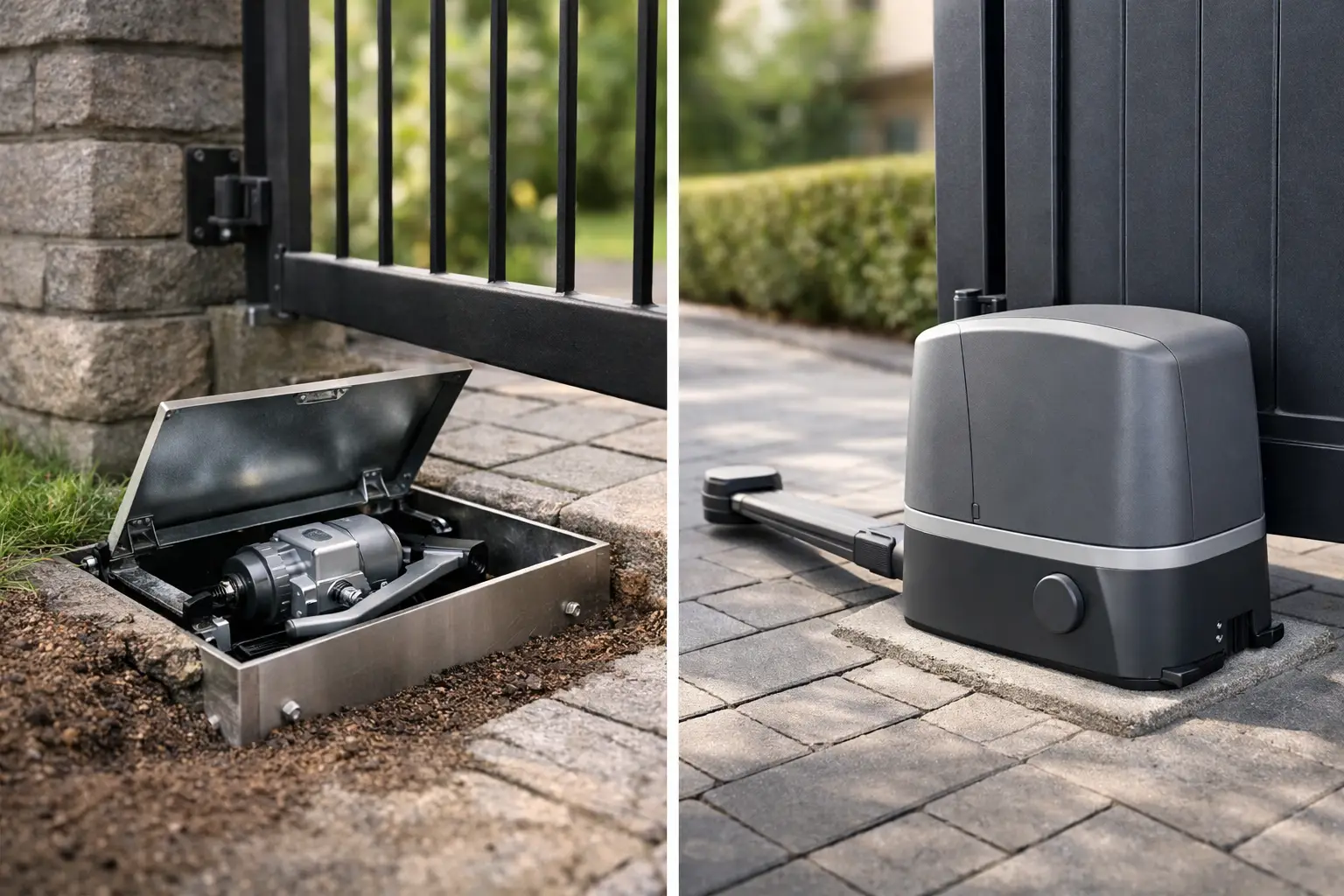
A new automated gate should suit the way your entrance looks, works and is used every day. When comparing underground vs above ground gate motors, the right answer is rarely just about price. Gate weight, pillar position, drainage, expected traffic and access for future servicing all matter.
For swing gates, both systems can provide reliable, secure automation when correctly specified and installed. The practical difference is where the motor sits and what that means for appearance, groundwork, maintenance and long-term performance.
Underground vs above ground gate motors: the main difference
An underground gate motor is fitted below ground level in a protective foundation box, usually beneath the bottom hinge of each gate leaf. The motor operates through the gate pivot, leaving the gate face and posts largely free of visible automation equipment.
An above ground motor is mounted visibly on or alongside the gate, post or pillar. Depending on the site, this may be a linear ram, an articulated arm operator or another surface-mounted system. It connects directly to the gate leaf and moves it open and closed.
Neither option is automatically better. Underground motors are often chosen where a clean, discreet finish is the priority. Above ground systems are regularly the more practical choice where access, budget or challenging ground conditions need careful consideration.
When underground motors are the right choice
Underground automation is particularly popular on high-quality timber, metal and wrought-iron gates where the visual finish matters. With the mechanism hidden below the hinge line, there are no arms or rams across the rear of the gate. This can preserve the original design of the entrance and is useful where gates are viewed from both inside and outside the property.
They can also be a strong option for gates with unusual shapes, decorative detailing or limited room behind the gate leaves. Because the movement comes from the bottom pivot rather than a motor fixed across the gate, the installation can look more refined.
However, discreet does not mean simple. Underground motors require excavation, correctly positioned foundation boxes, electrical supplies and proper drainage. A foundation box that holds water can cause preventable faults and shorten the working life of the equipment. On properties in Dorset and across the South of England, soil conditions, existing drainage routes and the level of the driveway should be assessed before this type of system is specified.
The gates themselves must also be properly aligned and structurally sound. Underground systems work best when the hinge arrangement, gate frame and posts have been designed or adjusted for automation. Trying to automate an old, sagging gate without resolving the underlying issue can lead to poor operation regardless of the motor selected.
The practical advantages of above ground motors
Above ground motors are visible, but that visibility brings useful benefits. Installation is usually less invasive because there is no need to create motor pits beneath each gate. This can reduce groundwork, avoid disruption to finished driveways and make above ground automation more cost-effective on suitable gates.
Servicing is also more straightforward. An engineer can inspect the motor, wiring and mounting points without lifting the gate or opening an underground foundation box. For busy commercial entrances, estate access points and private driveways where dependable ongoing maintenance is a priority, this accessibility can be a sensible advantage.
Modern above ground operators are not one-size-fits-all. Linear rams suit many conventional swing gates, while articulated arm motors can accommodate certain wider pillars or mounting positions that are difficult for rams. The choice depends on the available opening angle, hinge position and the space behind the gate when it opens.
Above ground motors are often well suited to retrofitting. If an existing gate and post arrangement is in good condition, it may be possible to install a surface-mounted system with limited alteration to the entrance. That said, cables should still be protected correctly and the gate structure must be capable of taking the operating forces involved.
Appearance, cost and maintenance
Appearance is usually the clearest dividing line. Underground motors offer the more concealed finish and are often preferred for prestigious homes, period properties and carefully designed entrances. Above ground motors are more noticeable, although a well-planned installation can still look tidy and purposeful.
Initial cost can differ significantly. Underground automation generally involves more labour and civil work, including excavation, drainage and reinstatement of the driveway surface. If a new gate installation is already being built from the ground up, the additional work may be easier to incorporate. Retrofitting underground motors into an established paved or landscaped entrance can be more involved.
Above ground systems may cost less to fit, but price should not be the only deciding factor. A cheaper installation that leaves poor access, unsuitable mounting geometry or inadequate safety equipment is not good value. The correct system should be chosen for the gate, rather than forcing a gate to suit a preferred motor.
Maintenance requirements also differ. Both types benefit from planned checks of the gate movement, hinges, fixings, safety devices and control equipment. Underground motors need particular attention to drainage and the condition of the foundation boxes. Above ground operators need their brackets, arms or rams checked for wear, movement and alignment.
Gate size, use and site conditions matter
The weight and length of each gate leaf are central to motor selection. A light pedestrian-style timber gate and a heavy pair of steel driveway gates place very different demands on the system. Wind exposure matters too. Solid boarded gates can act like sails in exposed locations, increasing the force the motor and gate structure must manage.
How often the gates will operate is equally relevant. A private home with a handful of movements each day has different requirements from a commercial site with frequent vehicle access. For higher-use entrances, the motor duty rating, access controls and maintenance plan need to reflect the workload.
The site itself can rule options in or out. Underground installations need a viable drainage solution and sufficient depth around the hinge area. Above ground motors need suitable room on the gate and post, with the correct opening geometry. Very wide masonry piers, sloping driveways, rising hinges and restricted opening areas all need to be considered during a site survey.
This is also why swing gate automation should not be selected from photographs alone. Measurements, ground levels, gate construction and the location of power supplies should be checked in person before a final recommendation is made.
Safety and access control should be planned together
A gate motor is only one part of a safe automated entrance. The gates must be installed to operate safely, with suitable force settings and protection against trapping or impact risks. Depending on the entrance, this may include photocells, safety edges, warning devices and carefully positioned controls.
Access control should be considered at the same stage. A video intercom, keypad, fob entry, GSM calling system or ground loop can be integrated with either underground or above ground automation. For commercial sites, separating visitor access, staff access and vehicle detection can make day-to-day entry easier to manage. For homes, the priority may be answering visitors without walking to the gate, while keeping the driveway secure.
Manual release is another practical point. In a power cut or equipment fault, authorised users need a safe way to release the gates. This should be explained at handover, alongside any remote controls, intercom operation and routine care requirements.
Choosing the right installation for your property
Choose underground motors when a concealed finish, gate design and long-term kerb appeal are your main priorities, and the site allows for proper excavation and drainage. Choose above ground motors when accessible maintenance, simpler installation or a retrofit-friendly approach carries more weight.
For some properties, the decision is clear. For others, it depends on details that are not obvious until the gates, pillars and driveway have been inspected. Crabtree Electrical Gates provides expert-led surveys and installations, helping homeowners and commercial customers select automation that is appropriate for their site rather than simply convenient to fit.
A properly planned gate system should feel straightforward once it is in use: the gates move reliably, visitors can gain authorised access, and the installation remains safe and serviceable for years to come. A site survey is the best place to start, because the right motor is the one that suits the complete entrance.
0 Comments