
A gate motor is not simply a mechanism that opens and closes a gate. It must move a heavy structure safely, cope with the way the entrance is used, and continue working in poor weather. This gate motor review focuses on the practical points that matter when choosing automation for a home, estate entrance or commercial site.
The right motor depends on the gate itself, the available space, the number of daily movements and the access controls required. A motor that looks suitable on paper can become unreliable if it is fitted to a poorly hung gate, undersized for its workload or installed without proper safety measures.
Start with the gate, not the motor
The best gate automation installations begin with an assessment of the existing gate and entrance. Before selecting a motor, an installer should check the gate weight, width, hinges, posts, ground levels and the condition of the gate frame. A gate that drags, drops or catches on the ground will place unnecessary strain on any automated system.
Swing gates are common on private driveways and can be automated with above-ground arm motors, ram motors or underground operators. Each approach has a place. Above-ground motors are accessible for servicing and are often a practical choice for many properties. Underground motors are concealed below the gate hinge line, making them popular where appearance matters, but they need careful drainage and installation work.
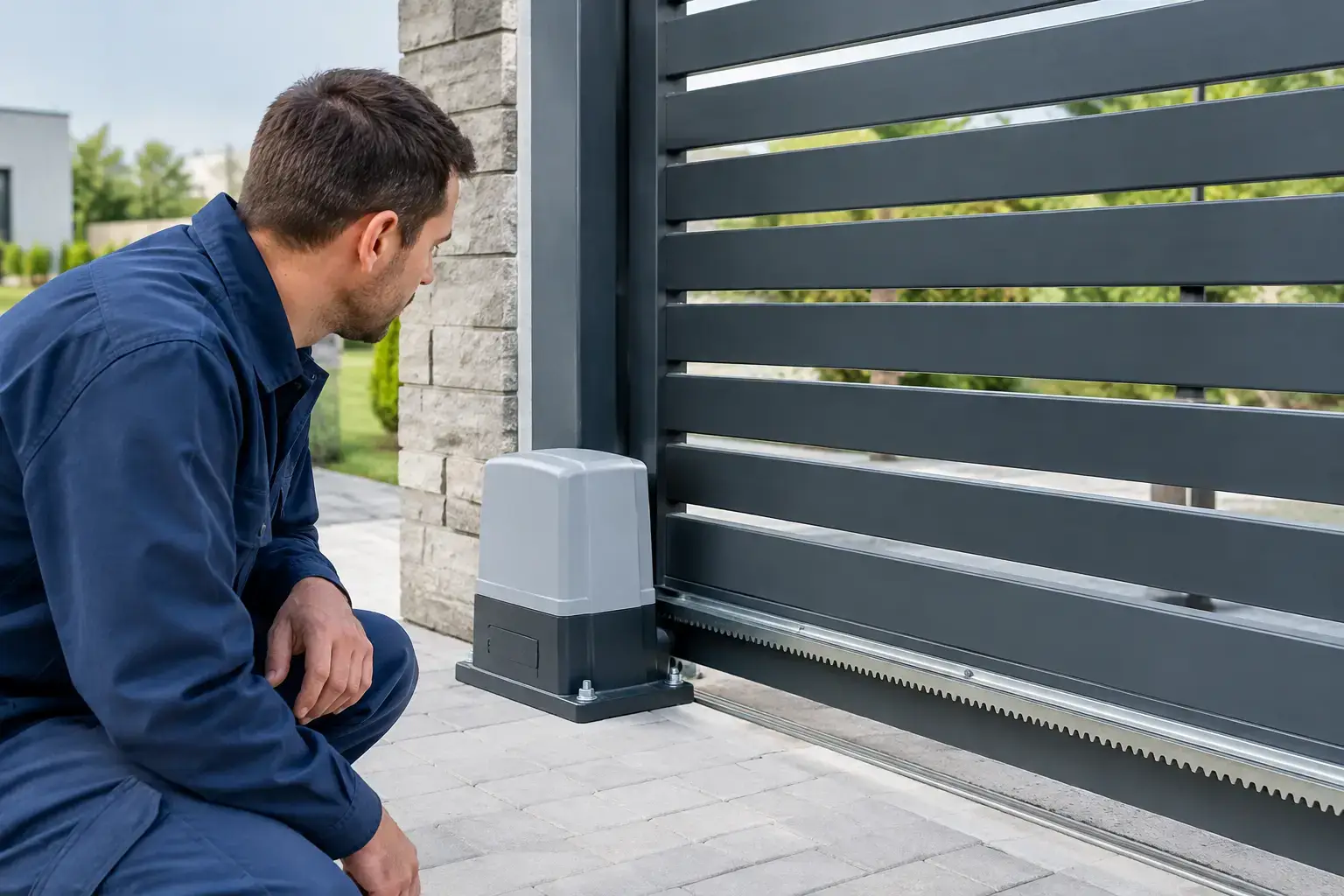
Sliding gates need a different type of operator. A sliding gate motor drives a toothed rack fixed along the gate and requires a sound track or cantilever arrangement. It is often the better option where a swinging gate would open into a road, obstruct a steep driveway or need too much clearance behind it.
Gate motor review: power, duty cycle and use
Motor power should be matched to the gate’s true operating demands, not just its stated weight. Wind loading, long gate leaves, uphill movement and poor mechanical condition all increase the work required. A wide timber-clad gate, for example, may weigh within a motor’s limit but still create significant resistance in strong winds.
Duty cycle is equally important. This refers to how frequently a motor can operate within a set period without overheating or wearing prematurely. A private household with a few movements each day has very different requirements from a shared development, farm entrance, school or commercial yard with regular traffic.
For low-use domestic gates, a quality residential operator can provide dependable performance when correctly fitted. For busy entrances, a heavier-duty motor with a higher duty cycle is usually the sensible investment. Choosing a light-duty product for a commercial site may reduce the initial cost, but frequent call-outs and disruption soon outweigh that saving.
It is also worth considering how the gate will be used in five or ten years. A property with occasional visitors may later have more vehicles, deliveries, staff or tenants. Allowing sensible capacity at the outset can prevent the need for early replacement.
Safety equipment is part of the system
An automated gate has moving parts, pinch points and considerable force. Safety cannot be treated as an optional extra or added after the motor is installed. The installation should be designed around the risks created by the gate, its travel path and the people likely to use the entrance.
Photocells are commonly fitted to detect a vehicle, person or obstruction in the gate opening. Safety edges can provide additional protection where there is a trapping or crushing risk, particularly around closing edges, posts and hinge areas. Force settings must be properly adjusted, and the system should stop or reverse appropriately if it meets an obstruction.
The exact safety arrangement depends on the gate design and site layout. A simple driveway with clear sight lines requires a different assessment from a commercial entrance used by pedestrians, delivery drivers and vehicles. Good access control planning also matters. A keypad or intercom should be positioned so visitors do not need to stand in an unsafe area while waiting for the gate to operate.
A professional installer will explain how the safety devices work, test them during commissioning and show the owner what to check. Ongoing maintenance is essential because damaged photocells, loose safety edges or altered gate settings can affect safe operation.
Choosing between swing and sliding gate motors
There is no universal winner between swing and sliding automation. The entrance layout usually decides which system is most suitable.
Swing gate motors work well where there is sufficient space for the leaves to open inside the property boundary. They can suit traditional timber, metal and bespoke gates, and an underground system can keep the appearance of the entrance clean. However, a swing gate should not open across a public pavement or carriageway, and steeply rising driveways may need special consideration.
Sliding gate motors are often preferred for constrained entrances, sloping driveways or wide openings. A sliding gate can be an efficient solution, but it needs room alongside the opening for the gate to travel. The track, rollers or cantilever components must also be installed accurately. Debris, poor drainage and uneven ground can all affect performance if the site preparation is not right.
Where appearance is a priority, the motor can often be positioned discreetly, but it must remain accessible for maintenance. Hiding equipment at the expense of service access is rarely a good long-term decision.
Access control affects the motor choice
A gate motor is only one part of an automated entrance. The controls determine who can enter and how conveniently the system works day to day. Remote controls suit many homes, while keypads, audio intercoms, video entry systems and GSM calling can provide more controlled visitor access.
Commercial sites may need vehicle loops, timed opening, multiple user codes or integration with existing access arrangements. A ground loop can detect a vehicle and prevent the gate closing onto it, while also allowing authorised traffic to exit without using a remote.
These additions influence the electrical design, cable routes and control panel configuration. Planning them early gives a tidier installation and avoids unnecessary digging once the motor is already in place. It also ensures the controls are practical for the people using them, rather than merely impressive on a specification sheet.
Installation quality decides long-term reliability
Even a well-regarded gate motor will perform poorly if the groundwork, electrical supply or gate alignment is below standard. Proper installation includes secure foundations, suitable cable protection, correct earthing where required, weatherproof connections and a stable power supply. Control equipment should be mounted and protected appropriately for the location.
The gate itself should move freely by hand before automation is connected. This is one of the clearest signs of a properly prepared installation. A motor should automate a correctly functioning gate, not compensate for bent hinges, failing wheels or inadequate posts.
Maintenance should also be discussed before the job is completed. Most systems benefit from periodic inspection, lubrication where specified, checks of safety devices and adjustment of moving components. In coastal or exposed parts of the South of England, weather and corrosion can place additional demands on external equipment.
What to ask before approving a quote
A detailed quote should make clear what is included: the motor type, safety devices, controls, electrical works, groundwork and commissioning. Ask whether the proposed motor is suited to the gate weight and expected daily use, and whether the existing gate needs repairs or strengthening before automation begins.
It is sensible to ask how the system can be manually released during a power cut, what aftercare is available and what level of workmanship guarantee is provided. For commercial entrances, ask how the design accounts for higher traffic levels, pedestrian safety and site-specific operating requirements.
The lowest price is not always the lowest cost over time. A clear specification, sound installation and suitable motor capacity are more valuable than an attractive figure that excludes essential safety equipment or preparation work.
For property owners and site managers, the most reliable choice is a system designed around the entrance rather than a standard package. Crabtree Electrical Gates can assess the gate, usage and access requirements before recommending an automation solution that is practical, safe and built for the work it needs to do.
0 Comments