
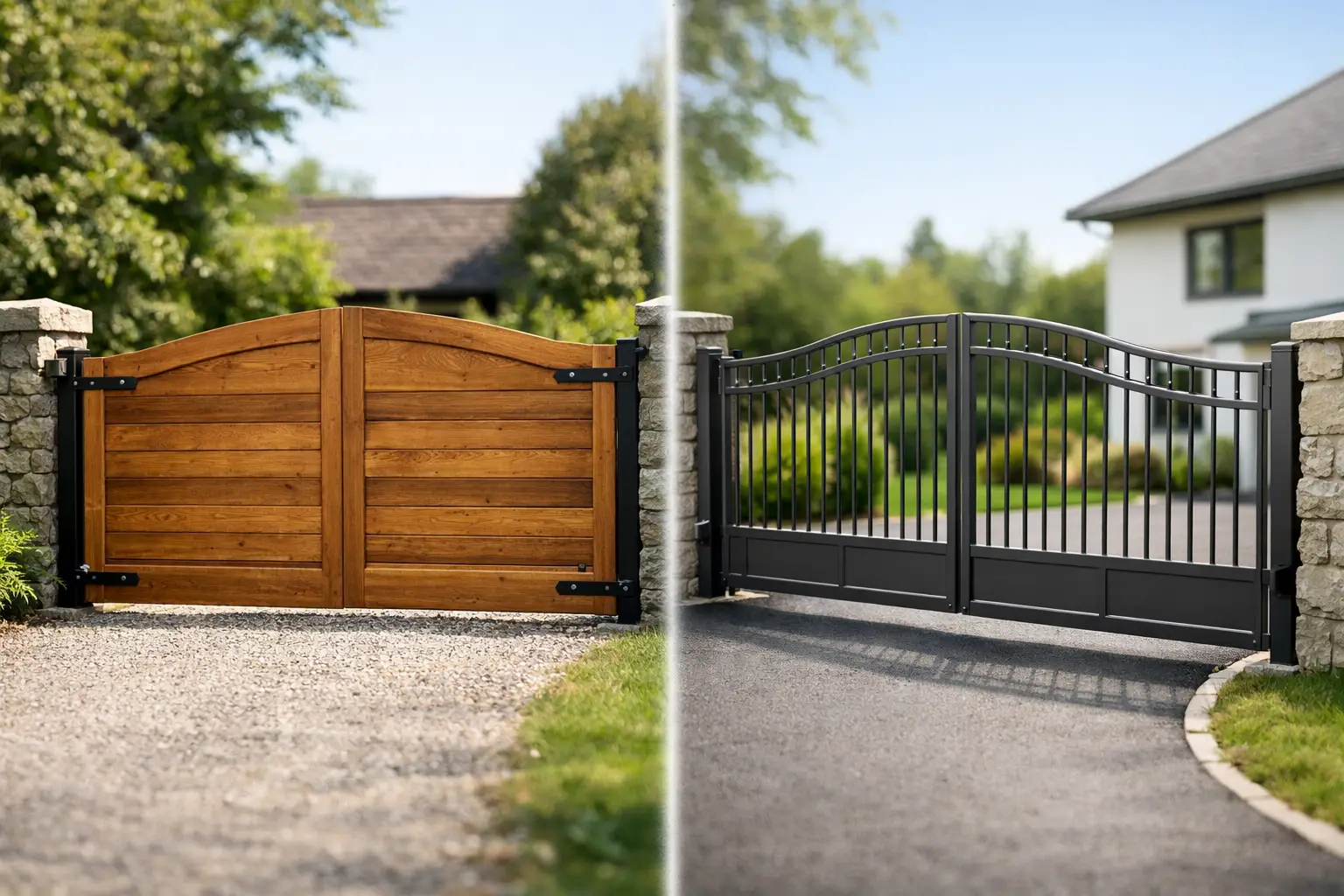
A driveway gate is often one of the first things visitors see, but its day-to-day job is more practical: controlling access safely and reliably. When comparing timber vs metal driveway gates, the best choice is rarely about appearance alone. The material affects maintenance, privacy, gate weight, automation requirements and how well the installation stands up to local weather.
For homes, estates and commercial sites across Dorset and the South of England, the right answer depends on the entrance, the level of security required and how the gate will be used. A carefully designed timber gate can bring warmth and privacy. A well-made metal gate can offer a more open, long-lasting and lower-maintenance solution. Both can work very well with electric automation when specified and installed correctly.
Timber vs Metal Driveway Gates: The Key Differences
Timber gates are typically chosen for their natural appearance. They suit country homes, period properties and driveways where a softer, more private boundary is wanted. A solid boarded design can screen a property from the road, while timber can be made to complement fencing, cladding or existing wooden features.
Metal gates, usually steel or aluminium, tend to suit properties looking for a more formal, contemporary or architectural finish. They can be made with open bars, decorative details, solid lower panels or a combination of these. This gives owners more choice over the balance between visibility, privacy and security.
Neither material is automatically better. A gate should suit the site first. A wide exposed entrance, for example, creates different demands from a sheltered driveway with short gates between substantial brick piers.
Appearance and kerb appeal
Timber has character that many manufactured materials cannot fully replicate. Its grain, colour and texture can make an entrance feel established rather than overly formal. Over time, however, timber naturally changes in colour. Some owners like the weathered look, while others prefer to maintain the original tone with stain or treatment.
Metal offers cleaner lines and a more consistent finish. Powder-coated steel or aluminium is available in a wide range of colours, from traditional black to softer greys and colours selected to match windows, railings or building details. Metal is often the simpler choice where the gate needs to complement a modern property or commercial frontage.
For a rural property, timber infill within a metal frame can be a sensible middle ground. It retains the warmth and privacy of wood while using a steel frame to help maintain the gate’s shape. The design still needs to allow for timber movement and drainage, but it can be an attractive, practical option.
Privacy, security and visibility
Solid timber gates provide good privacy by their nature. They are useful for driveways close to a road, homes with front gardens or sites where limiting views into the property is a priority. The trade-off is that a solid gate catches more wind than an open design. This matters for both the gate structure and the automation system.
Metal gates can be very secure, but open railings or bars allow people to see through them. That can deter opportunistic access by making the entrance clearly visible, yet it does not provide the same privacy as a close-boarded timber gate. Adding solid panels, perforated metal or timber infill can reduce visibility without losing the strength of a metal framework.
Security is not only about the material. Hinge design, locking points, gate stops, foundations, access control and safe automation all make a significant difference. A high-quality gate fitted to unsuitable posts or poorly prepared ground will not deliver the protection expected of it.
Maintenance and Weather Exposure
Timber needs regular care. The amount depends on the species, finish, exposure and quality of construction. Softwood is often more economical initially but generally needs a suitable preservative treatment and ongoing protection. Hardwood can offer greater natural durability, although it still benefits from maintenance and should not be treated as maintenance-free.
Owners should expect to inspect timber gates for surface coating condition, signs of moisture retention, loose joints and movement. Recoating intervals vary, but south-facing gates and exposed coastal or rural locations may need attention sooner. Keeping vegetation away from the gate, ensuring water can drain away and avoiding prolonged contact with wet ground will all help extend its life.
Metal gates require less routine finishing work, particularly where they have been properly galvanised and powder coated. Steel should be checked periodically for chips, scratches and early signs of corrosion, especially around welds, fixings and areas exposed to road salt. Prompt touch-up work prevents a small damaged area from becoming a more expensive repair.
Aluminium does not rust in the same way as steel and is light for its strength, making it useful for automated gates. It can, however, be more vulnerable to dents in some designs and may not provide the same feel or structural capability as heavy steel on very large entrances. The right metal depends on the gate size, style and expected use.
Weight matters for electric gates
A heavier gate is not necessarily a stronger or better gate. For automation, weight, width, balance and wind loading must all be considered together. A large timber swing gate may be heavy, particularly after rain, while a solid metal gate can create substantial wind resistance even if it is not exceptionally heavy.
The automation equipment must be matched to the real demands of the gate, not simply its basic dimensions. Underground motors, above-ground ram motors and articulated arm systems each have appropriate applications. Sliding gates bring another set of considerations, including track or cantilever design, ground conditions and the available run-back space.
A specialist installation should also include proper safety measures. Depending on the system and site, this can involve photocells, safety edges, controlled force settings, warning signage, manual release arrangements and risk assessment. These are essential parts of an electric gate installation, not optional extras.
Cost: Look Beyond the Purchase Price
Timber can appear less expensive at the outset, particularly in standard softwood designs. Yet the lifetime cost should include future treatment, repainting or staining, potential repairs and eventual replacement. A well-built hardwood gate may cost more initially but may offer better durability and a more premium finish.
Metal gates often have a higher initial cost, especially for bespoke steelwork, galvanising and powder coating. Their lower maintenance requirement can make them better value over time. Aluminium can be competitively priced for certain contemporary designs and offers the advantage of reduced weight for automation.
The gate itself is only one part of the project budget. Posts or piers, groundwork, power supply, drainage, automation, intercoms, keypads and access control can all influence the final cost. It is worth discussing the complete installation at the start rather than selecting a gate design without considering what it needs to operate safely.
Choosing the Right Material for Your Site
Timber is often the better fit when privacy, a traditional appearance and natural materials are the main priorities. It is especially effective on homes where the gate can be maintained as part of the wider property upkeep. Choose quality timber, sound construction and a finish suited to the level of weather exposure.
Metal is often preferable where low maintenance, a tailored finish and long-term consistency matter most. It works particularly well for formal entrances, commercial sites and properties requiring integrated access control. Steel suits substantial gates and decorative work, while aluminium can be a good choice for lighter contemporary gates.
Before making a decision, consider the opening width, slope of the drive, wind exposure, traffic levels and whether the gates need to be fully private. Also think about how visitors will enter. An intercom, keypad, remote controls, vehicle detection or a separate pedestrian gate can make access more convenient and avoid unnecessary gate cycles.
Crabtree Electrical Gates can assess the entrance, discuss suitable gate styles and specify automation that is appropriate for the material, weight and use of the gates. Professional planning helps avoid common problems such as undersized motors, poor drainage, inadequate safety protection or a design that does not suit the available space.
A good driveway gate should feel straightforward to use every day. Choose the material that suits your property, but make sure the structure, automation and access controls are designed as one reliable system.
0 Comments