
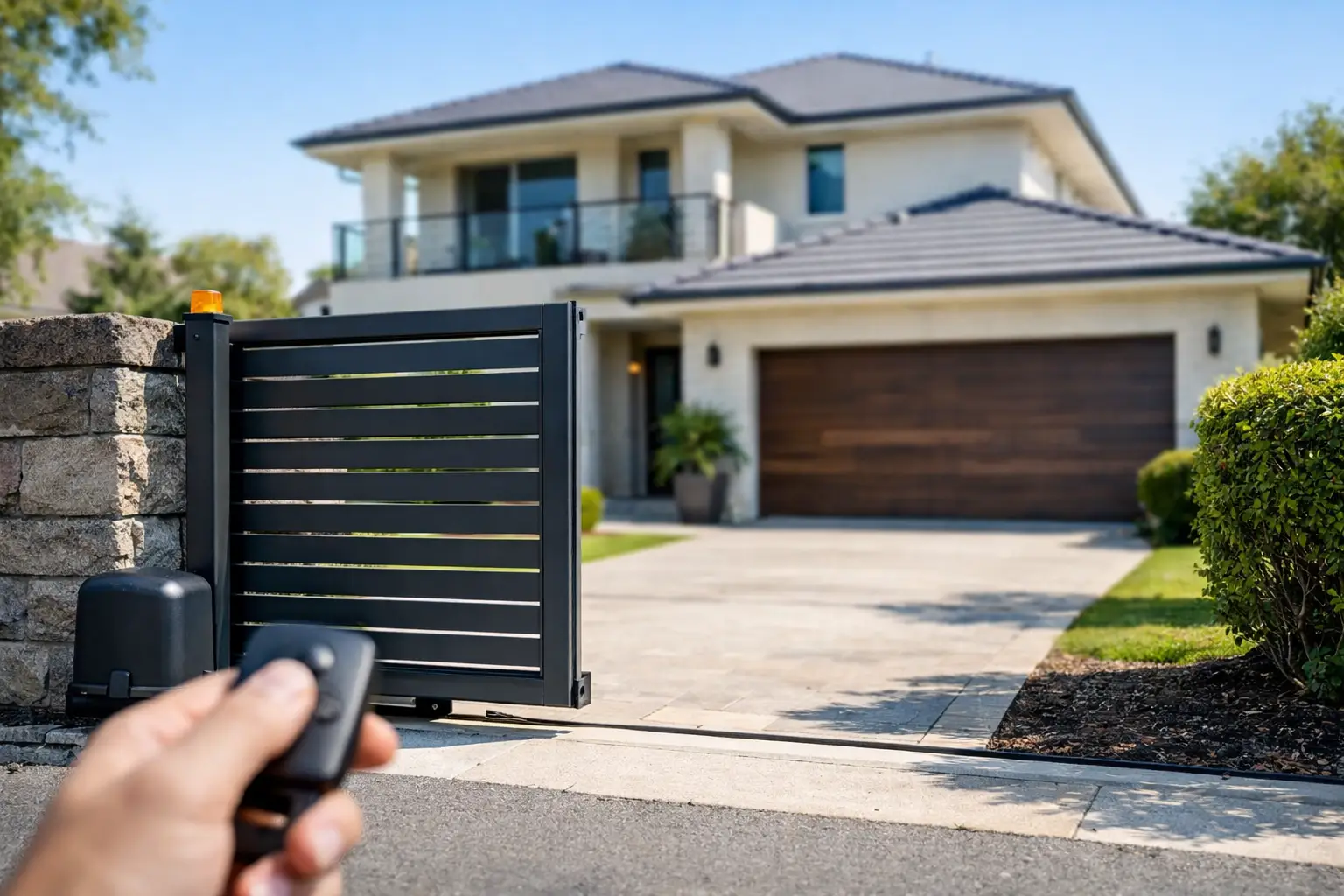
A gate that needs lifting, dragging or locking by hand soon becomes a nuisance in rain, darkness and the morning rush. This residential electric gates guide explains the decisions that make the difference between a system that simply opens and one that provides dependable, safe access to your property for years to come.
For most homeowners, an automated gate is an investment in security, convenience and the appearance of the entrance. The right result is not determined by the motor alone. It depends on the gate design, driveway layout, power supply, safety equipment and the way people need to enter the property every day.
Start with how your entrance needs to work
Before choosing a gate style, consider the practical use of the driveway. Is there enough room for a vehicle to wait safely clear of the road while the gate opens? Does the driveway slope? Will pedestrians, delivery drivers, gardeners or tradespeople need their own means of access? These details should shape the system from the outset.
A good installation also considers who will use it. A family home may need remote controls, keypad access and an intercom at the gate. A larger rural property may benefit from vehicle detection loops, so the gate can open from inside without a remote. If access needs to be managed while you are away, an intercom with remote answering can be a sensible addition.
Security matters, but a gate should not create frustration for legitimate visitors. The most effective systems balance controlled entry with simple, reliable operation.
Choosing between swing and sliding gates
The main choice is usually between swing gates and sliding gates. Both can be automated successfully, but they suit different sites.
Swing gates
Swing gates are a familiar choice for private driveways and can be made in timber, metal or composite materials. They open inwards in most residential settings, which avoids any risk of a gate leaf moving into a public road or pavement. They can be single-leaf or double-leaf, depending on the width and layout of the entrance.
Above-ground motors are visible but accessible for servicing. Underground operators are concealed beneath the gate hinges, creating a cleaner finish and preserving the look of a traditional gate. Underground automation requires careful groundwork, drainage and cable protection. It is often an excellent option, but it is not automatically the best choice for every budget or site.
Swing gates need sufficient clear space behind them to open. A rising driveway, parked vehicles or a tight turning area can make this difficult. Wind loading must also be considered, particularly with solid or close-boarded gates in exposed locations.
Sliding gates
Sliding gates travel sideways along the boundary, making them well suited to driveways that slope upwards or have limited depth. They are commonly used on wider entrances and can offer strong security, especially where a single solid gate is preferred.
A sliding gate does need a clear run-back area beside the opening, usually at least the width of the gate itself. The ground and track arrangement must be suitable, or a cantilever system may be considered where a ground track is impractical. The choice should be based on measurements, access requirements and the condition of the site, not just appearance.
Gate weight, construction and foundations
Automation should be matched to the actual gate, not a catalogue description. The weight, width, hinge condition and surface area all affect the operator required. A motor with insufficient capacity may work initially, then struggle as the gate settles or experiences wind resistance. Overspecifying without assessing the gate can be equally unhelpful and adds unnecessary cost.
Existing gates can sometimes be automated, provided they are sound, correctly hung and move freely by hand. Automation will not correct warped timber, worn hinges, weak posts or poor foundations. In some cases, repairing or replacing the gate before fitting motors is the more reliable long-term decision.
Posts, piers and foundations deserve the same attention as the machinery. They must carry the gate safely and remain stable through seasonal ground movement. Cabling should be installed in suitable ducts and protected from damage, with drainage planned where underground equipment is used.
Safety is part of the installation, not an optional extra
An electric gate has moving parts, pinch points and sufficient force to cause serious harm if it is poorly designed or installed. Safe operation must be considered at every stage, especially where children, pets, visitors or members of the public may be nearby.
Safety measures vary by installation, but may include photocells to detect an obstruction, safety edges on closing faces, force limitation, warning signage and properly positioned controls. The arrangement needs to suit the gate’s movement and the hazards around it. For example, a pair of swing gates creates different risk areas from a sliding gate travelling alongside a fence line.
Manual release is also essential. In the event of a power failure, authorised users need a safe way to operate the gate. Ask how this works before installation, where the release mechanism will be located and who will have access to it.
A specialist installer should assess the system as a complete machine, rather than treating a motor as an add-on. This is particularly relevant if an older gate has previously been automated or if you are taking responsibility for a system installed by a previous owner.
Access control: decide who gets in and how
The access control system is what makes an electric gate useful day to day. Remote fobs offer straightforward vehicle entry, while keypads can provide access for family members, staff or regular visitors without issuing additional remotes. Codes should be changed when circumstances change, particularly after a tenant, contractor or employee no longer needs access.
Audio and video intercoms allow you to speak to a visitor before releasing the gate. They are useful for homes set back from the road, where walking to the entrance is inconvenient. The best position for an intercom is one that is visible and usable from a vehicle, while still allowing pedestrians to call safely.
Pedestrian gates should be planned alongside the main entrance. Providing a separate pedestrian route can reduce unnecessary gate cycles and makes access easier for callers on foot. It should be secured and designed so that users are not tempted to pass through or around a moving vehicle gate.
Power, connectivity and day-to-day reliability
Most residential systems are powered from the property electrical supply. A proper assessment identifies the route for cables, isolation requirements and whether there is capacity for the equipment and chosen access controls. Electrical work should be carried out correctly and protected for an outdoor environment.
Solar power can be viable on some sites, particularly where running a mains supply would involve extensive excavation. Its suitability depends on daylight levels, gate usage, battery capacity and the power demands of the operators and intercom. It can be an effective solution, but it is not a universal substitute for a properly planned mains installation.
Connectivity is another practical consideration. Video intercoms and app-based controls may rely on Wi-Fi, mobile coverage or a wired network. A gate at the far end of a long driveway may sit outside reliable household Wi-Fi coverage. Checking this early avoids choosing features that cannot perform as expected at the entrance.
Planning, appearance and local considerations
Electric gates can improve kerb appeal when their materials and proportions suit the property. Timber may complement a rural or traditional home, while aluminium and steel can provide a more contemporary look with lower routine maintenance. The automation should be selected to work with the gate, rather than forcing a style that does not suit the entrance.
Planning requirements vary. Factors can include the height of the gate, its position in relation to a highway, whether the property is listed and whether it lies in a conservation area. There may also be covenants or estate rules to consider. A site-specific check before work begins is sensible, especially where the entrance adjoins a public road.
Gates should normally open into your property, with adequate space for vehicles to wait without obstructing traffic. This is both a practical and safety consideration.
Installation and aftercare
A reliable result begins with a survey. Measurements, levels, drainage, power, gate condition, user requirements and safety risks should all be reviewed before equipment is specified. A clear quotation should explain the intended gate arrangement, automation, access controls and any groundwork required.
Once installed, the system should be tested and demonstrated to the owner. You should understand normal operation, manual release, remote control use and what to do if the gate behaves unexpectedly. Keep controls secure and avoid allowing children to play near or operate the gate.
Ongoing maintenance is not complicated, but it should not be ignored. Gates can move out of alignment, tracks collect debris and hinges require attention. Regular servicing helps identify wear before it develops into a breakdown or safety issue. If operation becomes noisy, slow, inconsistent or obstructed, arrange an inspection rather than repeatedly forcing the system.
Crabtree Electrical Gates provides specialist gate automation installations across Dorset and the South of England, with the electrical expertise needed to plan safe, practical systems around the property rather than around a one-size-fits-all package.
The best next step is a professional site survey. It turns a general idea of added security and convenience into a gate system that suits your driveway, your daily routine and the people who rely on it.
0 Comments