
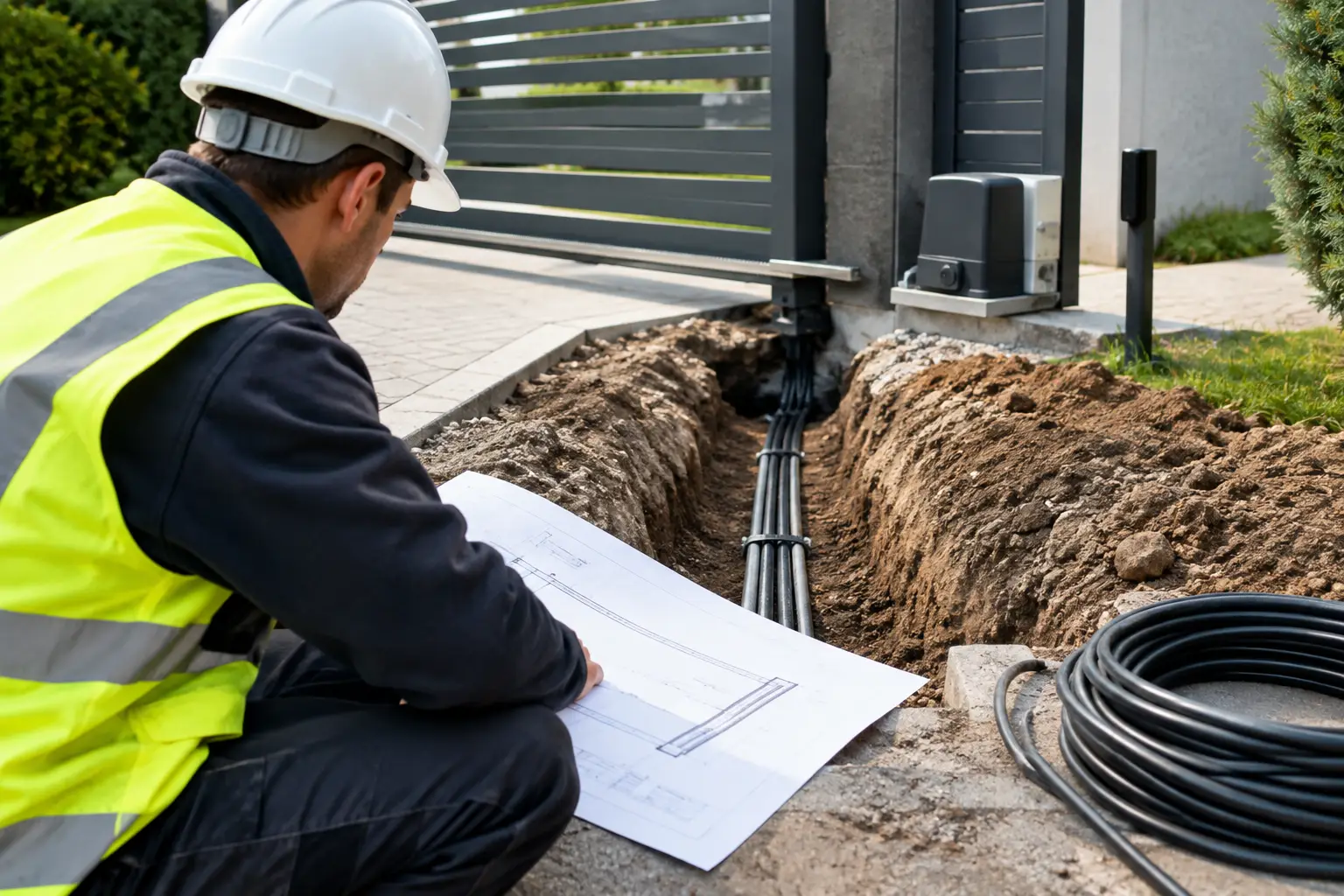
A finished driveway can hide a costly problem. Once paving, tarmac or gravel has been laid, adding a missing cable for an intercom, safety photocell or gate motor usually means digging it all up again. Planning underground gate cabling before groundworks begin avoids that disruption and gives your automated gate system the reliable foundation it needs.
For homes, estates and commercial entrances, the cable routes are as important as the gates themselves. They determine where power can safely reach the automation, how visitors call at the entrance, where vehicles are detected and whether future upgrades can be made without disturbing the drive.
Start with how the entrance will be used
The right cabling plan starts with the layout and daily use of the site, not with a standard trench route. A private driveway with a pair of swing gates has different requirements from a busy commercial entrance with a sliding gate, keypad, intercom, exit loop and multiple users.
Consider where people will approach from, where vehicles wait before the gate opens and whether deliveries, tradespeople or emergency services need managed access. The position of the property, gate posts, gate motors and control cabinet all affect the route cables must take.
It is also worth deciding early how the gates will be operated. A simple remote-control system may need only power and safety connections at the gate. An audio or video intercom, keypad, number plate recognition, GSM calling unit or hard-wired release button will add further cable requirements. Agreeing these details before excavation is far easier than making assumptions and revisiting them later.
What underground gate cabling needs to serve
Most automated gate installations need more than one cable route. The exact design depends on the equipment selected, the distance involved and the site conditions, but the installation may need to connect the gate automation control equipment with the mains supply, motors, photocells, safety edges, intercom or keypad, exit controls and vehicle detection loops.
Cables for mains power and low-voltage or communications equipment should be planned appropriately, with suitable separation and containment. This matters for safety, performance and fault finding. A system that opens reliably but has intermittent intercom audio or unreliable safety devices has not been planned well enough.
At a commercial site, the plan may also need to account for a fire alarm interface, timed access arrangements, a barrier, pedestrian gate release or connection to existing access control. These elements should be considered as one entry system rather than separate additions. This reduces duplicated digging and helps provide a clear, serviceable installation.
Do not overlook safety equipment
Safety devices are not optional extras. Depending on the gate type and risk assessment, they can include photocells, safety edges, warning lights and emergency stop controls. Each item needs a suitable cable path and a practical mounting position.
For example, photocells may need to cover the opening and closing path of the gate, while safety edges may be fitted to moving sections where a crushing or trapping risk exists. A cable plan must allow for these devices without leaving vulnerable exposed cable around the gate posts or moving gate structure.
Plan routes before the driveway is built
The best time to install ducts is before the driveway sub-base, edging and finished surface are in place. Cable ducts can then be laid at an appropriate depth, protected from future damage and routed neatly beneath the entrance.
A good plan identifies the electricity supply point, control panel position, gate posts, motor positions and every accessory point. It should also show any existing services. Water pipes, drainage, telecoms and electrical supplies may already be below ground, particularly at established properties and commercial premises. They must be located before excavation begins.
Driveways are not all the same. A cable route beneath block paving can be accessed more easily than one beneath reinforced concrete, but neither should be treated as a reason to take shortcuts. Areas crossed by cars, vans or lorries need proper protection, and routes near drainage or landscaping must remain accessible and dry.
Where practical, ducts should include draw cords and be sized with enough capacity for the intended cables. Tight bends, crushed ducting and routes without draw cords turn a straightforward cable pull into a difficult job. Spare capacity is valuable too. It allows for an extra intercom cable, new access device or replacement cable later without reopening the ground.
Allow for distance, voltage drop and the local supply
Gate automation is electrical work, so the supply arrangement needs proper consideration from the outset. Long cable runs can affect performance if cable sizes are not selected correctly. The further the gate is from the available supply, the more important it becomes to assess the design rather than simply extending a cable to the entrance.
The control equipment will normally need an appropriate isolated supply and protection. The final arrangement should account for the gate motors, accessories and the environment in which the equipment will be installed. Control panels and joints must be protected from water ingress, accidental damage and unauthorised access.
It may be tempting to position the control box at the gate simply because it appears convenient. Sometimes that is right; in other cases, a protected position nearer the property gives better access for servicing and a more practical cable route. The best location depends on the gate type, cable distances, available space and the overall look of the entrance.
Build in future options without overspending
Future-proofing does not mean installing every possible accessory on day one. It means putting sensible infrastructure in place while the ground is open. A spare duct to the entrance can be a modest addition during construction and a substantial saving later.
Useful future options often include a video intercom, keypad, pedestrian gate release, additional photocells, vehicle loop, external antenna or a second control point inside the property. Commercial sites may later require more user controls or integration with a wider access system.
There is a balance to strike. Installing unnecessary equipment adds cost and complexity, while providing no spare route can restrict sensible improvements. During a site survey, an experienced gate installer can advise which provisions suit the property and which are unlikely to be needed.
Keep water, movement and maintenance in mind
Underground cables face conditions that indoor wiring never does. Rainwater, ground movement, frost, vehicle loading and garden work can all create faults if the installation has not been designed and installed correctly.
Cable entries into gate posts, cabinets and equipment enclosures need careful finishing. Water should not be given an easy path into electrical equipment, and joints should not be buried where they cannot be inspected or maintained. Gate posts can also move slightly over time, especially on new builds or ground with poor drainage, so cable transitions need to be considered carefully.
Access for maintenance is equally important. The most discreet installation is not always the best if every inspection requires lifting paving or dismantling a gate. A well-positioned control cabinet and clearly routed ducts make future diagnosis faster and less disruptive.
Coordinate the right trades at the right stage
Underground gate cabling often sits between several parts of a build or renovation project: groundwork, driveway construction, gate fabrication, electrical work and access control installation. Problems arise when each trade works independently and assumes somebody else has allowed for the cables.
Before work starts, make sure the agreed gate layout is shared with those carrying out the excavation and surfacing. Confirm the finished ground levels, opening direction, gate post locations and any drainage channels. Even a small change in levels can affect where ducts emerge and whether a cable route remains protected.
For new driveways and major landscaping projects, bring the gate automation specialist into the conversation before the final surface is chosen. Crabtree Electrical Gates can assess the entrance layout, automation requirements and cabling routes before groundworks are completed, helping avoid avoidable alterations later.
A cable plan is part of a reliable gate installation
The visible gate is what visitors notice, but the underground work is what helps it operate safely and reliably for years. A clear plan protects the driveway finish, supports the safety system and leaves sensible options open for future access control.
Before the first trench is dug, arrange a site assessment and confirm every cable route on the plan. That one conversation can prevent a finished entrance from becoming an excavation project a few months later.
0 Comments