
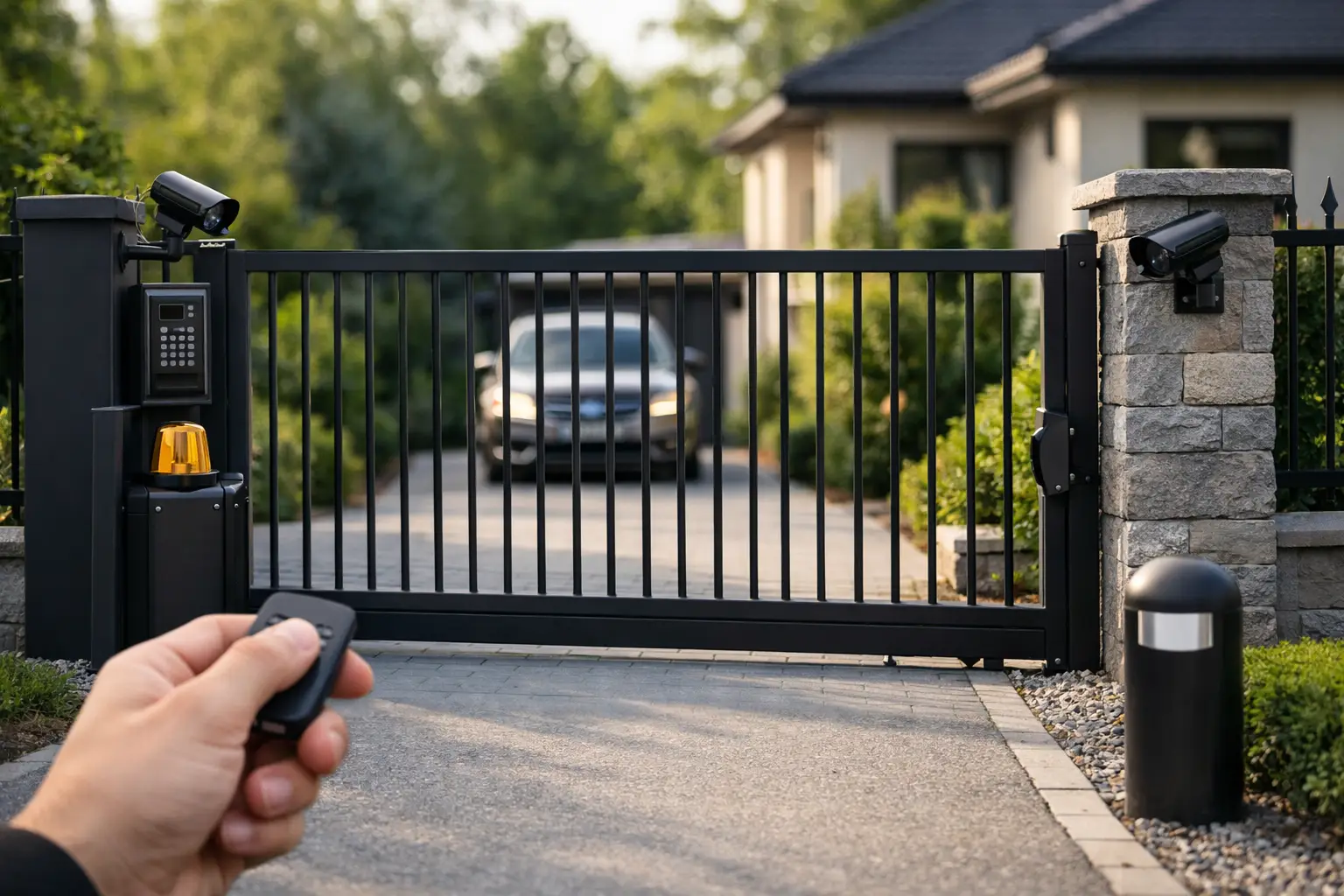
A driveway is often the first weak point on a property. It is where visitors arrive, deliveries stop, tradespeople come and go, and unwanted vehicles can gain easy access if there is nothing in place to control entry. If you are looking at how to secure driveway access, the right answer is rarely just a gate on its own. It usually comes down to combining physical security, safe automation and practical access control that suits the way the site is used every day.
For some properties, a simple manual gate may be enough. For many others, especially larger homes, shared entrances, rural properties and commercial sites, a properly designed electric gate system gives far better control. The key is choosing a setup that works in real conditions, not just one that looks good on paper.
How to secure driveway access with the right starting point
Before choosing any gate or control system, it helps to be clear about what problem you are trying to solve. Some owners want to stop casual access from the road. Others want privacy, safer access for children and pets, better control over deliveries, or a stronger first line of defence for vehicles and buildings.
That matters because the best solution depends on the site. A long private drive has different requirements from a narrow entrance opening directly onto a busy road. A commercial premises with regular staff and delivery traffic needs something different again. In practice, securing driveway access properly starts with the entrance layout, the available space, the frequency of use and the level of control you need.
A gate that is awkward to open, unreliable in poor weather or badly matched to the site often ends up being left open. At that point, even a high-spec installation is not doing its job. Good driveway security has to be practical enough to use every day.
Choose a gate type that suits the entrance
The gate itself is the obvious first decision, but there is no universal best option. Swing gates are popular for domestic properties because they suit many traditional entrances and can give an impressive finish. They do, however, need room to open safely and smoothly. Ground levels, hinge positions and the direction of travel all need proper consideration.
Sliding gates are often a better choice where space is limited or where the entrance rises sharply behind the gate line. They can also be a strong option for commercial sites where a wider clear opening is needed. The trade-off is that they require the correct run-back space and a well-prepared track or cantilever arrangement, depending on the design.
Underground automation can be ideal where appearance matters and you want the motors hidden from view. Above-ground automation can be more straightforward for some installations and easier to access for maintenance. Neither is automatically right or wrong. The best choice depends on the gate style, the usage level and the ground conditions.
Access control is what makes the system secure
If you want to know how to secure driveway access properly, access control deserves as much attention as the gate itself. A gate is only effective if the right people can enter easily and the wrong people cannot.
For many homes, an intercom system is the most useful starting point. It allows the occupier to speak to or view visitors before granting access. That gives far more control than simply relying on an open entrance or a manually latched gate. If the property is regularly used by family members, regular visitors or staff, keypads, fobs or remote access devices can make entry straightforward without compromising security.
Commercial and multi-user sites often need a more structured setup. That may include coded access, timed entry permissions, vehicle detection loops or exit controls suited to higher traffic volumes. The point is not to overcomplicate things. It is to make sure the system reflects the way the site actually operates.
Too many entry methods can create confusion. Too few can become inconvenient. A good installation strikes the balance between control and ease of use.
Safety is part of security, not separate from it
A secure entrance should never come at the expense of safety. Automated gates must be designed and installed correctly, with suitable safety devices and force settings to reduce risk. This is especially important on properties used by children, visitors, delivery drivers or members of staff who may not be familiar with the system.
Photocells, safety edges, controlled opening and closing behaviour, and properly configured automation all play a part. So does the physical design of the gate. Entrapment points, poor visibility and inadequate stopping distances can turn a security upgrade into a liability if the installation is not handled professionally.
This is one reason many property owners prefer to work with a specialist rather than a general gate supplier or basic fabricator. Automation is not just about attaching motors to a gate. It requires electrical knowledge, system integration and attention to compliance and long-term reliability.
Don’t ignore the wider entrance layout
The entrance area around the gate affects security more than many people expect. If boundary lines are weak, fencing is low, walls are easy to bypass or there is room to walk around the side of the gate, the system may offer less protection than it appears to.
Lighting can also make a noticeable difference, especially on rural and poorly lit approaches. A visitor should be able to find the entry point clearly, and the occupier should be able to identify who is there. Good visibility supports both safety and deterrence.
Driveway width, turning space and stopping distance matter as well. If vehicles cannot pause comfortably at the entrance to use an intercom or keypad, drivers may become frustrated and the system may be used badly. A well-planned layout reduces accidental damage and makes the gate more likely to be used as intended.
Domestic and commercial sites need different thinking
Homeowners often want a combination of privacy, convenience and kerb appeal, alongside better control over who enters the property. In those cases, the most effective system is often one that feels simple in daily use while quietly doing a lot of work in the background.
Commercial properties and managed sites usually place more emphasis on traffic flow, staff access, reliability and auditability. Frequent use means motors, controls and safety features need to be chosen with that demand in mind. A setup that works perfectly for a private driveway may not be suitable for a yard, depot or office entrance with repeated daily use.
That is why off-the-shelf answers can fall short. Secure driveway access depends on matching the equipment to the location, not just picking what seems cheapest or quickest to install.
Reliability matters as much as security
A driveway gate that fails regularly becomes a problem very quickly. If it sticks, loses power, responds poorly or needs constant adjustment, people will look for ways around it. That usually means leaving it open, overriding controls or avoiding the system altogether.
Reliable security comes from sound installation, suitable equipment and sensible aftercare. Motors need to be properly specified. Cabling and control equipment need to be installed neatly and protected correctly. The gate itself needs to be strong, aligned and capable of repeated use without unnecessary strain on the automation.
Ongoing servicing also has a place. Like any mechanical and electrical system exposed to weather and daily wear, automated gates benefit from routine checks. Small issues can often be dealt with before they become expensive faults or security risks.
How to secure driveway access without overcomplicating it
There is a temptation to add every available feature, especially when security is a priority. In reality, the best systems are usually the ones that do the basics well. A dependable automated gate, sensible access control, proper safety measures and a layout that supports daily use will outperform a more complex setup that nobody enjoys using.
For some sites, that may mean a pair of automated swing gates with an intercom and safe exit control. For others, it may mean a sliding gate with keypad entry and vehicle loops. The right specification depends on the property, the traffic and the level of control required.
At Crabtree Electrical Gates, that practical approach is central to getting the right result. A secure entrance should not only improve protection. It should also make arrival, entry and exit easier for the people who use it every day.
If you are thinking about securing a driveway, start by looking at how the entrance works now and where the weak points are. The best improvement is usually the one that fits the property properly, works reliably in all conditions and gives you clear control without adding hassle. A well-designed gate system does exactly that.
0 Comments