
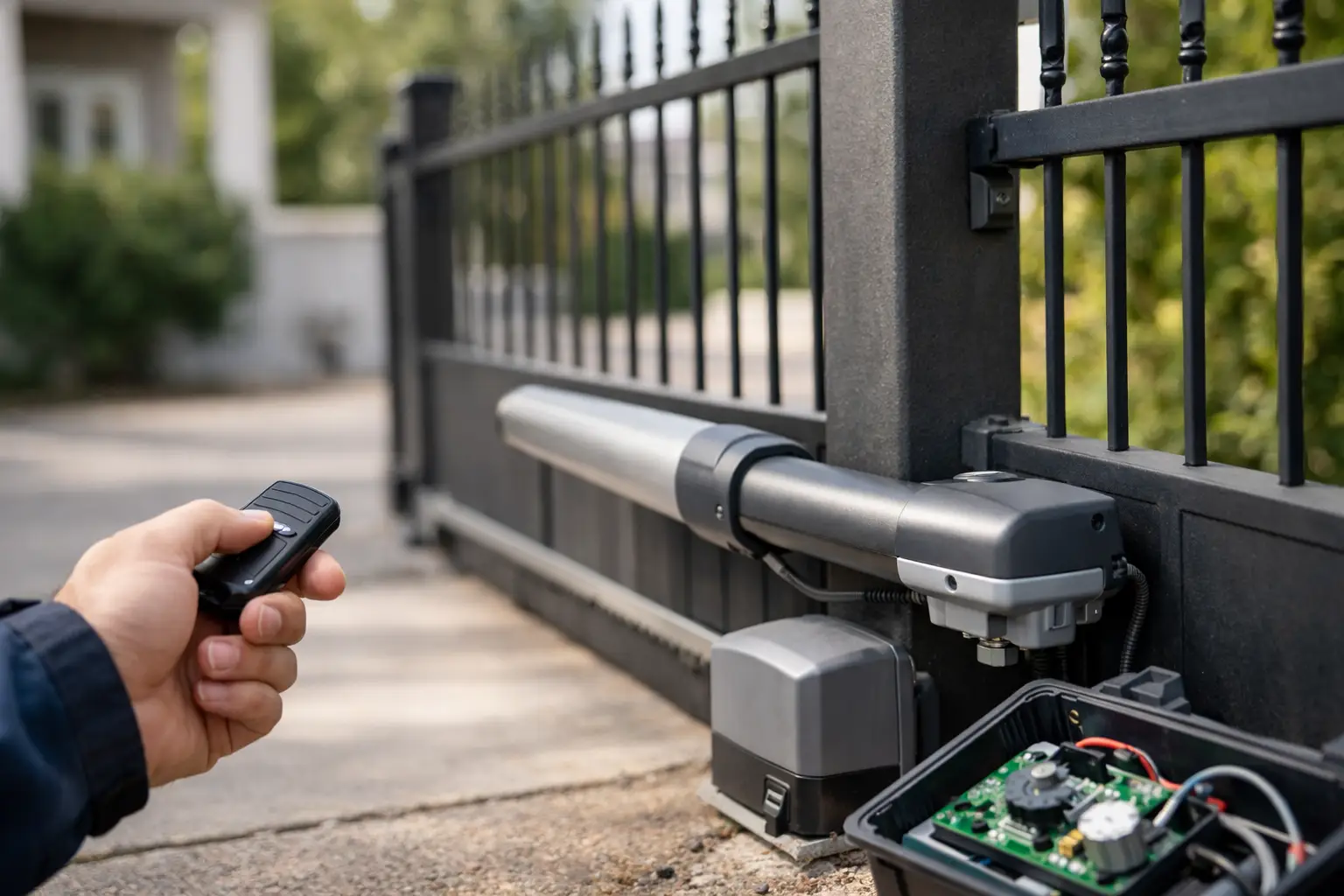
A gate that looks solid and works well by hand is not always ready for automation. That is usually the first surprise for people researching how to automate existing gates. The gate itself might be in good condition, but the posts, hinges, levels, electrics and safety requirements all need to be right before any automation is added.
That is why a proper site assessment matters. If you want an automated gate that opens reliably, closes safely and stands up to daily use, the starting point is not the motor. It is the structure already in place and whether it is suitable to be upgraded.
How to automate existing gates without costly mistakes
The most practical way to approach an existing gate is to treat it as part of a complete system. The gate leaves, support posts, track or rollers, power supply, control equipment and safety devices all have to work together. If one part is weak, the whole installation suffers.
For domestic properties, the goal is often convenience and security. For commercial sites, the focus may also include traffic control, access management and heavier duty usage. In both cases, the right automation depends on the gate type, the available space and how often the gate will be used.
Some gates can be automated with minimal alteration. Others need structural work first. A professional installer should tell you that plainly. It is better to correct a poor gate setup before automation goes on than to fit equipment to a gate that was never going to perform properly.
Start with the condition of the gate
Before choosing any operator, the gate needs to be checked manually. Swing gates should open and close freely, without dropping, binding or scraping. Sliding gates should move cleanly along the track or cantilever system, with no excessive resistance.
If a gate is heavy, twisted, poorly hung or already difficult to move by hand, adding automation will not solve the problem. In fact, it often makes the problem more obvious and can shorten the life of the motor and control gear. Hinges, posts, fixings and foundations may all need attention before automation is considered.
Timber gates deserve particular care because weight changes over time. A pair of timber driveway gates may have been manageable when first fitted, but after exposure to the weather they can become heavier or less stable. Metal gates can also present issues if corrosion, damaged welds or poor alignment have developed.
The gate type affects the automation options
Swing and sliding gates are automated in different ways, and the available space around the entrance often decides what is possible.
Swing gates can use above-ground ram operators, articulated arm systems or underground motors. Ram motors are common where there is a good solid fixing point and enough room for the opening arc. Articulated arm systems can suit wider posts or situations where geometry makes a ram less suitable. Underground motors are often chosen where appearance matters and a more discreet finish is preferred, though installation is usually more involved.
Sliding gates use a motor to drive the gate along its travel path. This can be a strong solution where there is limited depth on a driveway or where wind loading makes a pair of swing gates less practical. The gate and track arrangement still need to be sound. If the ground movement, debris build-up or poor track installation are already causing problems, those need to be resolved first.
What is needed to automate existing gates safely?
Safety is not an optional extra. Any powered gate must be installed with appropriate safety measures to reduce the risk of injury. That includes more than simply fitting a motor and remote controls.
A compliant automated gate system may require safety photocells, pressure edges, force testing and proper control logic. The exact setup depends on the gate style, operating area and level of risk. A domestic entrance used by a single household is different from a commercial site with staff, visitors and delivery vehicles moving through it all day.
This is one reason experienced electrical and gate automation knowledge matters. The controls, cabling and protection devices need to be installed correctly, and the safety setup needs to suit the real use of the entrance rather than a basic one-size-fits-all package.
Power supply and cabling
One of the most common questions is whether an existing gate already has the power needed for automation. Sometimes it does. Often it does not.
A reliable supply has to be planned properly from the outset. That may involve new armoured cabling, isolation, suitable protection and controls housed in the right enclosures. Long driveways can add complexity, especially where trenching is needed to reach gate posts or control points.
There are situations where solar-assisted systems are discussed, but they are not the right answer for every site. Usage levels, gate weight, orientation and battery storage all affect whether that route is viable. For many properties, a mains-powered installation is still the most dependable option.
Access control should be chosen around real use
Automating a gate is only part of the job. You also need to decide how users will open it and how entry should be managed.
For a private home, that may be as simple as remote fobs, an intercom at the entrance and a keypad for trusted visitors. For larger properties, mobile phone entry and vehicle detection loops may be more useful. On commercial sites, access control often needs tighter management, with timed operation, staff access credentials, separate entry and exit logic, or integration with existing security arrangements.
The best setup is the one that suits daily use without becoming awkward. A gate that is technically advanced but frustrating to operate will soon become a problem. Good design keeps the system straightforward for authorised users while maintaining proper control over who enters.
Costs, trade-offs and what affects the final specification
There is no single price for how to automate existing gates because the gate condition and site requirements vary so much. Two properties may both have timber swing gates, yet one may need only operators and controls while the other needs new posts, groundwork, cabling and safety upgrades before automation can even begin.
Underground automation can look excellent, but it tends to involve more labour and more ground preparation. Above-ground systems can be more economical and easier to maintain, though some clients prefer a less visible finish. Sliding gates can be very effective, but only if there is enough lateral run-back and the support system is right.
Usage also matters. A gate for a private driveway with a handful of cycles each day should not be specified in the same way as an entrance serving flats, a farm, a yard or a commercial premises with repeated vehicle movements. Duty rating, component quality and access control needs all influence the final cost and the long-term reliability.
Trying to save money by fitting under-specified equipment usually costs more later. Premature wear, nuisance faults and poor operation are common when the automation does not match the gate weight or expected use.
Why professional installation matters
Existing gates nearly always come with unknowns. Posts may not be as strong as they look. Ground levels may affect travel and clearances. Previous electrical work may be unsuitable. What appears straightforward at first glance can turn into a poor installation if those details are missed.
A specialist installer should assess the structure, measure the opening geometry, review the electrical requirements and explain clearly what needs to be done before work starts. That gives you a realistic specification rather than guesswork.
It also gives you accountability. When you are investing in gate automation for security and convenience, you want insured work, proper guarantees and a system fitted by someone who understands both the mechanical and electrical side of the job. That is particularly important for commercial premises and shared access points, where reliability is not just a convenience issue but an operational one.
For property owners across Dorset and the South of England, that often means choosing a dedicated gate automation specialist rather than a general tradesperson. Crabtree Electrical Gates works on exactly these kinds of installations, with the practical experience needed to assess whether existing gates can be automated properly and what upgrades are required to make the system safe and dependable.
When replacing the gate is the better option
Sometimes the honest answer is that the existing gates are not worth automating. If the structure is weak, the leaves are badly warped, the posts are failing or the design is simply unsuitable for powered operation, replacement can be the better long-term investment.
That does not mean the original gate has failed completely. It may still function manually. But automation places different demands on a gate. Repeated powered movement, safety compliance and accurate setup all require a stronger standard than many older manual gates were built to meet.
A good installer will not force automation onto a gate that is likely to give trouble. They should explain whether repair, reinforcement or full replacement is the sounder route.
If you are considering how to automate existing gates, the sensible first step is a site visit and proper advice based on the gate in front of you, not a generic package. The right system should suit the entrance, the property and the people using it every day – and when it is specified properly, that is exactly what it does.
0 Comments