
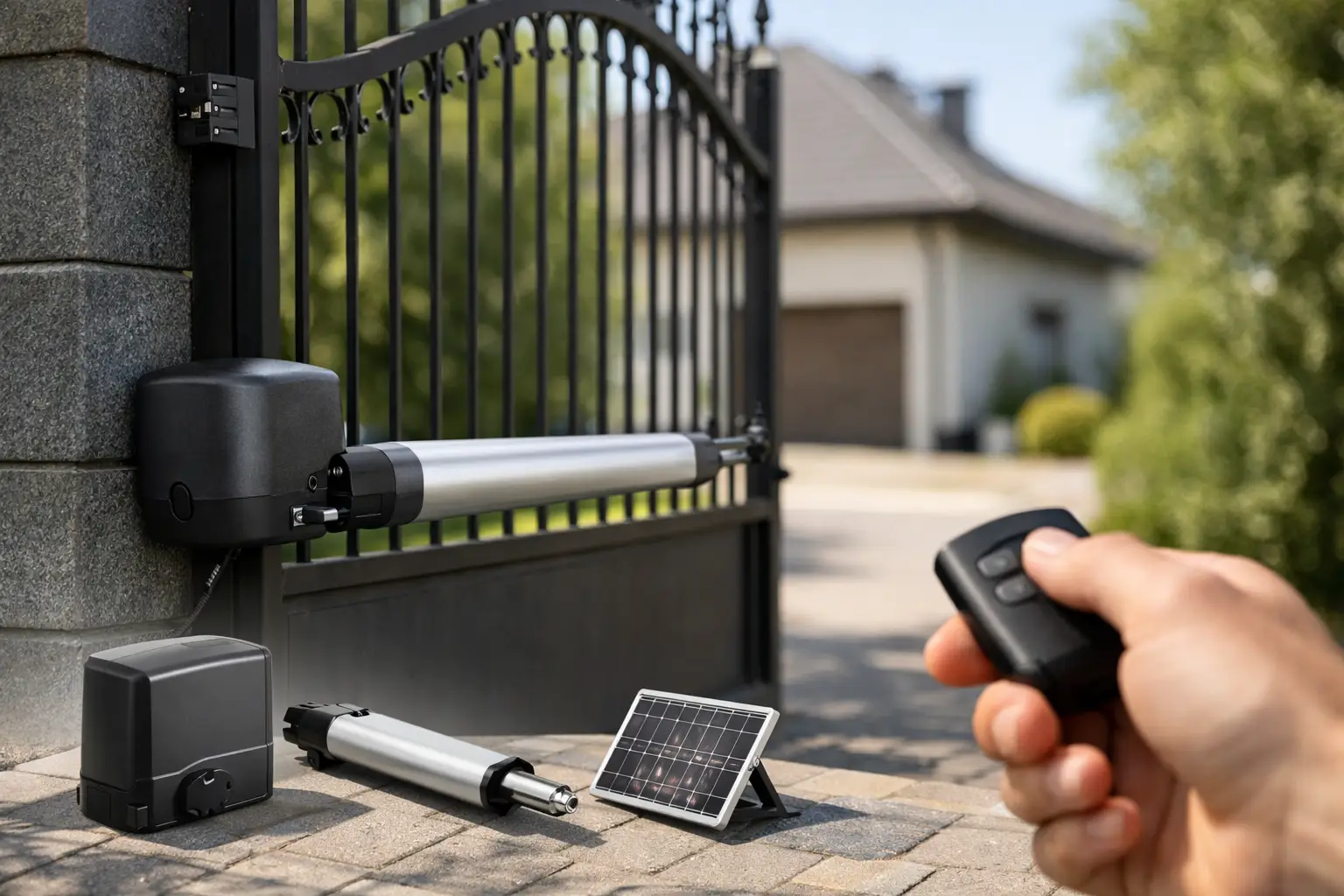
A gate that looks the part but struggles in wind, drags under load or stops working after a wet winter is not a good investment. The best swing gate opener is not simply the strongest motor on paper. It is the system that suits the gate’s size, weight, usage, site layout and the level of access control you actually need.
For homeowners, that usually means reliable day-to-day convenience and improved security without constant maintenance. For commercial sites and estates, it often means more frequent use, tighter control over entry and a system that can cope with vehicles arriving throughout the day. In both cases, getting the specification right at the start matters far more than choosing on price alone.
What makes the best swing gate opener?
A good swing gate opener should open and close consistently, operate safely and stand up to local weather conditions. That sounds straightforward, but the detail matters. A light timber gate on a sheltered driveway needs something very different from a heavy steel pair of gates on an exposed entrance.
Motor power is only one part of the picture. The geometry of the gate posts, the hinge position, the opening angle and the available run-back space all affect which operator is suitable. If those factors are ignored, even a well-known motor can become unreliable or place unnecessary strain on the gate.
Safety is just as important as performance. Properly installed safety edges, photocells and force settings help prevent accidents and reduce the risk of damage to vehicles or the gate itself. On many sites, particularly where families, visitors or staff are regularly moving through the entrance, that is not an optional extra. It is part of a professional installation.
The main types of swing gate opener
There is no single best swing gate opener for every property because swing gate automation comes in a few different forms. Each has strengths and limitations depending on the entrance.
Above-ground ram operators
These are commonly used and suit many domestic and light commercial gates. They are visible on the gate and post, generally offer dependable performance and can be a practical choice where access for installation and servicing needs to be straightforward.
They work well on many metal gates and some timber gates, but the gate design and post dimensions need to be right. Deep or wide brick piers can create awkward motor geometry, which affects travel and strain. That is why a site survey matters.
Articulated arm operators
These are often useful where gate posts are larger or the hinge position makes standard ram motors less suitable. The articulated arm gives more flexibility in certain layouts and can be a good answer for residential entrances where preserving smooth movement matters.
The trade-off is that they are not always the best option for very heavy-duty applications. As with any operator, suitability depends on gate weight, usage and site conditions rather than a simple label.
Underground swing gate motors
If appearance is a priority, underground automation is often the preferred choice. The mechanism is hidden below ground level, which keeps the gate looking clean and avoids visible motors on the inside face.
This can be an excellent solution for high-end residential properties and prestige entrances, but it comes with more involved installation work. Drainage, ground conditions and long-term access for servicing all need to be considered properly. When underground systems are installed well, they offer a very neat finish. When corners are cut, they can become troublesome.
Best swing gate opener for homes versus commercial sites
A private driveway and a busy site entrance do not place the same demands on automation. A homeowner might use the gate a handful of times a day. A commercial yard, shared development or managed estate could see repeated cycles from early morning onwards.
For domestic use, quiet operation, convenience and discreet integration often matter most. Many homeowners also want intercoms, keypads or smartphone-based entry so they can manage visitors without leaving the house. In these cases, the best swing gate opener is usually the one that balances dependable operation with ease of use and a tidy finish.
For commercial premises, durability and control tend to come first. Entry systems may need to work with audio or video intercoms, coded access, fobs, timers or ground loops for vehicle detection. The gate automation also needs to suit a higher duty cycle. A motor that is perfectly adequate for a home may not be the right choice for a business entrance with regular traffic.
Why installation matters as much as the motor
A lot of problems blamed on the opener are actually installation issues. Poorly aligned gates, worn hinges, weak posts or unsuitable foundations will affect performance however good the operator is.
This is where specialist electrical and automation knowledge makes a real difference. The control board, safety devices, power supply and access control all need to work together properly. An installer should not simply fit motors to an existing gate and hope for the best. The gate structure, cable routes, safety setup and end-user requirements all need to be assessed as one complete system.
That is especially important when combining automation with intercoms, keypads and vehicle access equipment. A well-installed gate should feel predictable and easy to use. It should not require repeated call-backs because the design was never properly thought through.
Features worth paying for
Not every extra is necessary, but some features are genuinely worthwhile. Soft start and soft stop can reduce wear and improve the feel of the gate in daily use. Battery back-up can be useful where power cuts are a concern. Adjustable force settings and obstacle detection improve safety and help protect both people and vehicles.
Good access control integration is also worth considering from the outset. If you know you want keypad access, an intercom, GSM entry or vehicle detection, it is better to plan for that at installation stage rather than bolt it on later. The best swing gate opener is rarely a motor on its own. It is usually part of a complete entrance control system.
Common mistakes when choosing a swing gate opener
One of the most common mistakes is choosing purely on cost. Lower-priced kits can look attractive, but if they are not suited to the gate or are fitted without proper attention to safety and setup, the saving tends to disappear quickly.
Another mistake is underestimating the effect of gate construction. Heavy hardwood gates, long leaves and exposed entrances all increase the demand on the automation. So do poor hinges and gates that are already dropping or binding. If the gate does not swing freely by hand, automation should not be the first step.
There is also a tendency to focus on the motor and overlook aftercare. Like any mechanical and electrical system, automated gates benefit from servicing. Choosing an installer who can advise, install and support the system afterwards is often more valuable than chasing the cheapest hardware.
How to decide on the best swing gate opener for your property
Start with the gate itself. Its size, construction and condition will narrow the options quickly. Then consider how often it will be used, who needs access and whether the entrance is exposed to wind or difficult ground conditions.
After that, think about how you want to control entry. Some properties only need a couple of remotes. Others need keypad access for staff, intercom control for deliveries or automatic opening for authorised vehicles. These decisions affect not only convenience but the overall specification of the system.
A proper site visit is usually the best way to get this right. Measurements, hinge positions, post dimensions, cable requirements and safety provisions are hard to judge accurately from photos alone. That is why bespoke advice tends to produce a better result than a one-size-fits-all kit.
For customers across Dorset and the South of England, that practical approach matters. The right installer should explain what is suitable, what is not and where there are trade-offs between appearance, budget and long-term reliability. If a system is right for the site, that should be clear. If it is not, you should be told plainly.
The right choice is the one that works for years
When people ask for the best swing gate opener, what they usually mean is the most reliable option for their property. That depends on the gate, the entrance and the way the system will be used. A good installer will not guess. They will assess the site properly, recommend the right type of automation and make sure the safety and access control are equally well considered.
If you are planning a new automated gate or upgrading an existing entrance, take the time to choose a system built around your site rather than a brochure headline. A gate opener should make daily access easier, safer and more dependable from the first use onwards.
0 Comments