
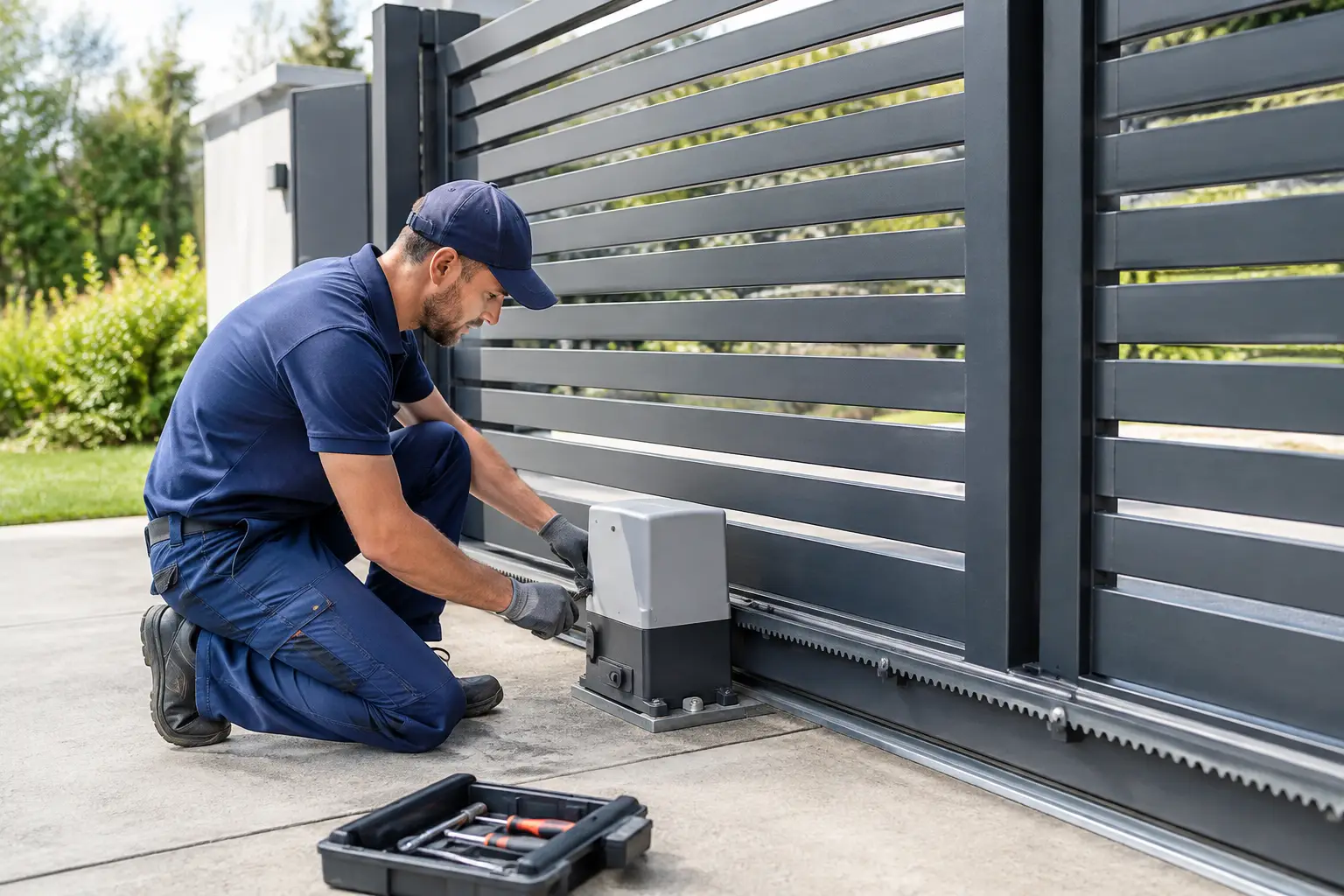
A sliding gate that hesitates halfway across the entrance, makes a grinding noise or stops short of the closed position is more than an inconvenience. It can leave a home or commercial site less secure, disrupt deliveries and put extra strain on the motor. Knowing how to maintain sliding gates helps prevent many of these problems before they become a call-out or repair.
Sliding gates are dependable when the gate, track, rollers, motor and safety equipment are working together correctly. Their maintenance needs are not complicated, but they do need regular attention. Dirt on the track, poor drainage, a slight change in alignment or a damaged safety device can all affect performance.
Start with the Track and Gate Path
The track is the foundation of a tracked sliding gate. Leaves, gravel, mud and compacted debris can stop wheels from rolling freely, particularly after high winds, heavy rain or nearby landscaping work. A clear track reduces resistance and avoids forcing the automation to work harder than it should.
Inspect the full length of the travel path regularly. Sweep away loose debris and remove anything caught around the wheels or guide posts. Do not use a pressure washer close to electrical equipment, motor housings or exposed cable routes. If washing the gate itself, keep water away from the control cabinet and follow the manufacturer’s care guidance.
Also look at the surface alongside the track. Water that repeatedly pools around it can wash in grit, undermine the surrounding ground and accelerate corrosion. Drainage is especially worth checking on rural, coastal or exposed properties in the South of England, where wet weather and wind-blown material can build up quickly.
Cantilever sliding gates have no ground track, but they still need a clean, unobstructed travel area. Check that nothing is sitting where the gate passes and that overgrown shrubs, branches or loose materials cannot obstruct its movement.
Check Rollers, Guides and Alignment
A gate should travel smoothly without scraping, bouncing or leaning. The wheels, rollers and upper guide assemblies keep it in line. Wear in any of these components can make the gate harder to move and increase load on the operator.
With the automation isolated and the gate safely released only if you understand the manual-release procedure, look for obvious damage, looseness or unusual wheel wear. A gate that has begun to sag, catches at one point, or has a visible gap change as it moves should be assessed by a gate automation specialist. Adjusting supports or guides without the right knowledge can create a safety issue or affect the gate’s limit positions.
Lubrication is not a case of applying oil to every moving part. Some bearings and roller systems are sealed, while excess lubricant can hold dust and grit. Use only the lubricant recommended for your particular gate hardware and motor system. If the gate is noisy, identify the cause rather than masking it with spray lubricant.
Keep the Motor and Control Equipment Protected
The operator does a great deal of work, but it cannot compensate for a poorly running gate. Check that the motor housing is secure, undamaged and clear of vegetation. Keep its drainage points free, where applicable, and make sure the cabinet door or cover closes properly.
Do not open the electrical enclosure or attempt internal repairs unless you are qualified to do so. Gate systems combine mains electrical supply, moving machinery and safety controls. Water ingress, damaged glands, chewed cables or condensation inside an enclosure should be dealt with promptly by a competent engineer.
Pay attention to changes in operation. Slower travel, repeated stopping, a motor that sounds strained, tripped power, or a gate that works intermittently can indicate more than a simple mechanical issue. The cause may be a worn component, an electrical fault, an obstruction, a limit setting or a safety-device problem.
Do Not Ignore Battery Backup and Remote Controls
Where a gate has battery backup, test it in line with the manufacturer’s instructions. A backup system is useful during a power cut, but batteries have a limited lifespan and may fail without obvious warning. The same applies to remote controls: replace weak batteries and keep spare programmed fobs under proper control, especially at shared commercial sites.
If remotes have been lost, staff have left, or a property has changed hands, ask an installer to review access credentials. It may be sensible to remove old fobs from the system rather than simply issuing new ones.
Test the Safety Features Every Month
Automated gates should not be treated as ordinary manual gates. They need correctly functioning safety equipment to reduce the risk of injury or damage as the gate opens and closes.
A monthly visual and functional check is a sensible routine. Use the controls as normal and observe the full gate movement from a safe position. Safety photocells should be clean, firmly mounted and aligned. Cobwebs, mud, condensation and physical knocks can interfere with their performance.
If your installation includes safety edges, test them only in the manner advised by the installer or manufacturer. Never put yourself, a child, animal, vehicle or object in harm’s way to test a gate. If a safety device does not respond as expected, stop using automatic operation and arrange an inspection.
The following signs warrant prompt professional attention:
- The gate closes against an obstruction or fails to reverse when it should.
- Photocells are cracked, loose, misaligned or regularly showing a fault.
- The gate opens or closes unpredictably without a deliberate command.
- Warning lights, intercom release functions or access controls are not working correctly.
- Manual release is damaged, missing a key or difficult to operate.
For commercial premises, estate-managed entrances and properties with regular visitors, keep a simple record of inspections, faults and service visits. It provides a useful maintenance history and makes recurring issues easier to identify.
Maintain Access Controls as Well as the Gate
A gate may be mechanically sound but still inconvenient or insecure if the keypad, intercom, induction loop or exit button is not working properly. Clean keypads gently and check that numbers remain clear. Test intercom audio and video from both ends of the system, as poor connections are often noticed first through crackling sound, intermittent release or reduced image quality.
Vehicle detection loops and exit sensors should be checked if the gate starts closing too soon, stays open unnecessarily or does not respond to vehicles. Avoid digging, resurfacing or installing posts close to these systems without first confirming where cables and loops are located.
Seasonal Care for Sliding Gates
Maintenance is most effective when it follows the weather. In autumn, clear leaves before they break down into wet material in the track. In winter, remove snow and ice carefully from the travel path without striking the track, cables or photocells. Do not force a frozen gate or repeatedly command it to move.
Spring is a good time to inspect for storm damage, corrosion and ground movement. During dry summer periods, dust and loose gravel can collect around moving parts, while expanding vegetation can obstruct photocells and the gate path. Coastal locations may need more frequent checks because salt-laden air can speed up corrosion on metalwork and fixings.
Arrange Professional Servicing Before a Fault Develops
Routine owner checks keep the entrance tidy and help spot changes early. Professional servicing deals with the areas that need specialist knowledge: electrical connections, mechanical condition, force settings, safety circuits, limits and the overall operation of the automation system.
The right service interval depends on use. A private driveway gate used a few times a day will have different demands from a commercial entrance operating throughout the day. Gate weight, location, exposure to weather and the type of access control also matter. As a general approach, arrange regular servicing at least annually, with more frequent inspections for heavily used or safety-critical sites.
Crabtree Electrical Gates can inspect and maintain automated sliding gate systems across Dorset and the South of England, helping homeowners, estate managers and commercial operators keep access dependable and safe. If your gate has changed in sound, speed or behaviour, booking an inspection early is usually simpler than waiting for it to stop at the worst possible time.
0 Comments