
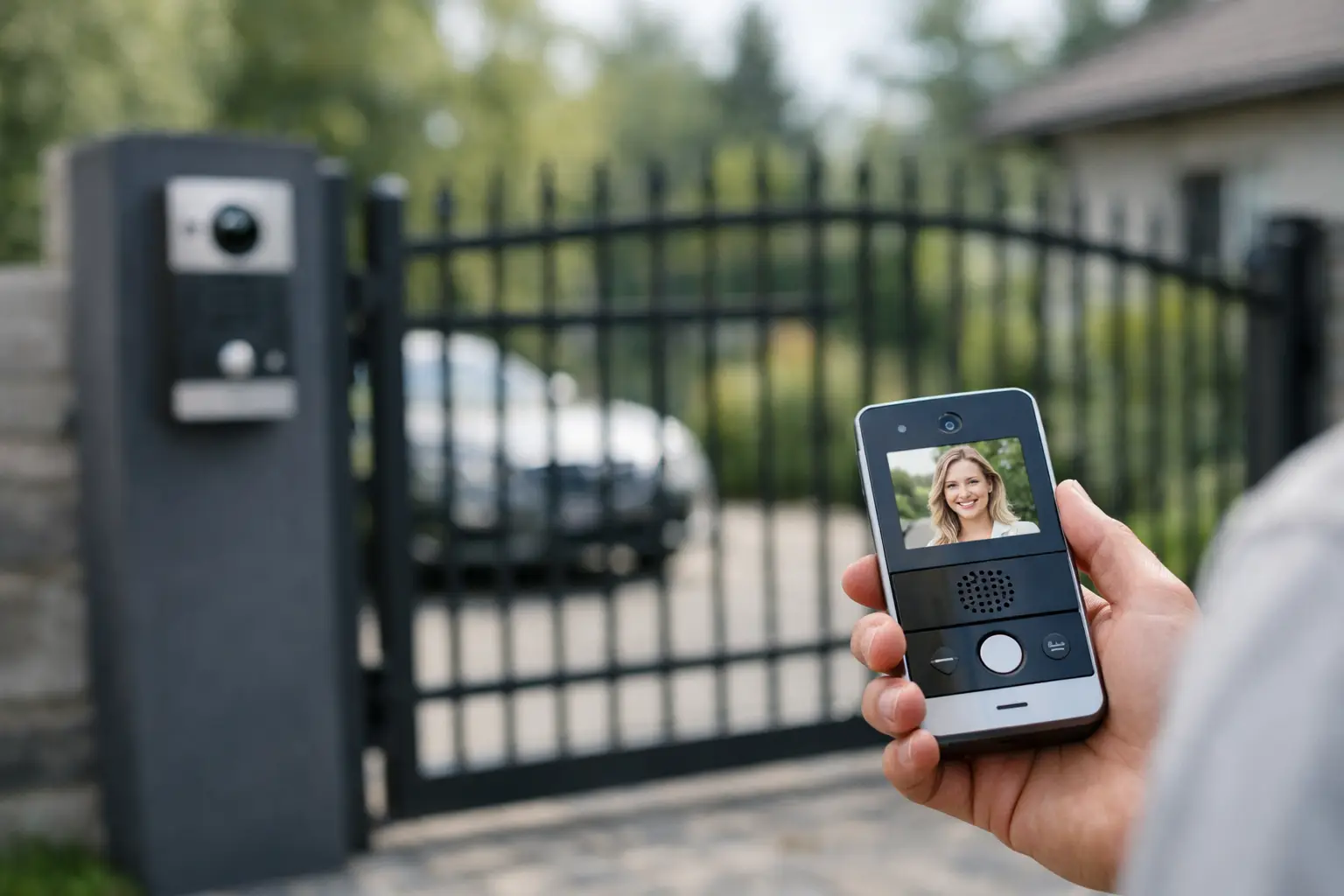
A gate intercom is often the first point of contact between your property and a visitor. It needs to work clearly in poor weather, be easy for the right people to use, and give you confidence before opening an automated gate. Knowing how to choose a gate intercom starts with the way people actually arrive at, use and manage your property.
For a private driveway, that may mean seeing a delivery driver from the kitchen or answering a call while away from home. For a commercial yard, estate or managed site, it may mean controlling access for staff, contractors and regular deliveries without leaving the office. The right answer is not always the system with the longest feature list. It is the one that suits the gate, the location, the users and the level of security required.
How to choose a gate intercom: begin with access needs
Before comparing handsets, cameras or apps, consider who needs to enter and how often. A household may need occasional visitor access, regular parcel deliveries and a simple way to let family members in. A business may need different access arrangements for employees, customers, suppliers and maintenance contractors.
Think about the points below in practical terms. Do visitors arrive on foot, by car or in larger vehicles? Is the gate a long distance from the building? Will someone normally be available to answer the intercom? Do you need access permissions to change regularly? These answers shape the choice of equipment and installation method.
It is also worth planning for normal day-to-day use, not just unusual events. An intercom that is straightforward for a guest to understand and dependable in the rain will provide more value than a complicated system that is rarely used properly.
Decide whether audio, video or mobile access is right
An audio intercom allows a visitor to call a handset or internal station so you can speak to them before releasing the gate. It can be a sensible, cost-effective choice where the entrance is visible from the property, the gate is used by known visitors, or visual verification is not a priority.
A video intercom adds a camera at the entrance. This is usually the better option for driveways with limited visibility, rural properties, busy entrances and commercial sites. Seeing who is at the gate helps you make a more informed decision, particularly when receiving deliveries or admitting visitors you do not know. Camera position matters as much as camera quality. It needs to capture a useful view of both a person standing at the panel and, where needed, a vehicle at the entrance.
Many modern systems can call a mobile phone as well as, or instead of, an internal monitor. This is useful if you are working away from the property, have a large home, or want more than one person to answer a call. However, app-based access depends on a stable internet connection and suitable network coverage at the gate. It should be selected for convenience, not as a substitute for getting the underlying installation right.
For some properties, a combined arrangement works best: an internal video monitor for dependable daily use, mobile phone calling for flexibility, and a keypad or fob system for authorised users.
Do not overlook everyday authorised access
An intercom manages visitors, but residents, staff and trusted contractors also need a simple route in. Keypads are useful where several people require a code, while proximity fobs and cards can be easier to manage for businesses or multi-user sites. If a code is shared too widely, it should be changed promptly. Fobs can usually be removed from the system when a member of staff leaves or one is lost.
For higher-traffic commercial entrances, ground loops, vehicle detection and timed opening arrangements may be more appropriate than asking every driver to use an intercom. The best access control system avoids creating unnecessary queues at the gate.
Choose wired where practical, wireless where suitable
The distance between the gate and the property is one of the biggest factors in the installation. A wired intercom normally offers the most dependable connection and can provide a clean, permanent solution, especially as part of a new gate automation project. It may require cabling beneath a driveway, through landscaping or along a boundary, so the route should be assessed before choosing equipment.
Wireless intercoms can be useful where running a cable would be disruptive or expensive. They are not all the same. Signal strength can be affected by stone walls, metal gates, mature trees, buildings and distance. A system that performs well in an open garden may be unreliable at a long entrance with obstacles in between.
A professional site survey should establish whether wireless equipment is suitable, rather than treating it as the automatic cheaper option. If the gate is remote from mains power, power supply and communications must be considered together. Solar-powered systems can work in the right position, but shading, winter daylight and expected gate usage all need to be accounted for.
Match the intercom to the gate system
The intercom should integrate correctly with the automation controls, whether you have swing gates, sliding gates or an underground operator installation. When a call is answered and access is granted, the release command must work safely with the gate control panel and its existing safety devices.
This becomes particularly important with older automation. It may be possible to upgrade access control without replacing the gates, but the condition of the motors, control equipment, photocells and safety edges should be checked first. There is little benefit in fitting a sophisticated video panel to a gate that does not operate consistently.
Consider where the intercom panel will be mounted. A vehicle-height pedestal is generally more convenient for drivers, while a wall-mounted panel may suit a pedestrian entrance. On a shared or commercial site, separate pedestrian and vehicle access points may need separate calling arrangements. The panel should be reachable without visitors leaning awkwardly from a car or stepping into the path of a moving gate.
Prioritise weather resistance, visibility and sound quality
External gate equipment is exposed to rain, wind, mud, vehicle fumes and changing temperatures. The intercom panel should be designed for outdoor use and installed securely on a suitable post, pedestal or wall. A recessed position can offer some shelter, but the camera and call button still need a clear, usable view.
At entrances on unlit lanes or driveways, lighting deserves attention. Video cameras need sufficient light to identify visitors after dark. Infrared capability can help, but a well-planned entrance light may improve visibility and make the gate easier to use for everyone.
Sound quality should not be an afterthought. Traffic, wind and distance can make poor audio frustrating. If the entrance is beside a main road or a noisy commercial area, select equipment with clear two-way communication and have it positioned away from avoidable sources of noise where possible.
Consider privacy and control of video footage
A video intercom should be aimed primarily at your entrance, not at neighbouring homes, gardens or public areas beyond what is necessary. If the system records footage, establish where recordings are stored, who can access them and how long they are retained.
For commercial sites and shared developments, access control procedures should be clear. Decide who can add or remove users, receive intercom calls, review recordings and respond if a fob or code is compromised. Technology supports good site management, but it does not replace it.
Plan for reliability, maintenance and future changes
Choose a system that can be serviced and supported, rather than equipment that becomes difficult to repair when a single part fails. Gate intercoms combine electrical work, communication equipment and moving gate machinery, so faults should be diagnosed as part of the whole system.
Ask your installer how calls will be routed, what happens during a power cut, and whether there is a safe manual release arrangement. You should also understand any ongoing costs for mobile-app services, data connections or cloud recording. These costs are not always necessary, but they need to be clear before installation.
Future requirements matter too. A homeowner may later want an additional monitor, keypad or mobile phone user. A business may expand its workforce, add a second entrance or need time-limited access for contractors. Selecting a system with appropriate capacity avoids an early replacement.
Use an experienced gate automation installer
Intercom selection is not just an electrical accessory decision. It affects how safely and reliably an automated gate operates every day. A specialist installer can assess cable routes, signal strength, gate controls, safety equipment, visitor flow and the best mounting position before recommending a suitable solution.
Crabtree Electrical Gates provides tailored gate automation and access control installations across Dorset and the South of England, with advice based on the property rather than a one-size-fits-all package. A site visit and clear quotation give you the opportunity to discuss how the entrance is used, what level of control you need and how the system can be maintained.
A well-chosen gate intercom should make entry simpler for authorised people and more controlled for everyone else. Start with the real conditions at your entrance, then choose equipment and installation that will remain dependable long after the gate first opens.
0 Comments