
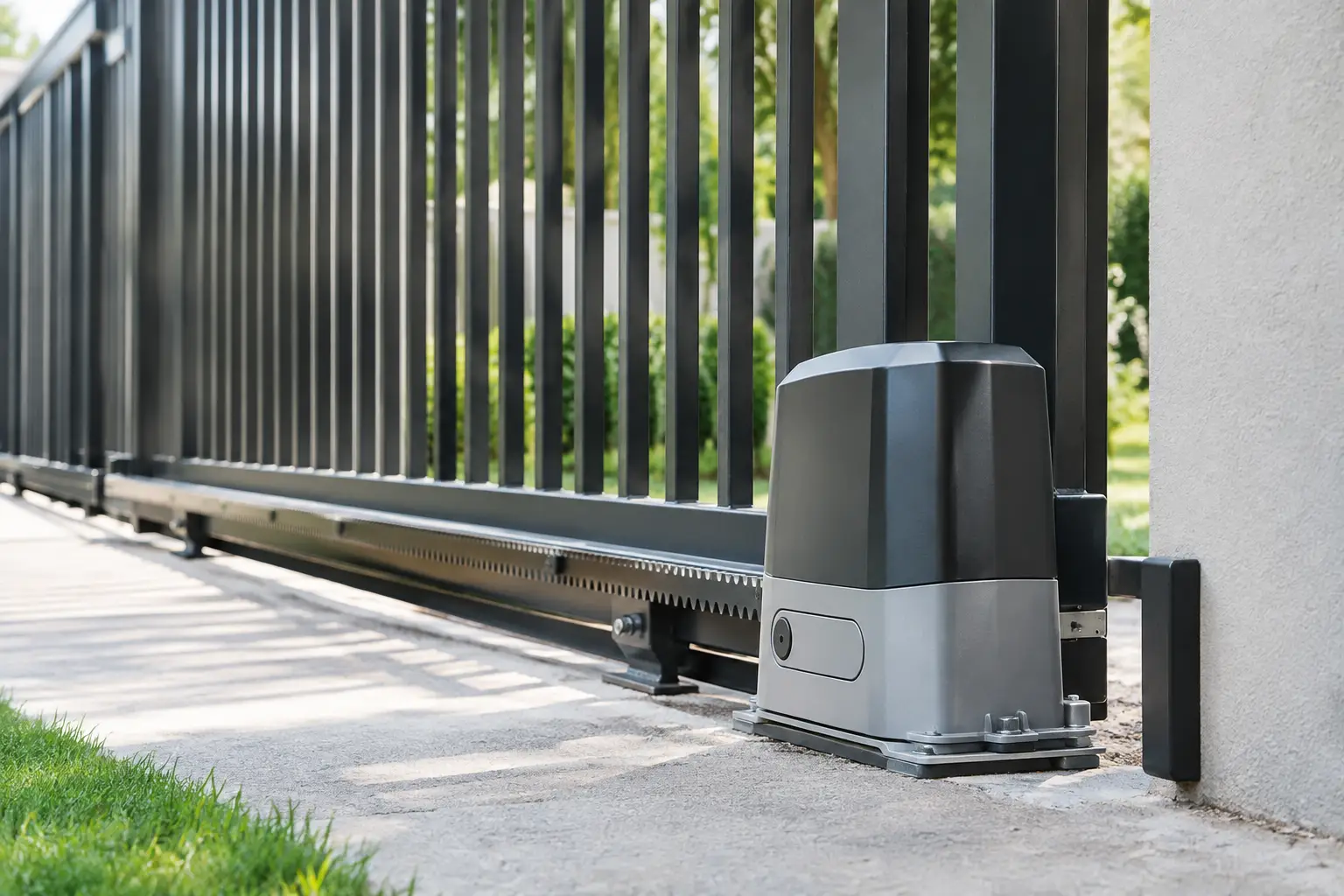
A gate that slows down on a wet morning, stops part way through its travel, or needs a second press of the remote is often a concern for owners. How long do gate motors last? For most well-specified domestic systems, a realistic expectation is around 10 to 15 years. A quality motor, correctly installed and regularly serviced, can last 15 to 20 years or more.
That said, the motor is only one part of an automated gate system. The condition of the gate, hinges, tracks, safety devices, cabling and controls all affect reliability. A motor asked to move a heavy, poorly aligned gate every day will not achieve the same lifespan as one operating a balanced gate within its design limits.
How long do gate motors last in real conditions?
There is no single lifespan that applies to every installation. Gate motors are rated according to the size and weight of the gate, the opening method and the number of operating cycles they can reasonably handle. A private driveway gate used a handful of times a day places far less demand on its automation than a commercial entrance used by staff, visitors and delivery drivers throughout the day.
For a residential swing or sliding gate, 10 to 15 years is a sensible working estimate when the equipment is from a reputable manufacturer and the installation is carried out properly. Commercial systems may need component replacement sooner due to higher usage, although heavy-duty motors are designed for that purpose and can provide many years of service when matched to the site correctly.
Underground gate motors can give an excellent, discreet finish and can last just as well as above-ground equipment. However, because they sit below ground level, drainage and protective sealing are critical. Standing water, poor drainage or neglected service access can shorten their life considerably.
What determines a gate motor’s lifespan?
The biggest factor is not simply the age of the motor. It is whether the entire automated gate system has been designed, installed and maintained to suit the property.
The size, weight and movement of the gate
A gate motor should not be selected on appearance or price alone. It must have enough capacity for the gate’s weight, length and wind loading. Solid timber or metal gates can catch a great deal of wind, particularly on exposed properties across Dorset and the South Coast. This can add resistance during operation and put unnecessary strain on the motor, arms and gearbox.
Swing gates should move freely on their hinges before automation is fitted. Sliding gates need a level, clear track and correctly adjusted guide rollers. Automation cannot cure a dragging gate. In fact, using a motor to force a poorly functioning gate open and closed is one of the quickest ways to cause premature wear.
How often the gate is used
Usage is usually described in cycles, with one opening and closing movement counting as a cycle. A household system might complete a few cycles each day. A gated development, farm entrance, office car park or commercial yard may complete dozens or hundreds.
Higher use does not automatically mean a short lifespan, but it does mean the motor, control panel and safety equipment need to be specified for intensive duty. Fitting domestic-grade automation to a busy commercial entrance can lead to overheating, worn gears and avoidable downtime.
Weather and site conditions
Electric gates work outdoors all year, so moisture, frost, heat, dirt and salt air all matter. Coastal or exposed locations need particular care, as salt and persistent moisture can affect metal components, cable connections and enclosures over time.
Water ingress is a common cause of faults, especially where underground motors or control cabinets have inadequate drainage. Rodents can also damage buried or surface cables, while leaves, gravel and mud can obstruct sliding gate tracks. A good installation accounts for these practical issues from the start.
Electrical installation quality
A motor relies on a stable electrical supply and properly protected connections. Poor joints, undersized cables, inadequate earthing or unsuitable control panel positioning can create faults that appear to be motor failures but are actually electrical problems.
This is one reason specialist electrical knowledge matters. The motor may be mechanically sound, yet unreliable operation can result from voltage drop, water-damaged cables or a failing control board. Identifying the actual cause avoids replacing equipment that did not need replacing.
When the problem is not the motor
Owners often refer to the whole system as the gate motor, but several parts can fail independently. Remote controls, photocells, intercoms, keypads, limit switches, batteries and control boards generally have different service lives.
For example, a gate that will not close may have an obstructed or misaligned photocell rather than a failed motor. A gate that opens slowly may be struggling with worn hinges, a tight track or a failing capacitor. If an automated gate is behaving unpredictably, it should be inspected rather than repeatedly reset or forced manually.
Safety equipment should never be bypassed to keep a gate operating. Photocells, safety edges and force settings are there to reduce the risk of injury or damage. A professional inspection can establish whether the issue is a simple adjustment, a service requirement or a replacement part.
Signs a gate motor may be nearing the end of its life
Many motors give warning signs before they fail completely. Acting early can prevent a gate becoming stuck open or closed at an inconvenient time. Look out for the following:
- The gate moves more slowly than usual or stops before reaching its open or closed position.
- You hear grinding, loud clicking, humming or repeated straining during operation.
- The motor casing, arms or gearbox show corrosion, cracks or oil leakage.
- The system trips electrical protection, loses settings or works only intermittently.
- The gate requires manual assistance, despite the hinges or track appearing clear.
These symptoms do not always mean the motor must be replaced. In some cases, a worn component, revised limit setting or mechanical repair will restore reliable operation. The key is to diagnose the fault before it develops into a larger repair.
Servicing can add years to a gate motor’s life
Regular servicing is the most practical way to protect an investment in gate automation. For most domestic gates, an annual service is sensible. Commercial sites, busy shared entrances and gates in harsh environments may benefit from more frequent checks.
A proper service should assess the movement of the gate itself, fixings, hinges or track, motor mounting, electrical connections, control settings and safety devices. It should also check for water ingress, damage to cables and signs of wear in moving parts. Gates may need lubrication, but only with products suitable for the components involved. Applying the wrong grease can attract grit and make the problem worse.
Owners can help between visits by keeping sliding tracks clear, checking that drainage channels are not blocked, listening for unusual noises and reporting changes in operation promptly. Avoid hanging heavy items on the gate or allowing vehicles to push against it. These simple habits reduce strain on the automation.
Should you repair or replace an ageing gate motor?
Repair is often the right choice where the system is otherwise sound and replacement parts are readily available. A new capacitor, control board, receiver, arm or safety device can be far more cost-effective than replacing the full automation system.
Replacement becomes more sensible when a motor has repeated failures, has suffered significant water damage, is no longer supported with parts, or was never correctly sized for the gate. It may also be an opportunity to improve access control with an intercom, keypad, vehicle loop or updated safety equipment.
The decision should take account of the gate’s condition as well as the automation. Replacing a motor without addressing worn hinges, an uneven sliding track or poor drainage is unlikely to provide a lasting solution.
Get the right system from the outset
The best way to achieve a long motor lifespan is to start with an accurate site assessment. The gate type, dimensions, construction, expected use, ground conditions, power supply and access requirements should all shape the specification.
Crabtree Electrical Gates provides specialist electric gate automation for domestic and commercial properties, including swing, sliding and underground systems. A professional assessment gives you a clear view of whether servicing, repair or replacement is the most sensible route for your entrance.
If your gate is showing signs of strain, arranging an inspection now is usually easier and less costly than waiting for it to fail when you need access most.
0 Comments