
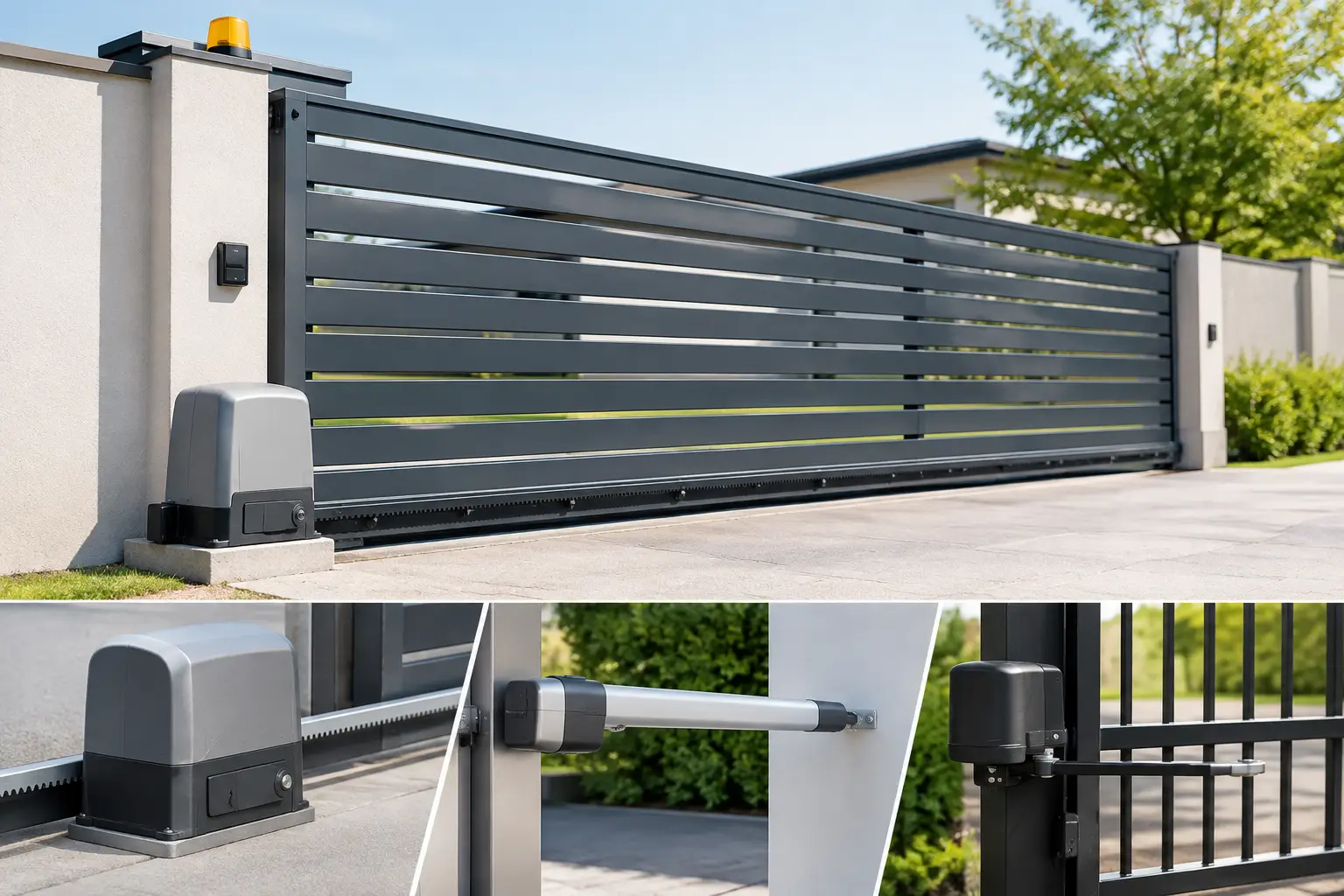
A gate operator comparison should start with the gate you already have, not with the motor you have seen advertised. A well-made operator can still be the wrong choice if it is asked to move a heavy leaf, work on a sloping drive, or cope with frequent commercial traffic beyond its intended duty cycle.
For homeowners, estates and businesses across the South of England, the right system is one that opens reliably, protects people and vehicles, and suits the way the entrance is used every day. The operator is only one part of that system. Gate weight, hinge condition, ground levels, power supply, safety equipment and access control all affect the final result.
Gate Operator Comparison: Start With the Gate Type
The first decision is whether you have swinging gates or a sliding gate. Each requires a different style of operator and each has practical advantages depending on the site.
Swing gate operators
Swing gates remain a popular choice for private driveways because they offer a traditional appearance and can work well with timber, metal and composite gate leaves. Most are automated using either above-ground arm operators, underground operators or, in some cases, hydraulic systems.
Above-ground operators are mounted to the gate posts or pillars and connect to the gate leaf with an arm. They are practical, accessible for future servicing and usually represent good value where the gate and pillars allow the correct geometry. The operator is visible, but a carefully planned installation can keep the appearance neat and unobtrusive.
Underground operators are fitted below the hinge point, making them a strong option where appearance is the priority. With no arm mounted across the gate, they preserve the original lines of an ornamental or high-end entrance. They do, however, require excavation, drainage and properly formed foundation boxes. On sites with poor drainage or ground that is likely to hold water, this detail matters greatly. An underground installation should never be treated as simply a hidden motor.
Hydraulic swing operators can be suitable for larger, heavier or more intensively used gates. They can provide considerable force and durability, but they are not automatically the best answer for every domestic entrance. A correctly specified electromechanical system is often an excellent choice for a typical residential gate, with simpler maintenance and lower overall cost.
Sliding gate operators
A sliding gate moves sideways along the fence line or wall, usually on a tracked system or as a cantilever arrangement. It is often the sensible choice where a drive rises immediately behind the entrance, where wind loading is a concern, or where there is limited room for gates to open inwards.
Sliding operators use a motor and toothed rack to move the gate. Their key consideration is not just gate weight. The track, wheels, guide rollers, rack alignment and clear run-off area must all be in good condition. A motor cannot compensate for a gate that binds, runs out of level or collects debris in the track.
For commercial premises, sliding gates are frequently preferred because they can manage wider openings and regular use. That said, they need sufficient space alongside the opening for the gate to travel. Where this space is unavailable, a pair of swing gates may be more appropriate.
What Determines the Right Operator?
Manufacturer weight ratings are useful, but they are not a complete specification. A 500 kg gate that moves freely on sound hinges is very different from a 500 kg gate exposed to strong winds, operating on an incline or opening dozens of times each day.
An installer should assess the gate structure, length and weight, opening angle, available clearance, pillar size and ground conditions. For sliding gates, they should also inspect the track or cantilever structure and allow for wind pressure across the full gate area. A long, solid-panel gate can place more demand on an operator than its weight alone suggests.
Usage is equally important. A private home may only require a modest number of cycles each day. A shared driveway, business yard, warehouse or managed estate may need an operator designed for repeated operation throughout the day. Selecting too light a system can lead to premature wear, inconsistent performance and unnecessary call-outs.
Power supply should be considered early. Mains-powered systems are normally the preferred option for reliable, consistent operation, particularly where safety equipment, intercoms and lighting are being added. A qualified electrical installation is essential, with suitable protection, isolation and cable routing planned around the site.
Solar-powered gate automation can be useful where mains power is difficult to bring to an entrance. It depends on the local aspect, seasonal light levels, gate usage and the power drawn by accessories. Solar is not a universal substitute for a mains supply, especially on busy entrances or shaded rural sites.
Safety Features Are Not Optional Extras
An automated gate must be designed as a complete safety system. The gate, operator and controls need to work together to reduce the risk of trapping, crushing or impact.
Safety photocells are commonly used to detect a person, vehicle or object within the gate’s travel path. Safety edges may also be required on leading edges or other areas where a risk assessment identifies a potential trapping point. The exact arrangement depends on the gate design, movement and surroundings.
Force limitation, obstacle detection, emergency release and correctly positioned controls are all part of good practice. Manual release is particularly important during a power cut, but it must remain secure and accessible to authorised users. On commercial and shared-access sites, the safety assessment should account for pedestrians, delivery drivers, visitors and people unfamiliar with the entrance.
Older gates deserve particular attention. Adding a motor to an existing gate does not automatically make it suitable for automation. Loose hinges, weak posts, excessive gaps and unsafe geometry should be corrected before an operator is fitted. This is one reason an on-site survey is more valuable than choosing equipment from a specification sheet alone.
Compare Access Control Alongside the Motor
The operator determines how the gate moves. Access control determines who can ask it to move. The two decisions should be made together, particularly where security and day-to-day convenience are priorities.
A simple remote control may be enough for a private driveway, although a keypad can provide useful access for family, cleaners, tradespeople or short-term visitors. Video or audio intercoms allow the property owner to speak to a caller before granting entry. GSM systems can call a mobile phone, which is useful for rural properties, offices and sites without a convenient internal handset location.
For commercial gates, proximity fobs, vehicle detection loops, timed opening, keypad access and intercom entry can be combined to suit staff, deliveries and visitors. Ground loops can be particularly useful for automatic exit or for preventing a gate from closing on a vehicle. The right arrangement depends on how the site operates, not simply on how many features are available.
It is worth deciding early whether the gate should integrate with existing door entry, lighting, CCTV or building controls. Planning this at installation stage is normally cleaner and more cost-effective than trying to add it after cables, surfaces and landscaping have been completed.
Cost, Appearance and Long-Term Service
The least expensive operator is rarely the lowest-cost installation over its working life. A system that is correctly sized, installed on sound gates and supported by suitable safety equipment is more likely to give dependable service than an underspecified package fitted quickly.
Above-ground swing operators generally offer easier access for inspection and maintenance. Underground units offer a cleaner finish but demand careful drainage and installation work. Sliding systems can be highly effective, but their tracks and moving parts need to be kept clear of leaves, stones and other debris. There is no single winner in every gate operator comparison because the site always sets the priorities.
Ask about the expected use of the system, emergency access, servicing requirements and what is included in the quotation. A clear proposal should explain the operator type, safety devices, access controls, electrical work and any preparation needed for the existing gate or entrance.
Crabtree Electrical Gates provides tailored automation installations for domestic and commercial entrances, with the electrical and practical site details considered together. A professional survey gives you the opportunity to discuss how the gate will be used before committing to a system.
The best operator is the one that suits your gate, your site and the people using it. Arrange a survey before making a final choice, and you can invest in secure, dependable access that works properly from the first opening.
0 Comments