
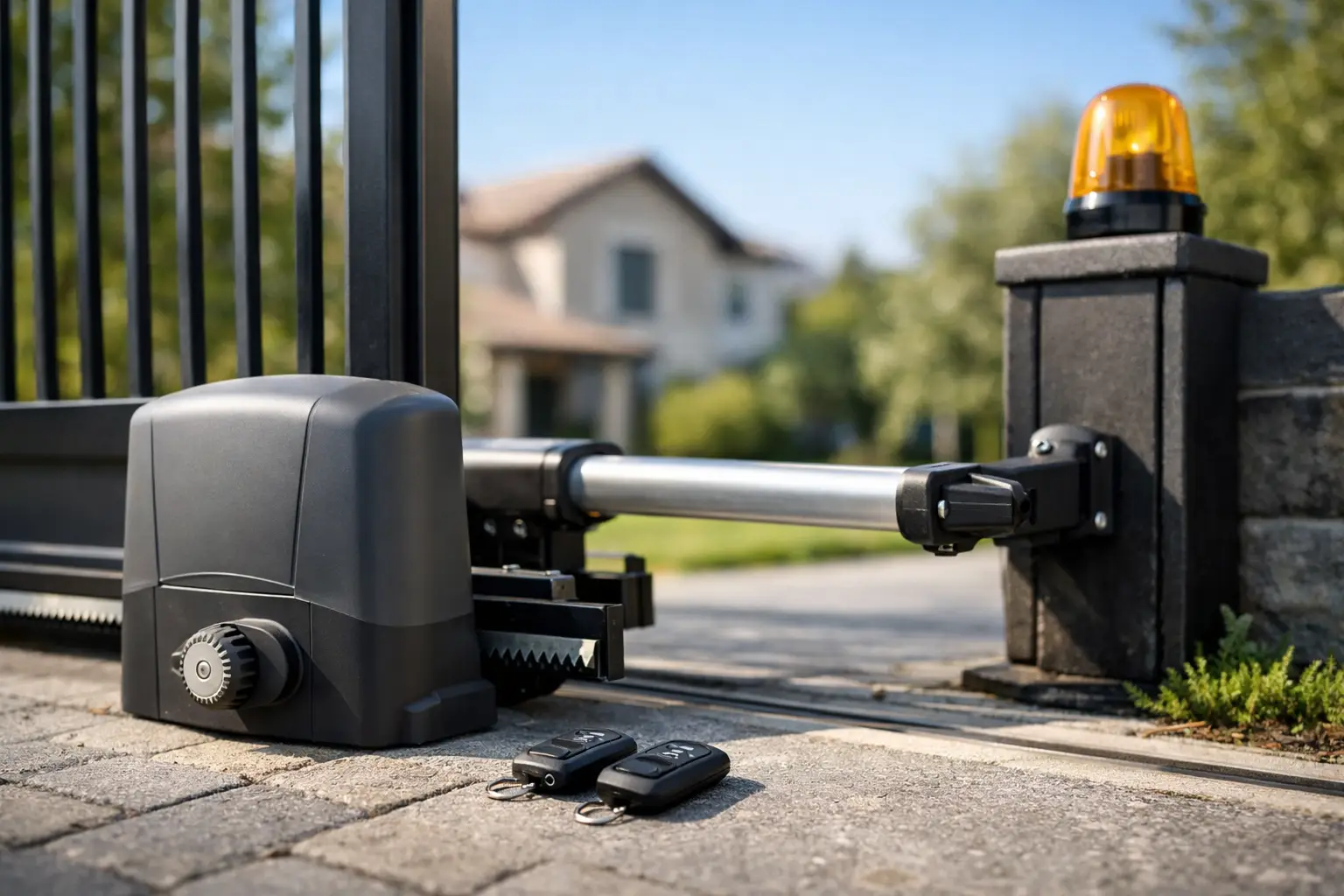
A gate that needs getting out of the car to open soon becomes an inconvenience, particularly in poor weather, after dark or when the entrance is used several times each day. The right gate openers turn that entrance into a controlled, practical point of access. The wrong system can be noisy, slow, unreliable or unsuitable for the gate it is meant to move.
For homeowners, estate managers and commercial operators, the starting point is not simply choosing a motor. A dependable installation considers the existing gates, the ground conditions, daily use, safety devices and how visitors, deliveries and authorised users will gain entry.
Choosing gate openers for the gate you have
Every automated gate system needs to be matched to the gate’s design, weight, size and movement. This is where specialist advice makes a clear difference. Fitting an operator that is too light for a heavy gate, or overlooking a poorly supported gate leaf, can shorten the working life of the equipment and create avoidable call-outs.
Swing gate automation
Swing gates are a popular choice for private driveways, courtyards and smaller commercial entrances. They open inwards or outwards on hinges, usually as a single leaf or a pair of leaves meeting in the middle. Above-ground ram or articulated arm systems can be a sensible option where the gate posts, hinges and available space allow for them.
Underground operators offer a more discreet finish because much of the mechanism sits below ground at the hinge point. They suit properties where appearance matters, including period homes and entrances with bespoke timber, metal or aluminium gates. However, underground systems require careful drainage and proper civil work. Water management is not an optional detail in the British climate.
Swing automation depends on clear opening space. A steeply rising driveway, uneven ground or a gate that opens across a public pavement may mean a different arrangement is needed. The gates must also be structurally sound before automation is added. Motors cannot compensate for dragging hinges, twisted frames or unstable posts.
Sliding gate automation
Sliding gates move sideways along the boundary rather than swinging into the driveway. They are often well suited to entrances where space behind the gate is limited, where a driveway slopes, or where a wider opening needs to be secured.
A tracked sliding gate runs on wheels and a ground track. It is a proven solution, but the track needs to remain clear of leaves, gravel, mud and debris. Cantilever sliding gates are supported above the ground and can be particularly useful where a track would be difficult to keep clean. They need additional run-back space and a suitable supporting structure, so they are not right for every site.
For commercial premises, sliding gates are frequently chosen for their ability to control wider vehicle entrances. The operator still needs to be selected around the actual gate weight, travel distance and expected operating cycles. A gate used by a family twice a day has different demands from one serving staff, suppliers and visitors throughout the working day.
Safety is part of the installation, not an add-on
An automated gate is a moving machine. Safe operation must be considered from the first site assessment, especially where children, pedestrians, visitors or staff may be near the entrance.
Safety devices are selected according to the gate, site layout and foreseeable risks. Photocells can detect an obstruction in the gate’s path, while safety edges can help protect crushing and trapping zones. Appropriate force settings, emergency release arrangements and clear controls also matter. A manual release allows the gate to be operated during a power failure or if the automation requires attention.
The safety requirements for a domestic driveway and an actively used commercial yard will not always be the same. A professional installation should assess how people approach the gate, whether they can pass around it, where vehicles wait and what could happen if a person is in the operating area. It is better to address these points before work begins than attempt to correct them after installation.
Regular checks remain important once the gate is in service. If it starts striking an object, stopping unexpectedly, making new noises or moving unevenly, it should be inspected rather than repeatedly reset. Physical damage to the gate, a loose photocell or a poorly closing latch can affect safe operation.
Access control should suit daily use
Automation is most useful when entry is straightforward for the people who need it and controlled for those who do not. A handheld remote may be enough for a private home, but many properties benefit from additional access control.
An intercom system allows a resident or receptionist to speak to a visitor before granting entry. Video intercoms add visual confirmation, which can be particularly useful at long driveways or commercial sites where the entrance is away from the main building. Keypads provide a convenient option for regular visitors, contractors or staff, although codes should be changed when access arrangements change.
For commercial premises, proximity fobs, vehicle detection loops and timed opening can reduce delays at the entrance while retaining control. Ground loops are installed beneath the driveway surface and can detect a vehicle approaching or leaving the gate. Their position and function need careful planning so that the gate does not open unnecessarily or close while a vehicle is still passing through.
There is a balance to strike. More features can improve convenience, but they also create more equipment to maintain and more decisions about who has access. A simple, well-specified system is often more useful than a complicated arrangement that no one is confident using.
Electrical work and site preparation matter
Gate automation is an electrical installation as well as a mechanical one. A reliable system needs a suitable power supply, protected cabling and correctly positioned controls and safety devices. It may also need groundwork for ducts, foundations, tracks, operator boxes and drainage.
The route for cables should be planned before surfaces are disturbed. On a finished driveway, this can affect the choice of equipment and the location of intercom posts, keypads and photocells. At a property still under construction, it is worth allowing for automation early, even if gates are being fitted later. Installing ducts and a suitable electrical supply at the right stage can prevent disruptive work afterwards.
A site survey should also establish whether the gate is exposed to strong winds, whether the entrance has reliable mobile or internet coverage if remote access is wanted, and whether existing brickwork, posts and gate furniture can support the proposed equipment. These details influence both performance and cost.
What affects the cost of a gate opener installation?
There is no meaningful one-price answer because installations vary considerably. The main factors are the gate type and condition, the chosen operator, electrical supply distance, groundworks, safety equipment and access control requirements. A pair of existing swing gates with power nearby is a different project from a new cantilever sliding gate with intercom, keypad, vehicle loops and extensive trenching.
It can be tempting to focus only on the operator price. In practice, the quality of preparation, wiring, safety provision and commissioning has a major effect on reliability. A properly installed system should be set up, tested and demonstrated so the customer understands normal operation, manual release and what to do if an issue arises.
For larger sites, it is also sensible to think beyond the initial installation. Consider who will hold remotes or access credentials, what happens when staff leave, how delivery drivers will call, and whether the system needs to operate outside normal hours. Planning these everyday details helps avoid expensive changes later.
Looking after automated gates
Gate openers benefit from routine maintenance, particularly where the gates are exposed to rain, salt air, dust or heavy daily use. Keep sliding tracks clear, check that gate leaves move freely when released manually, and make sure photocells are clean and aligned. Do not force a gate that has stopped or try to alter safety settings without proper knowledge.
An occasional professional service can identify worn hinges, loose fixings, damaged cables and drainage issues before they become a failure. Commercial sites may need more frequent attention because usage is higher and downtime can affect security, deliveries and staff access.
Crabtree Electrical Gates supplies and installs tailored gate automation and access control systems for domestic and commercial properties across Dorset and the South of England. The best next step is a site-specific quotation based on the gate, entrance and way the property is used. A well-planned system should make every arrival simpler while keeping access under your control.
0 Comments