
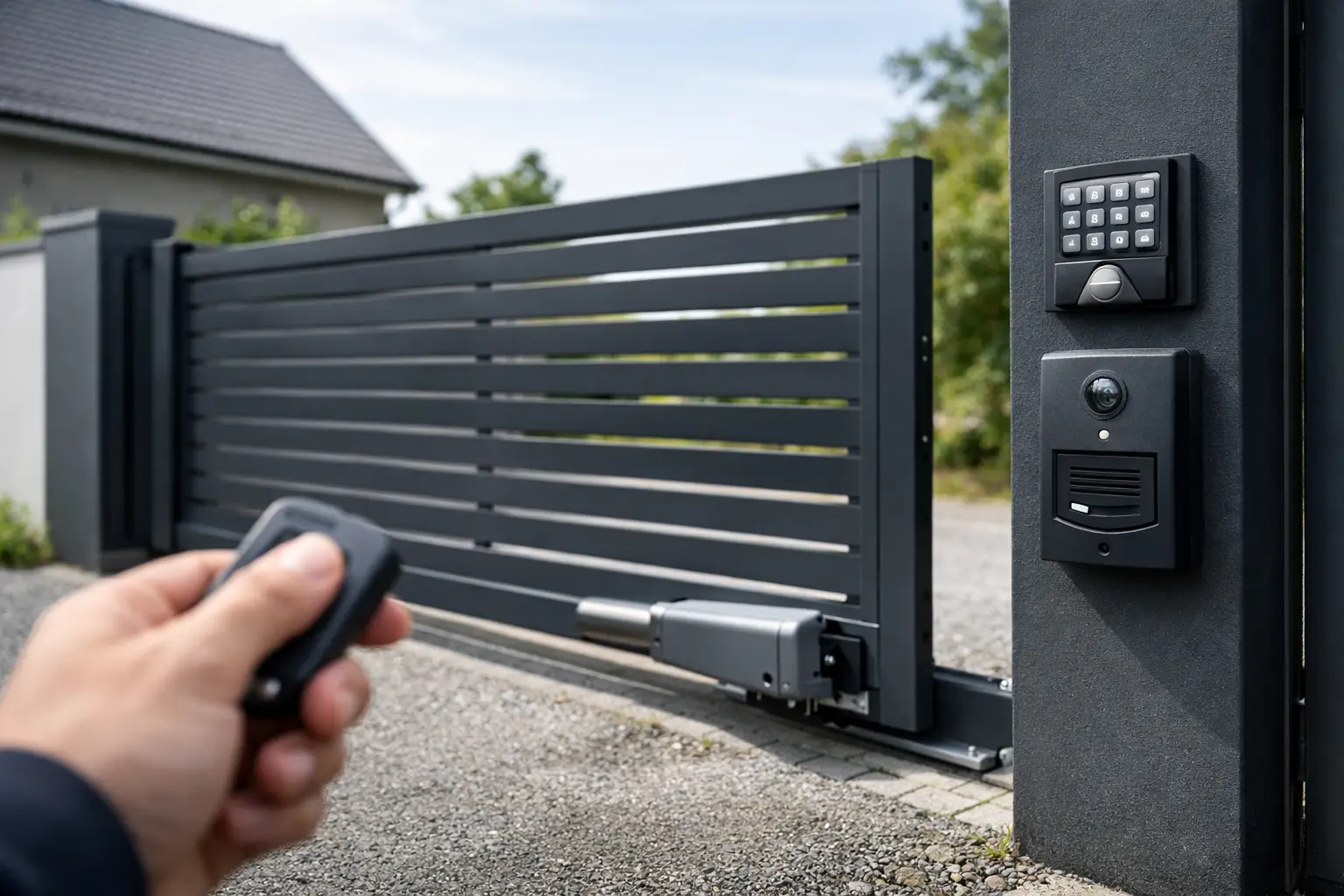
A new automated gate can make access safer, more private and far easier to manage. Before choosing the operator, intercom or gate style, it is sensible to establish whether electric gate permissions are needed for your property. The answer is often no, but planning restrictions, highway safety and the status of the building can change the position quickly.
For homes, estates and commercial premises across Dorset and the South of England, the best approach is to check the site first and design the installation around the rules that apply. It avoids costly alterations once the gates are in place.
When are electric gate permissions required?
In most cases, planning permission is concerned with the gate, wall, fence or entrance arrangement rather than the fact that the gates are electrically operated. An existing pair of manual gates can usually be automated without a separate planning application, provided the work does not materially alter the appearance, height or layout of the entrance.
A new gate or a substantial change to an existing entrance may fall within permitted development rights. These rights allow certain works without a full planning application, but they have limits. Whether they apply depends on the location of the gate, its height, local planning controls and the type of property.
As a general guide, a gate, fence or wall next to a highway used by vehicles should not exceed one metre in height without planning permission. Away from a highway, the usual height limit is two metres. The definition of a highway can include more than a main road. A public footpath, lane or shared access may also affect how the boundary is assessed.
Height is not the only consideration. If the work involves forming a new vehicle access onto a classified road, moving boundary walls, removing mature hedging, or changing the character of the frontage, speak to the local planning authority before work begins. A commercial entrance may also involve separate considerations around traffic movements, signage and the use of the site.
Properties where checks matter most
Some locations need more care than others. Planning permission or listed building consent may be required where gates are being installed at a listed building, within its grounds, or on a boundary that forms part of its historic setting. Even a modern automated system can affect protected fabric, old gate piers or the appearance of a significant entrance.
Conservation areas also require a closer look. Permitted development rights can be more limited, particularly where a boundary faces a road, open land or a public space. Local councils may have an Article 4 direction in place, removing rights that would normally apply. This is why a similar gate fitted successfully in a nearby road is not proof that the same work is permitted at your property.
New-build estates can create another complication. A planning condition, estate covenant or management company rule may control fencing, gates and changes to the front of a property. These are separate from planning permission. Approval from the council does not remove the need to comply with a covenant, and permission from a management company does not replace planning consent.
For leased commercial premises, check the lease and obtain the landlord’s written approval before ordering equipment. This is particularly relevant where gate posts, underground motors, cabling or safety loops will be installed in shared land.
Highway safety and the gate position
A gate that is allowed under planning rules can still be poorly positioned. This is one of the most important practical points in an automated gate installation.
Gates should open into the property, not out across a public highway, footway or shared access. Outward-opening leaves can obstruct pedestrians, cyclists and passing vehicles, while a sliding gate needs enough room to travel safely within the boundary. The entrance should also provide adequate visibility for drivers leaving the site.
Where possible, the gates should be set back far enough for a vehicle to pull clear of the carriageway while the entrance opens. A five-and-a-half-metre set-back is commonly used as a useful guide for a standard car, although the right distance depends on the vehicle types using the entrance, the road layout and the available space. A busy commercial site, for example, may need a longer holding area for vans, visitors or delivery vehicles.
If the drive opens directly onto a road, a properly designed access-control system can reduce delay. Keypads, video intercoms, remote controls, ANPR systems and ground loops all have a role, but they must be selected around the way the site operates. There is little value in installing fast automation if visiting vehicles still have to wait in the road for authorisation.
Planning approval is not the same as gate safety
A planning check is only one part of the job. Powered gates are machinery and need to be designed, installed and maintained with safety at the forefront. A gate that closes automatically has crushing, shearing, drawing-in and impact risks. The size, weight and style of the gate affect the safeguards required.
A professional installation should include a site-specific risk assessment and suitable safety devices. Depending on the arrangement, this may include photocells, safety edges, force limitation, warning signage, emergency release and carefully positioned controls. The gate should comply with the applicable machinery and electrical safety requirements, with testing and handover information provided at completion.
This matters for domestic driveways, but it is especially significant on sites used by staff, tenants, customers or the public. Estate managers and commercial operators have a clear duty to manage foreseeable risks. Regular maintenance is part of that responsibility, particularly where gates are used many times a day or are exposed to heavy vehicles and poor weather.
Electrical supply work must also be planned properly. Underground cables, control panels, intercoms and vehicle detection equipment need appropriate protection and installation. At a home, certain electrical work may be subject to Building Regulations requirements. An experienced electrical gate specialist can advise on the practical requirements for the proposed system and site.
A sensible order for getting approval
Before committing to a gate design, establish the boundary line, the ownership of the entrance and whether any shared access rights apply. Then check the planning history of the property and speak with the local planning authority if the site is listed, in a conservation area, subject to an Article 4 direction, or affected by an unusual frontage arrangement.
It helps to prepare a clear outline of the proposal: the gate height and materials, whether it is swing or sliding, the position of posts and motors, how far it sits back from the road, and whether the entrance is changing. Photographs and a simple site plan make it easier to obtain useful guidance.
For a new or altered access onto a public road, the highways authority may need to be involved. Do not assume that widening an opening, lowering a kerb or removing a boundary feature is covered simply because the gates themselves do not need planning permission.
Once the approvals and constraints are clear, the automation can be specified to suit the entrance. Underground operators may preserve the appearance of traditional gates, while above-ground rams are often a practical choice for suitable swing-gate layouts. Sliding gates can work well where space behind the entrance is limited, provided there is a safe run-back area and stable ground for the track or cantilever system.
Choosing an installer who understands the whole site
The best gate system is not chosen from a brochure alone. It should reflect the ground conditions, gate weight, daily usage, power supply, access requirements and safety risks at the entrance. This is where practical electrical knowledge makes a real difference.
Crabtree Electrical Gates assesses domestic and commercial entrances across Dorset and the wider South of England, supplying and installing automated swing and sliding gates, underground systems and access control. A proper survey helps identify planning or highway questions early, before equipment is selected or groundwork starts.
If there is any doubt about electric gate permissions, obtain clarity before installation rather than relying on assumptions. A well-planned entrance gives you the security and convenience you want while respecting the property, the road outside it and the people using it.
0 Comments