
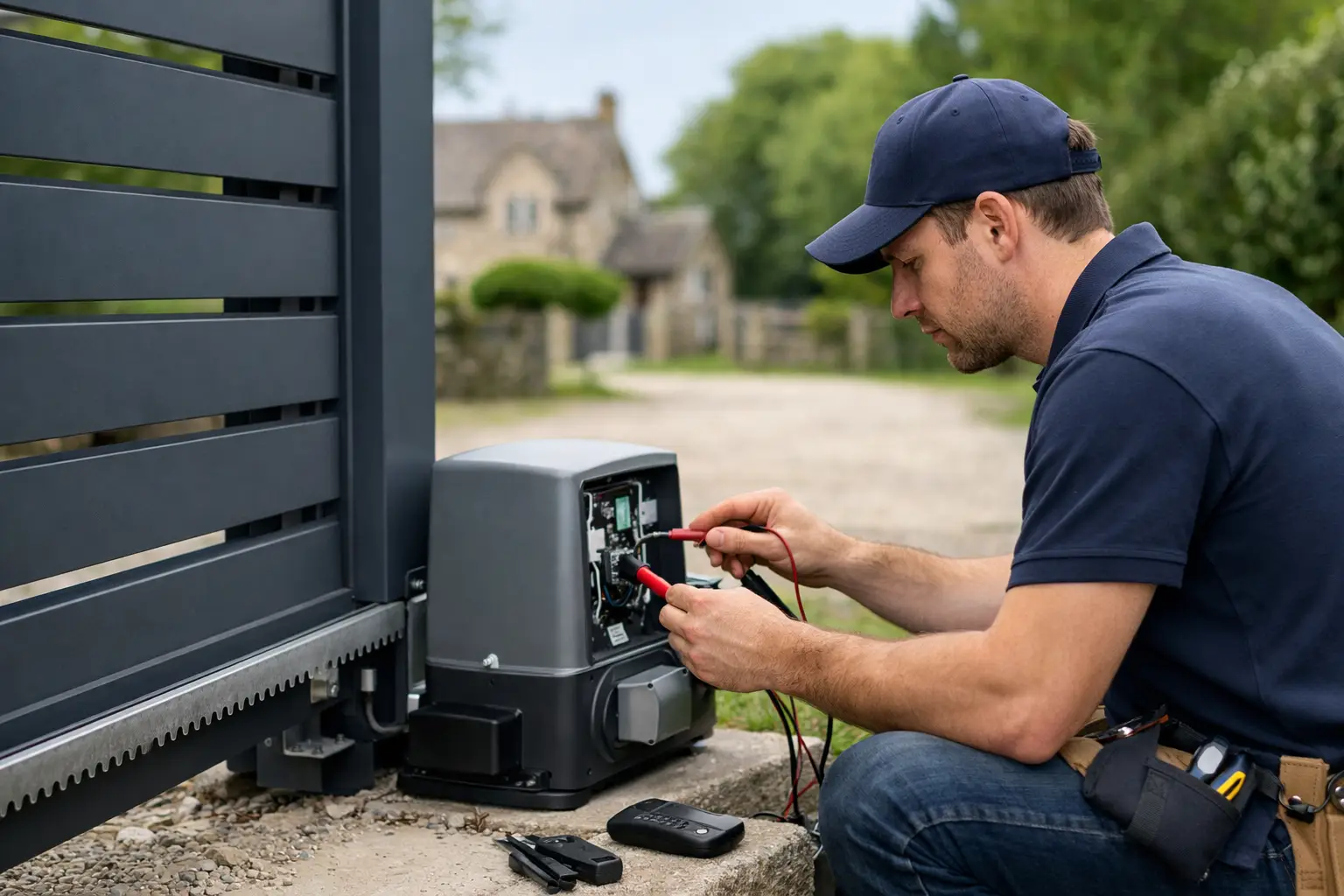
Choosing the right electric gate installer Dorset property owners can rely on usually comes down to one thing – confidence. You want a system that works properly in bad weather, handles daily use without fuss, and is fitted by someone who understands both gate automation and the electrical side behind it. That matters whether you are securing a private driveway, managing access to an estate, or controlling entry to a commercial site.
An electric gate is not just a gate with a motor attached. Done properly, it is a complete access system designed around your property, usage levels, safety requirements, and the type of control you want day to day. Done badly, it can become unreliable, awkward to use, and expensive to put right.
What to expect from an electric gate installer in Dorset
A specialist installer should start by looking at how the gate will actually be used. A family home with a pair of swing gates needs a different approach from a business premises with frequent vehicle movements, delivery access, and staff entry throughout the day. The site itself also changes the answer. Drive slope, available space, power supply, drainage, ground conditions, and gate weight all affect what can be installed and how well it will perform.
This is why an off-the-shelf recommendation rarely makes sense. The right installer will assess the opening, discuss how you want to control access, and explain where certain systems are the better fit. In some locations, underground motors offer a neater finish. In others, above-ground automation is more practical for maintenance and long-term servicing. Sliding gates can be ideal where there is limited swing space, but they need the right run-back area and sound groundwork.
A good installation is built around reliability first, then appearance and convenience.
Electric gate systems for homes and commercial sites
Most customers are balancing three priorities – security, ease of access, and appearance. The right system should support all three, but the balance is different for every property.
Swing gate automation
Swing gates remain a popular choice for residential driveways and many private entrances. They suit traditional and modern properties alike and can be automated using ram arms, articulated arm systems, or underground motors. The best option depends on the gate design, hinge positions, width, and how visible you want the automation to be.
For homeowners, swing gates often offer the strongest kerb appeal. For larger entrances, they can also create a more substantial and premium finish. The main trade-off is space. The gates need enough room to open safely, and sloping driveways can complicate the setup.
Sliding gate automation
Sliding gates are often the practical answer where space is tight or where a long, secure opening is needed. They are widely used on commercial premises, yards, and larger private properties. Because the gate slides rather than swings, they can work well on sites where traffic flow needs to remain controlled and predictable.
That said, the track, support structure, and run-back area all need to be considered properly. A sliding gate can be an excellent long-term solution, but only when the groundwork and installation are done correctly from the start.
Underground gate motors
Underground automation is often chosen where appearance matters and customers want a clean finish without visible motors on the gate. It can be an excellent solution on high-end residential properties and heritage-style entrances where preserving the look of the gate is a priority.
It does, however, need careful installation. Drainage and ground conditions are important, and future access for servicing should always be considered. A neat result is valuable, but not at the expense of practicality.
Access control is part of the system, not an extra
Most automated gates are only as convenient as the access control behind them. A proper installation should consider how residents, staff, visitors, deliveries, and contractors will enter and leave the site without confusion or unnecessary delays.
This is where integrated controls make a real difference. Intercoms allow visitors to request entry clearly. Keypads can be useful for regular authorised users. Ground loops help automate vehicle detection and exit. Fobs, remote controls, and app-based options can all play a role, depending on the site.
For a private home, the priority is often simple and reliable operation. For commercial premises, it is usually more about managing higher traffic levels and controlling who comes in at different times of day. A specialist installer should be able to advise on the right combination rather than pushing one standard setup.
Safety and compliance should never be an afterthought
When you are looking for an electric gate installer in Dorset, safety is not a detail to skim over. Powered gates need to be installed with proper safety measures, risk assessment, and attention to current standards. That includes the right force settings, safety devices, and testing.
This matters for obvious reasons. An automated gate is a moving piece of equipment. If it is fitted without proper safeguards, it creates risk for family members, visitors, staff, and vehicles. It can also create liability issues for property owners and site operators.
An experienced installer should talk clearly about how the system will be made safe, what protection devices are included, and what ongoing servicing may be needed to keep it operating as intended. Professionalism shows in the details here.
Why electrical expertise matters
Not every gate company approaches automation from a strong electrical background. That can become a problem when a project needs more than a straightforward motor fit. Power supply, control equipment, access integration, fault finding, and dependable setup all rely on sound electrical knowledge.
That is particularly important on larger properties and commercial sites where the installation may involve multiple control points, intercoms, safety devices, exit loops, timed access, or integration with existing systems. Even on domestic jobs, the difference shows when the system is commissioned properly and performs consistently.
A specialist with electrical expertise is usually better placed to design a system that works cleanly from day one and is easier to support later.
What a proper installation process looks like
A professional service should begin with a site visit or consultation, followed by a clear quotation based on the actual property and requirements. That quote should set out what is being installed, how the gates will operate, and any groundwork or electrical works involved.
From there, the installation should be planned around the site conditions, gate type, and access requirements. In some cases, existing gates can be automated if they are structurally suitable. In others, a new gate and automation package will make more sense. The key point is honesty. Sometimes the cheaper short-term option is not the one that gives the best result.
Customers should also expect clear communication on timescales, disruption, and any preparation needed before work starts. For many clients, especially those managing busy households or commercial access, that clarity matters nearly as much as the technical specification.
Choosing an electric gate installer Dorset clients can trust
Price matters, but it should not be the only measure. With gate automation, the cheapest quotation can easily become the most expensive if the system is unreliable or the installation lacks proper safety, support, or finish quality.
Look for an installer who is insured, experienced, and willing to explain the reasoning behind their recommendations. Guaranteed workmanship is another strong sign, as is a direct, expert-led service rather than a vague sales process passed between departments. When you are investing in security and access control, you need confidence that the people quoting the job understand the technical details as well as the practical ones.
It is also worth considering aftercare from the start. Gates are used daily. Like any mechanical and electrical system, they benefit from proper servicing and responsive support if issues arise. A local specialist with established coverage across Dorset and the South of England is often a safer choice than a general installer trying to cover every type of home improvement work.
For customers who want a dependable, well-specified system, that specialist approach is usually what makes the difference. Crabtree Electrical Gates works with homeowners, estates, and commercial sites that need secure, professionally installed automation backed by clear advice and guaranteed workmanship.
If you are planning a new automated gate or upgrading an existing entrance, the best next step is a straightforward one – speak to a specialist, arrange a quote, and get advice based on your property rather than a standard package.
0 Comments