
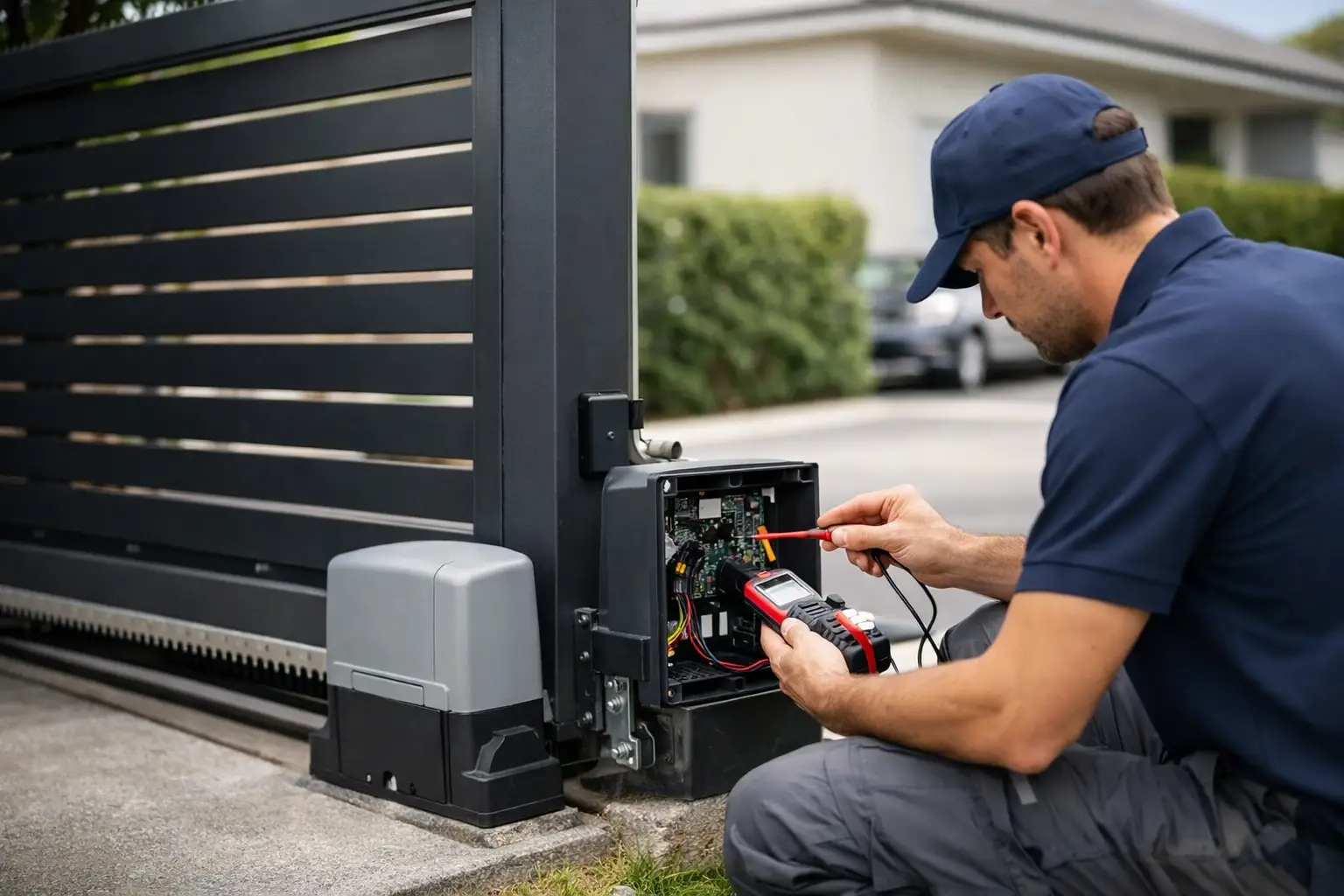
A gate that still opens and closes can appear to be working perfectly, while a worn hinge, misaligned safety device or strained motor is developing in the background. So, do electric gates need servicing? Yes. Regular servicing is the practical way to keep an automated gate safe, dependable and easier to repair before a small issue becomes a loss of access or a costly breakdown.
For homeowners, this means reliable entry to the driveway and confidence that the gate reacts safely around family, visitors and vehicles. For commercial sites, it supports controlled access, reduces disruption and helps those responsible for the premises manage a powered piece of equipment properly.
Do electric gates need servicing regularly?
Most electric gates should be professionally serviced at least once a year. Gates with high daily use, exposed coastal or rural locations, heavy leaves, or frequent delivery traffic may need inspections every six months. The right interval depends on the gate’s design, the automation equipment, site conditions and how much work the system does.
A private swing gate that operates a few times each day is under very different pressure from a sliding gate at a busy commercial yard. Likewise, an underground motor can be discreet and effective, but it needs its drainage and mechanical components checked carefully. Waiting until something fails is rarely the sensible maintenance plan.
Servicing is not simply about making the gate look tidy. It is about checking the physical gate, electrical controls and safety systems as one installation. Automation can only operate reliably when all three are in good condition.
What happens during an electric gate service?
A proper service begins with the gate itself. The engineer checks that the gate moves freely, has not dropped or twisted, and is not placing unnecessary load on the motors. Hinges, rollers, tracks, guide systems, stops and fixings all matter. A gate that has become stiff through corrosion, debris or movement in the ground will put strain on the automation every time it runs.
The automation equipment is then inspected. Depending on the system, this can include above-ground arms, underground motors, sliding gate motors, control panels, cabling and manual release mechanisms. Components are examined for signs of wear, water ingress, loose connections or damage from pests and weather.
Safety checks are a central part of the visit. Modern automated gates rely on devices such as photocells, safety edges and controlled force settings to identify an obstruction and stop or reverse appropriately. These devices need testing in the real operating environment, not just a quick visual check. A dirty photocell lens, damaged edge or incorrectly set control panel can compromise the system’s response.
Access control is also worth checking at the same time. Intercoms, keypads, remote controls, vehicle detection loops and exit buttons should work consistently and communicate correctly with the gate controls. An access issue may not be a motor fault at all, but it can still leave a resident or site operator unable to use the entrance as intended.
Why servicing matters for safety
An electric gate is a moving machine, not just a convenience feature. It has the weight and force to cause serious harm if it is poorly installed, damaged or allowed to operate with ineffective safety protection. The risks are greater where children, pedestrians, visitors or members of the public may be close to the gate.
Safety equipment can deteriorate gradually. A photocell may become obscured by dirt or cobwebs. A safety edge can suffer accidental damage. Ground movement may alter the gate’s path, while a hinge or track problem can change the force required to move it. These issues may not stop the gate immediately, but they can affect how safely it operates.
For commercial premises, regular servicing also provides a clear record of proactive maintenance. Site operators should consider their wider responsibilities for equipment used by employees, contractors and visitors. A documented inspection programme, combined with prompt repair of identified faults, is a sensible part of managing a controlled entrance.
If a gate behaves unpredictably, do not keep using it and hope the problem settles. Stop using the automatic function where possible, use the manual release only if it is safe to do so, and arrange for a qualified gate automation specialist to assess it.
Signs your electric gate is due a service
Annual servicing should be planned rather than triggered by a fault, but certain changes should prompt an earlier call. Unusual noises, slower movement, shuddering, inconsistent stopping points and repeated failure to close are all worth investigating.
You should also arrange an inspection if the gate reverses without an obvious obstruction, requires repeated remote-control presses, trips the power supply, or no longer responds reliably to an intercom or keypad. These can be symptoms of an electrical fault, a safety-device problem, mechanical resistance or a control-panel setting that needs attention.
Visible water around underground motors, a damaged cable, a bent gate leaf, loose posts or an obstructed sliding track should never be ignored. In some cases, the gate may need a repair before it can be safely serviced and returned to normal operation.
Can you maintain an electric gate yourself?
There are useful routine checks that owners and site managers can carry out between professional visits. Keeping the track, gate path and photocell area clear of leaves, mud, stones and overgrown planting can prevent avoidable problems. It is also sensible to look for obvious damage to the gate, posts, safety devices and cabling, especially after storms, vehicle contact or groundworks nearby.
Owners can test remotes and access controls, provided they do not alter the control panel or interfere with safety settings. If the system has a manual release, make sure authorised users know where it is and understand the manufacturer’s procedure. This is particularly valuable during a power cut, but the gate should not be forced or improvised if it will not release correctly.
What should be left to a specialist is adjustment of motor force, limit positions, safety devices, electrical connections and control-board programming. These settings affect safe operation. Applying grease in the wrong place, changing force levels to overcome a stiff gate, or bypassing a photocell can make a fault worse and introduce real risk.
Servicing frequency for homes and commercial sites
For a typical domestic installation, an annual service is usually a sound starting point. A service may be needed more frequently if the property is near the coast, the entrance is particularly exposed, the gate is large or heavy, or several households use the system.
Commercial and shared-access installations often benefit from six-monthly inspections, particularly where there is frequent vehicle movement, regular deliveries or public access nearby. A gate serving a farm, industrial unit, school, flat development or managed estate may face demanding conditions that accelerate wear.
The age of the system matters too. Older automation can remain dependable when maintained, but replacement parts, control compatibility and the condition of existing safety equipment should be reviewed honestly. Sometimes a repair is appropriate; sometimes upgrading key safety or control components is the better long-term decision.
Choosing the right gate service provider
Electric gates sit across several specialist areas: mechanical gate construction, electrical installation, automation controls and safety systems. Choose a provider that understands the complete installation rather than treating the motor as an isolated item.
Before booking, ask whether the service includes testing of safety devices, mechanical inspection, electrical checks and access-control equipment. It is also reasonable to ask what record of the visit will be provided and whether faults will be explained clearly before further work is carried out.
Crabtree Electrical Gates provides specialist electric gate automation work for domestic and commercial properties across Dorset and the South of England. Whether your system is a swing gate, sliding gate, underground installation or an entrance with integrated access control, professional attention helps keep it working as intended.
A planned service visit is far easier to arrange than an emergency call when the gate will not close at the end of the day. If your electric gate has not been checked in the last year, booking an inspection now gives you a clearer picture of its condition and the confidence to use it every day.
0 Comments