
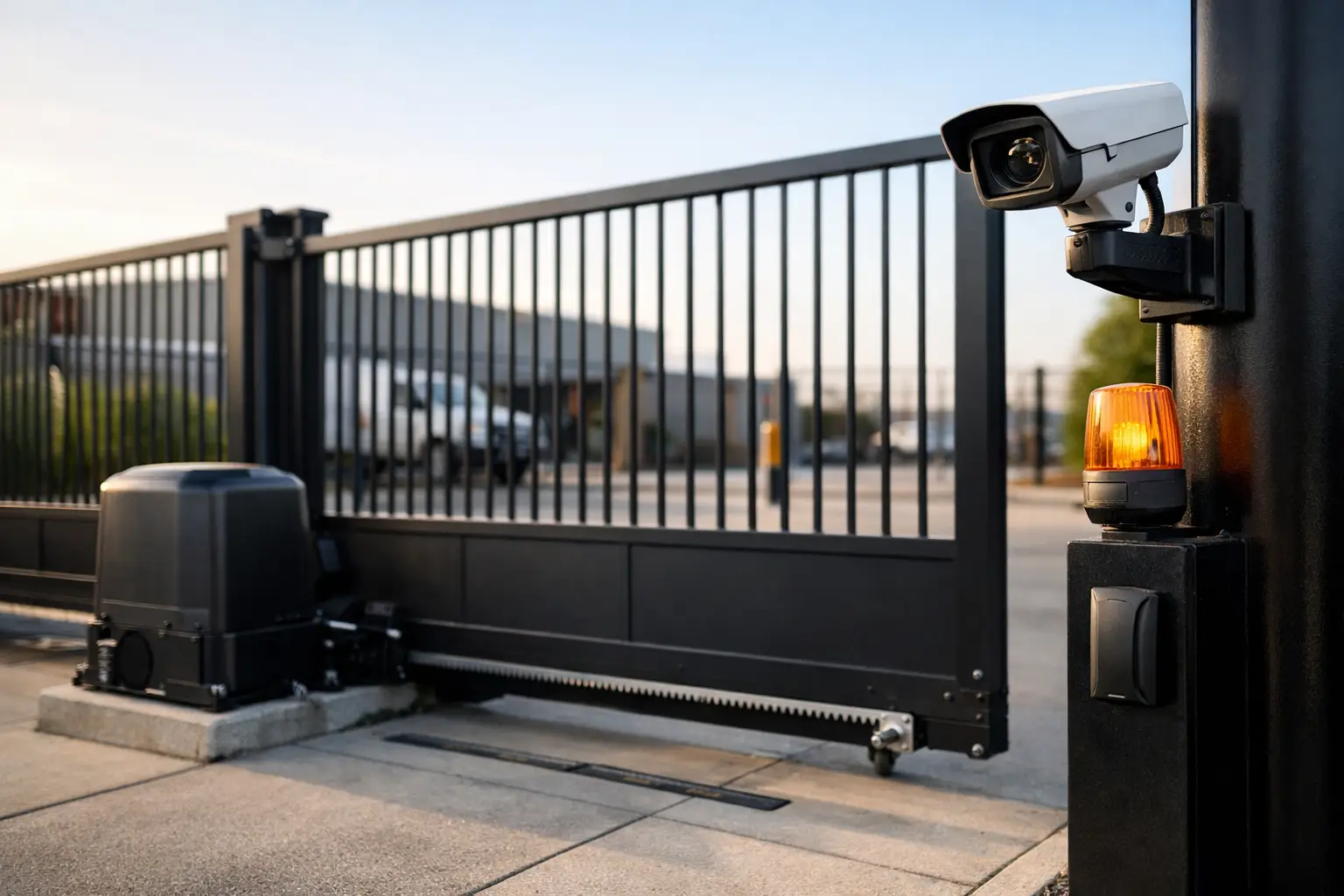
A gate at a commercial entrance has to do more than open and close. It may control staff arrivals at 7am, admit deliveries throughout the day and secure vehicles, equipment or stock after hours. Commercial automatic gate systems are designed around that daily reality, giving site operators better control over access without creating unnecessary delays for legitimate visitors.
For warehouses, yards, offices, farms, managed estates and industrial premises, the right system is usually a balance of security, safety, traffic flow and long-term reliability. The best answer is rarely the most expensive gate or the most complicated access control. It is a properly specified installation that suits the site, the people using it and the way it operates.
Start with the way your site actually works
A commercial gate system should be planned from the traffic pattern backwards. Consider who needs entry, when they need it and what type of vehicle uses the entrance. A small office car park with a predictable number of staff has different requirements from a busy trade yard receiving vans, lorries and contractors throughout the day.
The number of daily opening cycles matters. Gate motors are rated for different levels of use, and a domestic-duty operator may not be suitable for an entrance that opens repeatedly during working hours. Choosing equipment with the correct duty rating helps avoid premature wear, overheating and inconvenient downtime.
The available space also shapes the design. Swing gates need clear space to open safely into the property. Sliding gates are often the practical choice where space behind the entrance is limited or where a long, heavy gate leaf is required. They can also work well on busy commercial sites, although the run-back area must be kept clear and the ground prepared correctly.
A site survey should identify slopes, drainage, ground conditions, existing power supplies and the position of pedestrian routes. These details affect the cost and reliability of an installation far more than gate style alone. A gate that looks right on a plan can become difficult to use if it opens across a steep gradient or conflicts with a staff walkway.
Choosing commercial automatic gate systems
Most commercial automatic gate systems use either swing or sliding gate automation. Both can provide secure, controlled entry when specified and installed correctly.
Swing gates suit many business entrances, private estates and office sites. Above-ground motors are visible and accessible for servicing, while underground automation offers a cleaner appearance and can be a good option where the gate design or frontage calls for a less obvious installation. Underground systems need careful drainage and quality groundwork, particularly in the South of England where prolonged wet weather can expose poor preparation.
Sliding gates are a strong option for entrances with frequent traffic, limited swing space or wide openings. Cantilever gates, which travel above the ground without a track across the opening, can be particularly useful where loose gravel, uneven surfaces or regular vehicle movements would make a tracked gate less practical. They need additional space beside the entrance and a suitably engineered gate structure, so they are not the right answer for every location.
The gate itself must be capable of automation. A motor cannot compensate for a poorly built, misaligned or excessively heavy gate. Hinges, posts, rollers, foundations and the gate frame all need to be assessed before work begins. In commercial settings, investing in sound mechanical preparation protects the automation and reduces future maintenance requirements.
Access control should fit the people using it
Access control is where a commercial entrance becomes genuinely useful. A keypad may suit staff, regular contractors or tenants who need independent access. Key fobs, proximity readers and vehicle tags can be convenient where entry needs to be quick and traceable. Intercom systems allow reception, security staff or a site manager to verify visitors before releasing the gate.
For vehicle-led sites, ground loops are often a sensible addition. These detect a vehicle at the entrance or exit and can be configured to prevent a gate closing on a vehicle. They can also provide automatic exit operation where that is appropriate for the site. The setting and positioning of loops should be considered carefully, particularly where large vehicles or articulated lorries use the entrance.
Remote opening is useful, but it should not be treated as the only access method. Commercial sites benefit from a clear plan for lost fobs, departing employees, delivery drivers and emergency access. A system with several controlled ways to enter is often more practical than relying on one device or one person holding a remote control.
Safety is part of the installation, not an extra
An automated gate is a moving machine. On a commercial site, where employees, visitors, pedestrians and vehicles may approach it at different times, safety has to be designed into the system from the outset.
Safety devices may include photocells, safety edges, force limitation, warning lights and clearly positioned controls. Their role is to detect an obstruction, prevent contact where possible and ensure the gate responds correctly if something enters its path. The exact arrangement depends on the gate type, its movement, the layout of the entrance and the level of public access.
For example, a sliding gate beside a public footpath needs particular attention to entrapment zones and the possibility of someone reaching through or around the gate. A swing gate that opens into a private yard must still account for vehicles stopping in its travel path. Pedestrian access should be considered separately wherever possible, rather than expecting people to walk through the vehicle entrance.
A professional installer will assess foreseeable risks and select appropriate safeguards as part of the design. This is not an area for guesswork or a simple motor replacement. The installation should be commissioned properly, with safety functions tested before handover and guidance provided on normal operation and emergency release.
Power, controls and resilience
Commercial gate automation relies on electrical work being planned to the same standard as the mechanical installation. Cabling needs suitable protection, controls need to be positioned sensibly and external equipment must be appropriate for its environment. A tidy installation also makes fault-finding and future servicing much easier.
Power cuts are worth discussing before installation. Gates normally include a manual release so they can be operated when mains power is unavailable, but the people responsible for the site need to know how to use it safely. Battery back-up can be appropriate for some entrances, especially where continuous access is essential, though it should be sized around expected use rather than assumed to run a busy gate indefinitely.
Intercoms, keypads and access readers should be installed where drivers and visitors can reach them without awkward manoeuvring. On commercial sites, poor positioning can quickly lead to damaged posts, blocked entrances and frustrated drivers. A little planning at survey stage makes daily use safer and more efficient.
Maintenance protects security and uptime
Commercial gates are exposed to weather, dirt, repeated use and occasional accidental impact. Regular maintenance is not simply about keeping the gate looking presentable. It helps identify worn rollers, loose fixings, damaged safety devices, drainage issues and changes to the gate’s movement before they become a failure or safety concern.
The service interval depends on the gate type, environment and number of cycles. A lightly used office gate may need less attention than a busy industrial entrance, while a coastal or exposed location can place extra demands on metalwork and electrical components. Site managers should arrange inspections based on actual use and keep any damage or unusual operation under review.
Staff should also know the basics: do not force a gate, do not bypass safety equipment, keep the travel area clear and report slow movement, unusual noises or intermittent operation promptly. Small issues are usually simpler to resolve before they stop access to the site altogether.
A considered installation gives you control
A commercial gate is a visible part of your premises, but its real value is in the control it provides every working day. It can reduce unauthorised vehicle access, give staff a more convenient arrival point and help site operators manage visitors with greater confidence.
Crabtree Electrical Gates provides specialist gate automation and access control installations for commercial customers across Dorset and the wider South of England. The right starting point is a site-specific conversation about gate layout, traffic, safety requirements and the level of access control you need. A proper survey will give you a clearer route to an entrance system that works reliably for your site, not just on installation day but for the years ahead.
0 Comments