
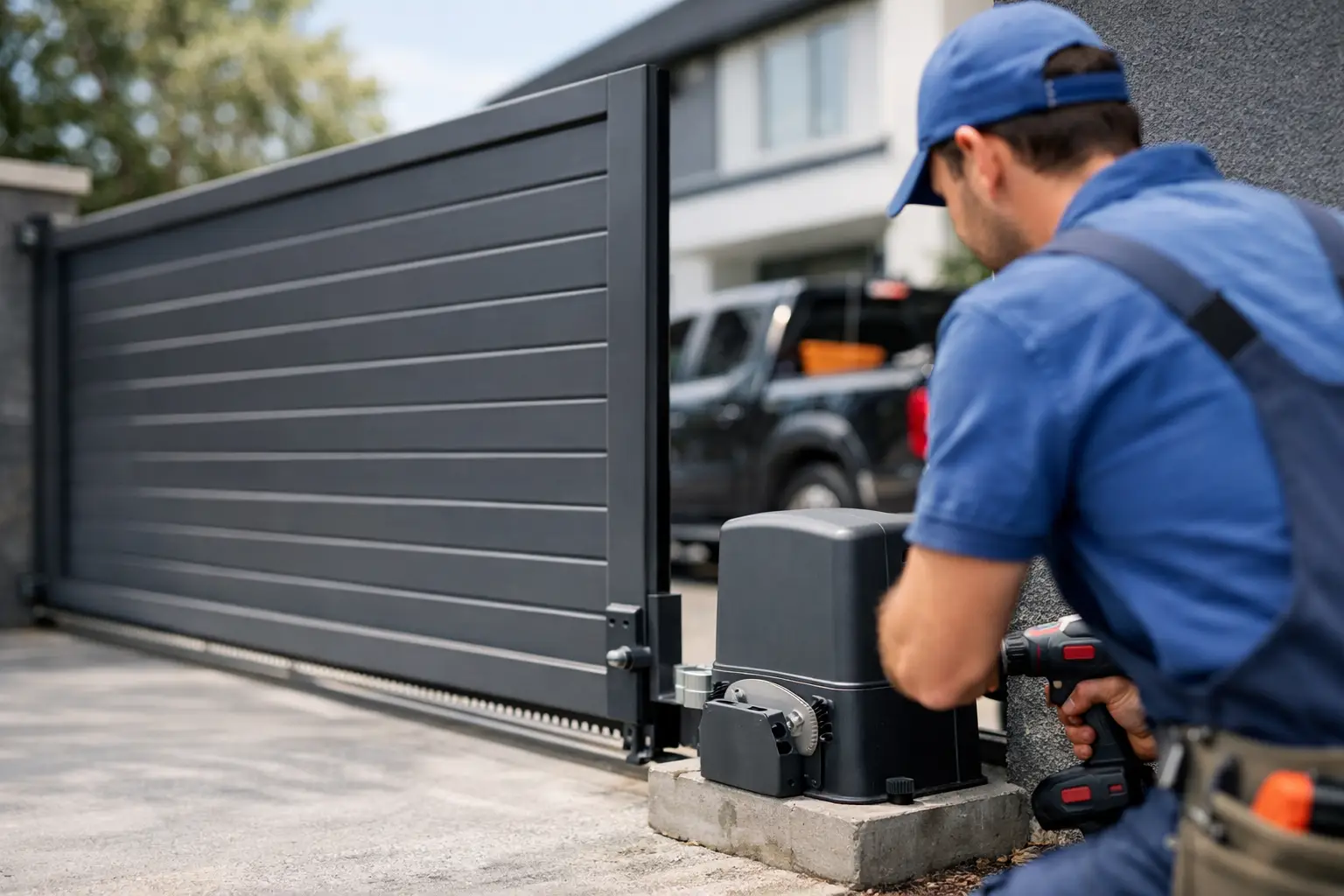
A sliding gate has to do more than look smart at the entrance to your property. It must move reliably in poor weather, stop safely when required, control access properly and suit the way people use the site. Choosing the right sliding gate installation company is therefore as much about electrical competence and planning as it is about the gate itself.
For a private driveway, the priority may be convenient access and a cleaner frontage. For a commercial yard, farm, development or managed estate, the focus is often security, traffic flow and dependable operation throughout the day. In either case, an installation should be designed around the property rather than fitted as a one-size-fits-all package.
Why a Sliding Gate Needs Specialist Installation
Sliding gates are a practical choice where there is limited room behind the entrance for gates to swing open. Rather than opening into the driveway or public highway, the gate travels sideways along a track or cantilever system. This makes it particularly useful for sloping driveways, busy entrances and locations where a wide opening is needed.
The gate leaf, supporting structure, motor, foundations, safety devices and controls all need to work together. A gate that is too heavy for the chosen motor, poorly aligned on its track or supplied from an unsuitable electrical connection will not provide the reliability expected from an automated entrance.
This is why electrical knowledge matters. Gate automation requires correctly specified power supplies, protected cabling, safe isolation and suitable controls. Intercoms, keypads, vehicle loops, remote controls and safety photocells must also be installed and tested as part of a complete system. A specialist installer will assess these elements before recommending equipment, rather than treating automation as an add-on once the gate is already in place.
What a Sliding Gate Installation Company Should Assess
A proper site visit should establish how the entrance works now and how it needs to work after installation. The available run-back space is a starting point. A sliding gate needs sufficient clear space to travel when open, and that space must remain free from obstructions such as walls, planting, parked vehicles or changes in ground level.
Ground conditions are equally important. Traditional tracked gates need a well-prepared, level track area, while cantilever sliding gates are supported above the ground and can be better suited to uneven surfaces, gravel approaches or entrances where debris may affect a track. Neither option is automatically best. The right choice depends on the location, gate size, usage and budget.
The installer should also consider the width and height of the opening, the material and weight of the gate, wind exposure and the frequency of use. A gate used by a household a few times a day has different demands from one serving a commercial site with regular vehicle movements. Choosing a motor purely on price can lead to slow operation, early wear and unnecessary call-outs.
Power is another area where early planning pays off. Some entrances are a long distance from the main building, so cable routes, trenching, protection and connection points need to be agreed before works begin. A clear plan avoids unsightly surface cables and prevents last-minute compromises that affect both appearance and reliability.
Safety Is Part of the Installation, Not an Extra
An automated sliding gate is a moving machine. It must be installed with the appropriate safety measures for its setting and use. This includes identifying pinch points, crushing zones and areas where people could be present while the gate moves.
Safety photocells can detect obstructions across the opening, while safety edges help the system respond if contact is made. Correct force settings, emergency release arrangements and clear access controls also form part of a safe installation. For shared entrances and commercial locations, the assessment must take particular account of pedestrians, visitors, delivery drivers and staff who may not be familiar with the site.
A professional installation is commissioned and tested before handover. Customers should be shown how to operate the system, use the manual release in the event of a power failure and report any change in operation. Safety equipment should never be omitted simply to reduce the initial cost of a project.
Access Control Should Match the Way You Use the Property
The most suitable gate control is not always a remote handset. Many homeowners want an intercom system that lets them speak to callers before granting access. Video options can provide an additional level of reassurance where the entrance is out of sight from the house.
For commercial sites, keypads, proximity fobs, timed access settings and vehicle detection loops can make entry easier to manage. A ground loop can open the gate automatically for authorised vehicles leaving a site, reducing the need for drivers to use a keypad or remote. Estate managers may need different levels of access for residents, contractors and service vehicles.
It is worth discussing everyday use at the quotation stage. Think about deliveries, visitors, refuse collections, gardeners, staff arrivals and emergency access. The best system is one that remains straightforward for legitimate users while giving the property owner proper control over entry.
Questions to Ask Before You Accept a Quote
Price is important, but it should not be the only basis for selecting a sliding gate installation company. A detailed quotation should make clear what is included, from groundwork and cabling through to the automation equipment, safety devices, access control and commissioning.
Before proceeding, ask whether the proposed system is suitable for the gate weight and expected usage. Confirm how the power supply will be installed, what safety features are included and whether the installer will explain the operation of the system at handover. It is also sensible to establish what workmanship guarantee is offered and whether the business is properly insured.
You should be wary of estimates that describe only a motor and a gate without addressing foundations, track or cantilever support, safety equipment and controls. These are not minor details. They are the parts of the installation that determine whether the entrance works well over time.
For larger or more complex sites, the quotation process may involve more than one visit or discussion. This is usually a positive sign. A commercial entrance with HGV traffic, pedestrian routes and multiple access requirements needs more thought than a standard private driveway.
Installation Day and What Happens Afterwards
The length of a sliding gate installation depends on the groundwork, electrical route, gate type and access control specification. Some projects require excavation and concrete works before the automation can be fitted. Others involve replacing or automating an existing gate, provided the structure is suitable and in good condition.
A competent installer will explain the expected sequence of works and any preparation needed from the customer. This may include keeping the entrance clear, confirming cable routes or arranging temporary access while work is underway. Good communication matters because the gate entrance is often the only practical way into a home, business or managed site.
Once operational, a sliding gate benefits from regular checks. Tracks should be kept clear where fitted, moving parts should be inspected, and any unusual noise, slower movement or damage should be addressed promptly. Safety devices need to remain clean, aligned and functional. Routine servicing helps identify wear before it becomes an access problem.
Crabtree Electrical Gates provides specialist electric gate automation installations across Dorset and the South of England, combining practical gate knowledge with the electrical expertise needed for sliding gates, intercoms, keypads and vehicle access controls. Every recommendation should start with the entrance in front of you, the people using it and the standard of reliability you expect from it.
A well-planned sliding gate is an investment in controlled access, security and everyday convenience. Take the time to discuss the site properly, ask clear questions and choose an installer who is prepared to stand behind the work long after the gate first opens.
0 Comments