
A commercial gate that stops working at the start of a shift can quickly create delays, security concerns and frustrated visitors. Choosing commercial gate operators is therefore about more than selecting a motor powerful enough to move the gate. The system must suit how the site operates, the traffic it receives and the level of safety expected from a professional installation.
For warehouses, business parks, farms, schools, private estates and managed premises, the right operator provides controlled access without becoming another maintenance problem. A proper site assessment should come before any recommendation.
Start with how the gate will be used
The first question is not whether a sliding or swing operator looks better. It is how many times the gate will open and close each day, and at what times those movements happen. A gate used by a handful of staff during office hours places very different demands on an operator than an entrance serving deliveries, contractors and shift workers throughout the day.
This is where duty rating matters. Commercial operators are designed for more frequent use than many domestic systems, but there are still significant differences between models. An operator that is adequate for 20 cycles a day may overheat, wear prematurely or become unreliable when asked to complete several hundred cycles.
Consider normal use as well as busy periods. Morning arrivals, evening departures and scheduled deliveries can create concentrated demand. If vehicles queue at the entrance, the gate should be able to operate consistently without long pauses or repeated resets. Choosing extra capacity can be sensible where a site is growing, even if current traffic is relatively modest.
The gate itself also affects the choice. Weight, length, construction and exposure to wind all influence the operator required. A solid timber swing gate may look excellent but catches more wind than an open-bar metal gate. A long sliding gate needs suitable track, ground preparation and guidance, as well as an operator rated for its actual weight rather than an estimate.
Choosing commercial gate operators for the gate type
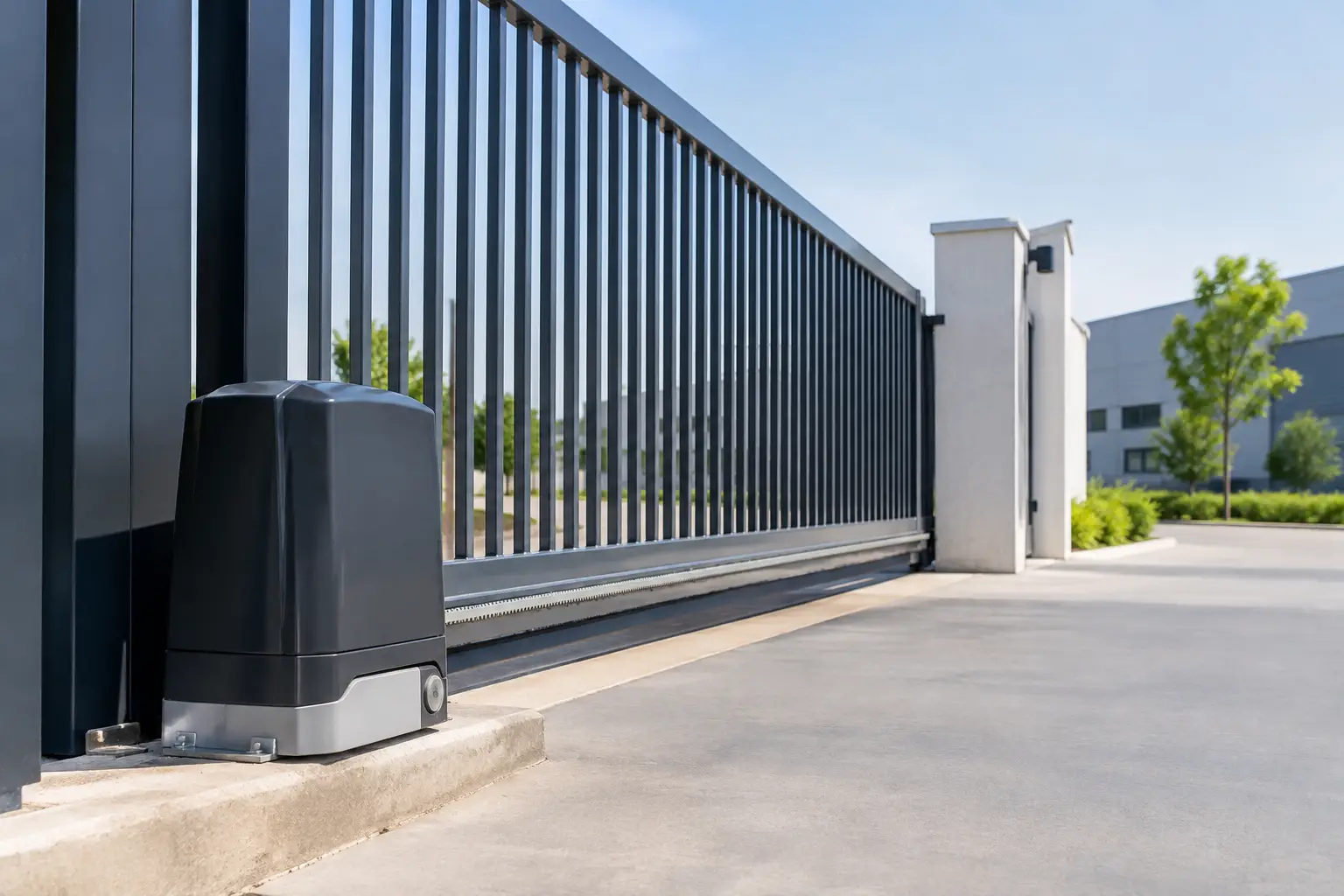
Sliding gates are often a practical commercial choice where there is limited room behind the entrance or where a wide opening is needed. A sliding operator can handle substantial gates when the foundation, track and running gear are correctly installed. However, the gate must move freely by hand before automation is fitted. A powerful motor should not be used to compensate for poor alignment, worn rollers or an uneven track.
Swing gates can be an effective solution where there is sufficient clear space for the leaves to open safely. Above-ground ram or articulated arm systems are commonly used, while underground operators offer a more discreet finish. Underground systems can suit prestige sites and entrances where appearance matters, but they require careful drainage and access for future servicing.
The best option depends on the entrance layout. Slopes, cambers, drainage channels, boundary lines and vehicle turning space all need consideration. For example, a swing gate opening towards a public highway is generally unsuitable, while a sliding gate may need more clear run-back space than is available. Measuring the opening alone is not enough.
Put safety before speed and convenience
Commercial automated gates are powerful moving machines. Safety devices should be specified around the real risks at the entrance, not added as an afterthought. Pedestrians, cyclists, visitors unfamiliar with the site and delivery drivers all behave differently around gates.
A well-designed installation may include safety photocells, pressure-sensitive edges, obstruction detection and clearly positioned controls. The exact arrangement depends on the gate design and the risks identified during the survey. Safety edges are particularly relevant where there are crushing or shearing points that cannot be fully protected by the gate’s movement controls alone.
The gate should also have an emergency release method in case of power failure, along with a clear plan for authorised staff to use it. Where continuous operation is essential, a battery backup or an alternative access arrangement may be appropriate. It depends on the consequences of being unable to enter or leave the site.
Automation should be installed, tested and handed over in line with applicable safety requirements. A professional installer will assess the gate and surrounding area, fit the necessary protection measures, test the system and explain its safe operation. This is especially important when automating an existing manual gate, as the gate structure may need alteration before it is suitable for powered use.
Match access control to the people using the site
The operator opens the gate, but the access control system determines who can use it and when. A basic keypad can work well for a small yard or private commercial entrance, particularly where access codes can be managed carefully. For sites with regular staff, key fobs, proximity tags or mobile credentials can provide more convenient entry and make it easier to remove access when someone leaves.
Audio or video intercoms are useful where visitors need to speak to someone before entry is granted. They are commonly specified for offices, managed estates and sites with a reception point. A video system can offer additional reassurance, but it should be positioned so callers are clearly visible in all expected lighting conditions.
For vehicle-led entrances, ground loops are often worth considering. They detect a vehicle at the gate and can prevent the gate from closing onto a vehicle in the opening. They can also be used to trigger exit automatically for authorised traffic patterns. Ground loops need to be planned before surfacing work is completed, which is one reason the electrical and civil elements of a project should be considered together.
Do not overlook operational details. Will delivery drivers need a temporary method of entry? Does the gate need timed opening for staff arrivals? Should visitors be directed to a separate pedestrian entrance? A controlled gate should make the site easier to manage, not force staff to spend the day dealing with avoidable access calls.
Plan the electrical work properly
Commercial gate automation needs a suitable power supply, correctly protected cabling and control equipment installed in an appropriate location. The route from the consumer unit to the entrance can be a major part of the project, especially on larger sites or long driveways.
It is worth discussing cable routes, trenching, drainage and reinstatement at the survey stage. Leaving these matters until the gate is ready to install can lead to unnecessary disruption and additional cost. If intercoms, lighting, cameras or access controls are planned for later, installing suitable containment and cable routes now may save significant work in the future.
The control cabinet should be secure but accessible for servicing. Equipment placed where it is exposed to standing water, vehicle impact or unauthorised interference is likely to cause problems over time. Surge protection may also be appropriate in exposed locations or where electrical supply conditions make sensitive equipment vulnerable.
Think beyond installation day
A lower initial price is not always the lower-cost choice. Commercial entrances need components that are available, serviceable and suitable for the expected workload. Before proceeding, ask how the system will be maintained, what happens if there is a fault and whether replacement parts can be obtained without a lengthy delay.
Routine servicing helps identify loose fixings, worn running gear, misaligned safety devices and drainage issues before they affect operation. Frequency depends on use, environment and the gate type. A busy logistics entrance generally needs more attention than a lightly used private estate gate.
Training also matters. Site managers and nominated staff should understand normal operation, manual release procedures and what to do if the gate does not behave as expected. They should not attempt to bypass safety devices or force a gate that has stopped. Reporting faults early protects both the equipment and the people using the entrance.
Choose an installer who understands the whole system
Commercial gate projects involve mechanical work, electrical installation, automation controls and safety design. These elements need to work together. Selecting an installer solely on the cost of the operator can result in a system that is poorly matched to the gate or difficult to support later.
Look for a specialist that can survey the site, explain the options in plain language and provide a clear scope of work. Insurance, guaranteed workmanship and a defined approach to testing and handover are practical signs of a professional service. Crabtree Electrical Gates provides tailored gate automation and access control installations for commercial sites across Dorset and the South of England, with the electrical knowledge needed to plan the full installation properly.
A useful first step is to record how the entrance is used over a typical week, including peak traffic, visitor access, vehicle types and any known safety concerns. With that information, a site survey can turn a broad requirement into an operator, gate and access-control system that remains dependable long after the installation is complete.
0 Comments