
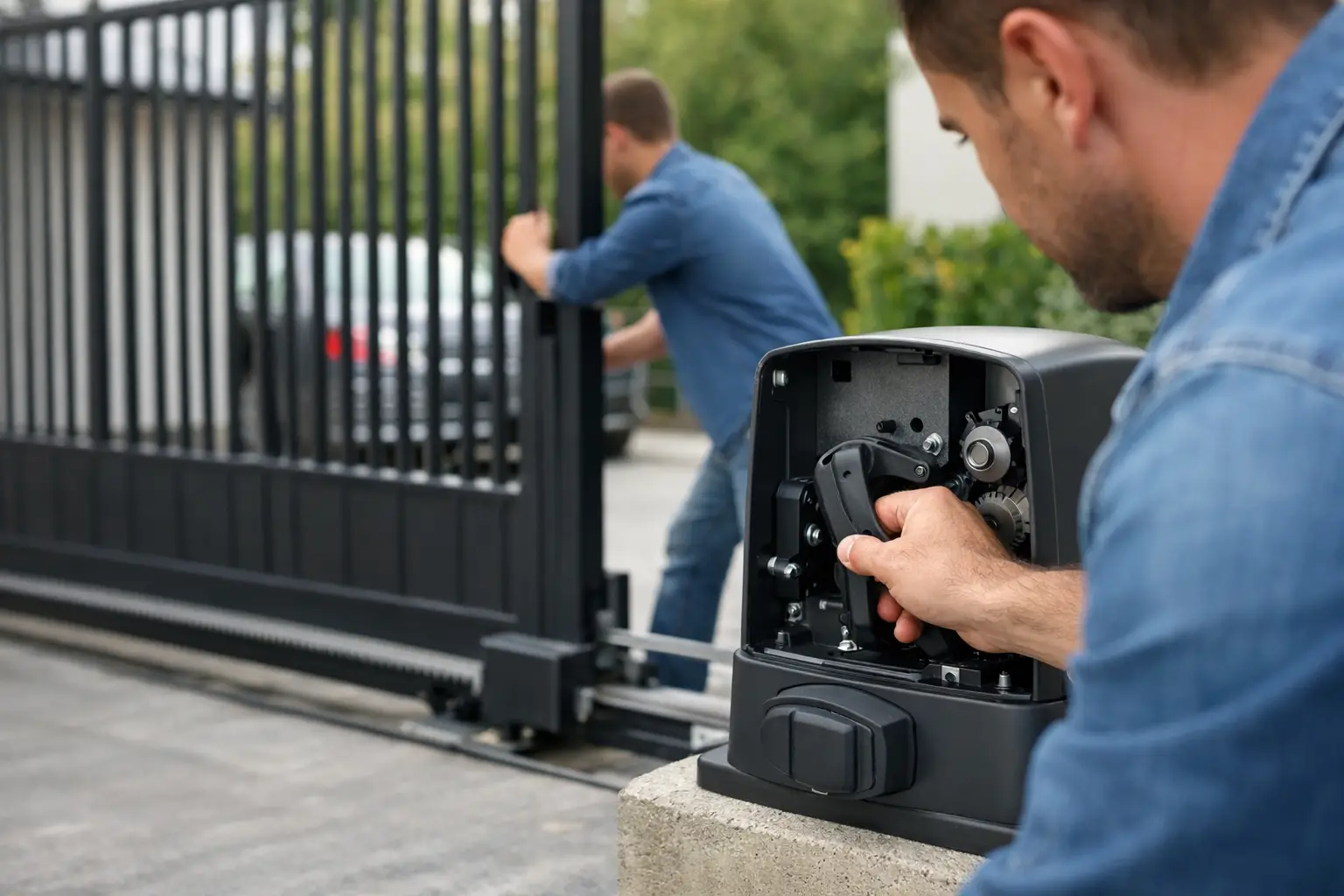
A remote stops working, the mains supply goes off, or a gate pauses halfway through a cycle. In that moment, the question is simple: can electric gates open manually? In most professionally installed systems, yes. Electric gates are normally fitted with a manual release so they can be operated when the motor cannot. The key is knowing where it is, using it correctly and not forcing a gate that may have a mechanical or safety fault.
For a home driveway, manual operation can mean getting a car out during a power cut. On a commercial site, it can be essential for maintaining safe access for staff, visitors and emergency services. It is therefore not an optional extra to understand after installation. It is part of using an automated gate safely.
Can electric gates open manually during a power cut?
Yes, provided the gate has been released from its motor or gearbox correctly. Automation systems are designed so that a loss of power does not leave the entrance permanently inaccessible. A release mechanism disconnects the drive motor, allowing the gate leaf or sliding gate to move by hand.
The exact process depends on the type of automation installed. Most systems use a dedicated release key, often supplied with the gate handover information. On a swing gate, the release is commonly located on or beneath the actuator. Underground motors usually have a release point near the hinge or in the motor housing below ground level. On a sliding gate, it is generally found on the motor unit beside the gate track.
Once released, the gate should move freely enough to be operated with reasonable, controlled effort. It may be heavier than expected, particularly with timber, steel or wide driveway gates, so take care in windy conditions and keep people clear of the moving gate.
A gate that will not move after release should not be pushed, pulled or levered into action. The problem may be a damaged hinge, obstructed track, failed roller, seized component or gate leaf that has dropped out of alignment. Forcing it can cause further damage and create a safety risk.
How manual release works on different gate types
Swing gates
Automated swing gates use arm motors, ram motors or underground operators. The manual release disengages the motor so the gate can swing on its hinges as a standard manual gate would.
Before opening, check the full swing area for vehicles, bins, loose gravel, overgrown planting or anything else that may restrict movement. If the gate opens onto a road or public footpath, hold it securely throughout operation. Never leave a manually released gate where wind or gravity could cause it to swing unexpectedly.
With double-leaf gates, it is often necessary to release both motors. Open each leaf steadily and secure it in the open position if the site requires access for a period of time.
Sliding gates
A sliding gate normally runs on wheels and a track, or on a cantilever system above the ground. Releasing the motor allows the gate to travel independently of the powered drive gear.
Check the track carefully before moving it. Stones, ice, leaves and other debris can prevent smooth movement. A sliding gate should travel evenly. If it feels tight, catches at one point or sits visibly out of level, stop and arrange an inspection rather than applying more force.
Because sliding gates can be long and heavy, manual operation is often a two-person task on larger residential or commercial installations. Keep hands away from the rack, rollers and closing posts while moving the gate.
Find the release key before you need it
The most common issue during a power failure is not the gate itself. It is that the homeowner, estate manager or facilities team cannot locate the manual release key. It may have been put in a drawer after installation, left with a previous owner or confused with another key.
Keep the release key somewhere secure but accessible to the people responsible for the property. It should not be left attached to the gate or stored in an obvious external location, as it allows the automation to be disengaged. For managed premises, it is sensible to include the release procedure in the site access plan and make sure relevant staff know who holds the key.
It is also worth checking the process before an emergency occurs. This does not mean repeatedly disengaging the system without reason. It means asking the installer to demonstrate the release at handover, retaining the instructions and knowing which gate components must be secured after manual use.
Do not confuse a power problem with a gate fault
A gate that does not respond to a remote is not always affected by a mains outage. The cause could be a flat remote battery, a tripped circuit breaker, an isolation switch turned off, a damaged photocell, an obstacle in the gate path or an issue with the control board.
Start with straightforward checks. Confirm whether other electrical equipment at the property has power. Check whether the gate control panel shows any indication lights or fault messages. Make sure there is no obstruction across the entrance and inspect the safety photocells for dirt, cobwebs or misalignment.
If the system has power but the gate will not operate, use the manual release only if access is needed and it is safe to do so. Releasing it may allow the gate to be opened, but it does not correct the underlying issue. Do not repeatedly try the remote or reset electrical components without understanding the fault, particularly on a commercial site where access control and safety devices may be connected to the same system.
What to do after opening an electric gate manually
Once the immediate access issue is resolved, consider how the entrance will remain secure. A gate in manual mode may be easier to open than usual, and it may not be held shut by the automation. If it is safe and practical, close and secure the gate using its manual latch, drop bolt or other physical fixing.
When the power returns, do not assume the gate can simply be re-engaged and used immediately. Move the gate to the position required by the manufacturer, reconnect the release mechanism fully and test the system while watching it from a safe distance. The gate should complete a normal open and close cycle without unusual noises, juddering or hesitation.
If the gate has been manually moved a significant distance, some systems may need their travel positions checked or reset. This is particularly relevant where limit switches, encoder settings or safety monitoring have been affected. If anything appears wrong, leave the system out of service and call a gate automation specialist.
Safety matters more than restoring convenience
Electric gates are heavy moving machinery, not simply a larger version of a domestic door. Their safety systems – including photocells, safety edges, force limitation and correctly set controls – are there to reduce the risk of injury. Manual release temporarily changes how the gate behaves, so the person operating it takes on more responsibility for controlling its movement.
Do not allow children to operate a released gate. Keep pedestrians, pets and vehicles clear of pinch points and the gate travel area. Never attempt to release or move a gate if it is visibly damaged, leaning, hanging from a hinge, off its track or trapped against an obstruction.
For commercial and shared-access properties, a fault should be recorded and addressed promptly. A manually released gate may affect site security, delivery access and emergency arrangements. It is better to put a clear temporary plan in place than leave people guessing whether the entrance is safe to use.
When a battery backup is worth considering
If a property regularly experiences power cuts, or if uninterrupted access is essential, a battery backup can be a useful addition. It allows the automation to continue operating for a limited number of cycles when the mains supply fails. The available runtime depends on the motor type, gate weight, frequency of use and condition of the batteries.
Battery backup is particularly useful for busy entrances, rural properties and sites where manual opening would be difficult or unsafe. It does not remove the need for a manual release, however. Batteries eventually discharge, and every electric gate should still have a safe means of manual operation.
A properly specified installation considers more than opening and closing the gate. It considers gate weight, wind loading, usage levels, access control, safety devices and what happens when power is unavailable. Crabtree Electrical Gates can advise on practical automation and backup options for residential and commercial entrances across Dorset and the South of England.
If you are unsure whether your gate can be released manually, do not wait for the next power cut to find out. Locate the release key, check the handover information and arrange professional help if the mechanism is missing, stiff or unclear. A gate should provide dependable access and security, even when the electrics need attention.
0 Comments