
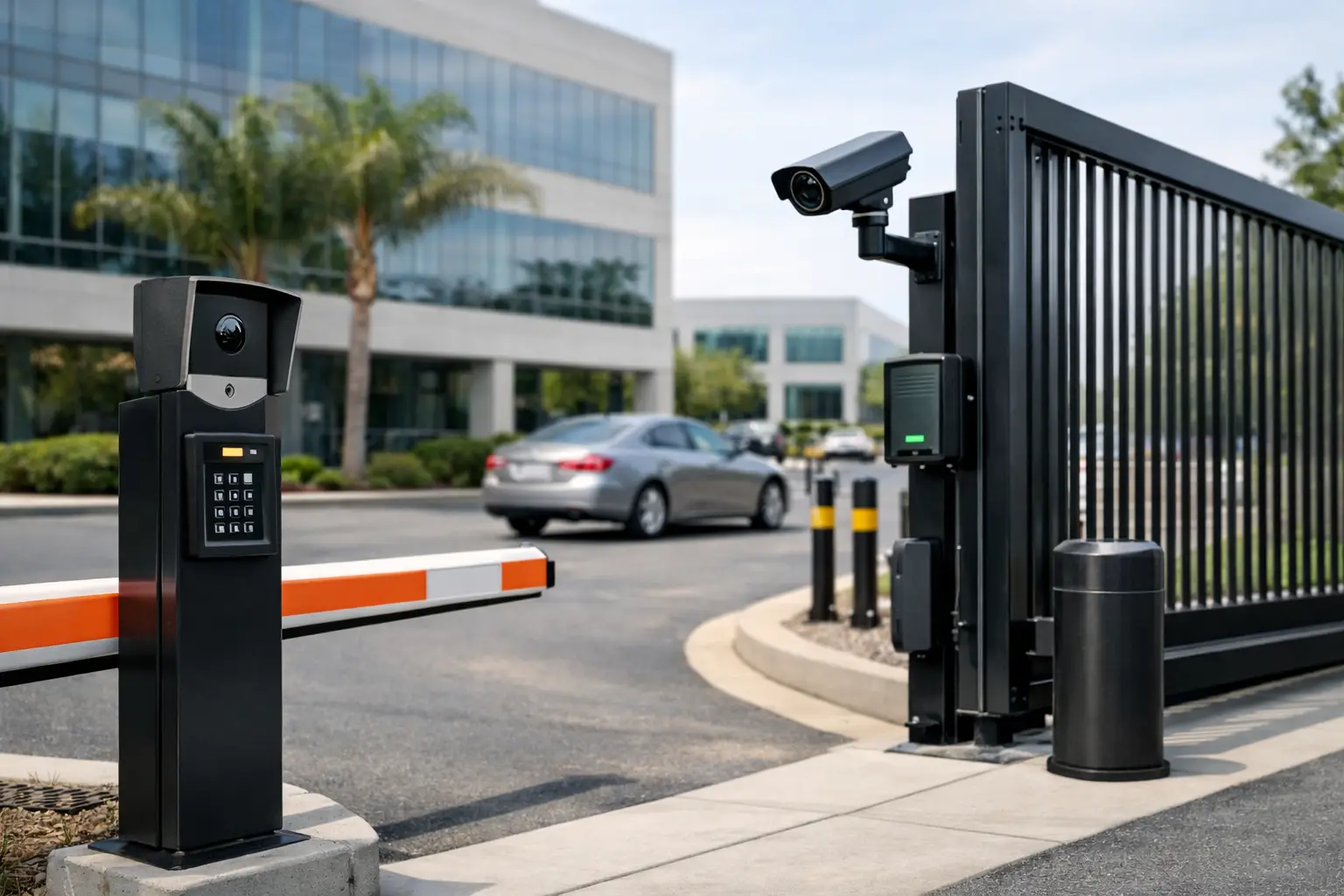
A commercial gate is only as useful as the way people are allowed through it. A busy trade yard, managed estate or private business premises needs an entry system that admits authorised vehicles quickly, records or controls access where needed, and does not leave staff dealing with avoidable gate issues. The best commercial gate entry systems are not necessarily the most complicated. They are the systems matched properly to the site, its users and its daily traffic.
For some businesses, a keypad and well-designed sliding gate provide exactly the right level of control. Others need video intercoms, fob access, automatic number plate recognition or ground loops to keep traffic moving without compromising security. The right choice starts with how the entrance is actually used, not with a catalogue of features.
What makes a commercial gate entry system suitable?
Commercial sites place different demands on gate automation than a typical private driveway. There may be delivery drivers arriving throughout the day, staff working shifts, visitors needing approval, HGVs requiring sufficient opening space, or several tenants using one entrance. The entry system must cope with this without creating queues, encouraging unsafe workarounds or leaving the gate open unnecessarily.
Reliability matters just as much as access control. A gate that takes too long to operate can hold up a site. A poorly planned system can leave users stranded during a power cut or make it difficult for emergency services to enter. The best installation considers the gate structure, operator type, electrical supply, cable routes, safety equipment and method of release together.
A sliding gate often suits a high-use commercial entrance because it can provide a wide clear opening and works well with ground loops or vehicle detection. Swing gates can be an excellent option where space permits, particularly at offices, estates and lower-traffic premises. The gate style affects which access controls will be practical, but it should never be the only deciding factor.
Best commercial gate entry systems for different sites
Keypad access for straightforward controlled entry
A keypad is a sensible, cost-effective choice for sites where a limited group of people needs regular access. Staff, contractors or residents can be issued a code, removing the need to distribute physical keys. It is particularly useful for small business units, compounds and service yards where visitors do not need to be screened before entering.
The trade-off is code management. Shared codes can be passed on, and a code should be changed when a member of staff or contractor no longer requires access. Keypads work best where there is a clear process for managing users. For higher-security premises, they are often better used alongside another method of access rather than as the only control.
Proximity fobs and cards for managed staff access
Fob or card entry gives site managers more control than a shared keypad code. Individual fobs can be issued to employees and removed from the system if lost or no longer required. This is a practical option for offices, depots, industrial units and managed commercial properties with a regular workforce.
It also keeps entry quick. A driver can present a fob without leaving the vehicle, provided the reader is positioned correctly. When planning the installation, it is worth allowing enough room for a vehicle to pull up safely without obstructing the road or gate travel path. The reader needs to be accessible from the driver’s window, even for larger vehicles.
Audio and video intercoms for visitor control
Intercom entry systems allow a visitor or delivery driver to call a nominated person before the gate opens. Audio intercoms offer a simple, dependable way to verify a caller. Video intercoms add a visual check, which can be valuable for offices, private estates, schools and sites where staff need more confidence about who is requesting entry.
The main consideration is who will answer. A video intercom linked to a staffed reception or site office can work very well. If calls need to be answered remotely, the system needs dependable network coverage and a clear arrangement for who is responsible outside normal hours. A video screen is only useful if someone is available to make a decision.
GSM intercoms for remote site management
GSM intercoms call a mobile telephone when a visitor presses the entry button. An authorised user can then speak to the visitor and open the gate remotely. This makes them useful for unmanned yards, rural premises, small estates and businesses without a permanent reception desk.
They are convenient, but mobile signal must be checked before installation. The system also relies on a managed list of authorised telephone numbers, so it needs occasional administration. For sites with frequent, time-critical deliveries, a GSM intercom is often best paired with a separate method of access for regular drivers and staff.
ANPR for frequent vehicle movements
Automatic number plate recognition, usually called ANPR, opens a gate when it identifies an approved registration number. It is one of the strongest options for sites with regular authorised vehicles, such as staff car parks, depots, gated business parks and fleet operations. Drivers do not need to stop, find a fob or enter a code, which can improve traffic flow at busy times.
ANPR needs careful setup. Number plates must be captured reliably in changing weather, darkness and different approach angles. The approved vehicle list also needs to be kept up to date. It is a valuable tool where convenience and controlled vehicle access are both priorities, but it is not a substitute for good gate safety equipment or a sensible visitor process.
Ground loops and vehicle detection for automatic exit
Ground loops detect a vehicle positioned at the gate. They are commonly used to open a gate automatically on exit, preventing drivers from having to reverse or get out of their vehicle. For busy commercial entrances, they can reduce congestion and minimise damage caused by drivers attempting to tailgate through the entrance.
Loop placement matters. It needs to be planned around the direction of travel, gate position and size of vehicles using the site. A poorly positioned loop may detect vehicles waiting in the wrong area or fail to provide enough time for a longer vehicle to clear the opening. Exit loops are often combined with fobs, keypads or intercoms for controlled entry.
Do not treat safety as an optional extra
Commercial automatic gates need suitable safety measures, selected through a proper assessment of how the gate operates and who may come into contact with it. Depending on the gate and site, this may include photocells, safety edges, force limitation, warning signage, emergency stop controls and protected areas around trapping points.
A gate at a busy workplace has to account for pedestrians as well as vehicles. Staff may cut across the entrance, visitors may not understand the gate’s movement, and delivery drivers may stand in the wrong place while waiting. Separating pedestrian access from vehicle access is often safer and more convenient than asking people to pass through the main automated gate.
Manual release arrangements also deserve attention. In the event of a power failure or fault, authorised people need a safe, understood way to release the gate. For some sites, a backup power solution may be appropriate. The right approach depends on the consequences of the entrance being unavailable and the site’s operational requirements.
Choosing the right level of access control
The best system is usually the simplest one that properly controls the risk. A low-traffic storage yard may only need a keypad for approved users and an intercom for deliveries. A multi-tenant commercial estate may benefit from fobs for tenants, video intercom calls for visitors and automatic exit detection. A depot with a large fleet may justify ANPR to avoid queues at the start and end of each shift.
Before choosing equipment, consider these practical questions: how many users need access, whether users are vehicles or pedestrians, who approves visitors, how often deliveries arrive, and whether the gate is likely to be used outside normal working hours. It is also sensible to think ahead. A system that can accept additional fobs, extra call points or an upgraded access method can be a better long-term investment than one that must be replaced when the site grows.
Electrical infrastructure is equally important. Reliable gate automation depends on correctly installed power supplies, protected cabling and controls that suit the conditions on site. Outdoor equipment must be appropriate for exposure to rain, dirt and regular use. This is where specialist electrical and gate automation knowledge makes a practical difference to long-term reliability.
Installation and aftercare make the difference
Even good equipment can underperform if the gate, automation and access controls are not designed as one system. The approach route, underground services, drainage, gate weight, wind loading and traffic pattern all influence the installation. A commercial entrance should be surveyed rather than specified from photographs alone.
Crabtree Electrical Gates provides bespoke commercial gate automation and integrated access control across Dorset and the South of England. A site visit makes it possible to assess how the entrance is used, identify safety considerations and recommend an entry system that is proportionate to the premises.
Regular servicing is also worthwhile for gates used every day. Operators, hinges, tracks, safety devices and access controls need checking before minor wear becomes a disruptive failure. Clear user guidance helps too, particularly where several staff members, tenants or contractors use the same entrance.
A well-planned commercial entry system should make access feel routine: authorised people get in without delay, visitors have a clear way to request entry, and the gate remains safe and dependable in daily use. Start with the traffic your site has now, allow for the way it may change, and choose an installer who can bring the gate, electrical work and access control together properly.
0 Comments