
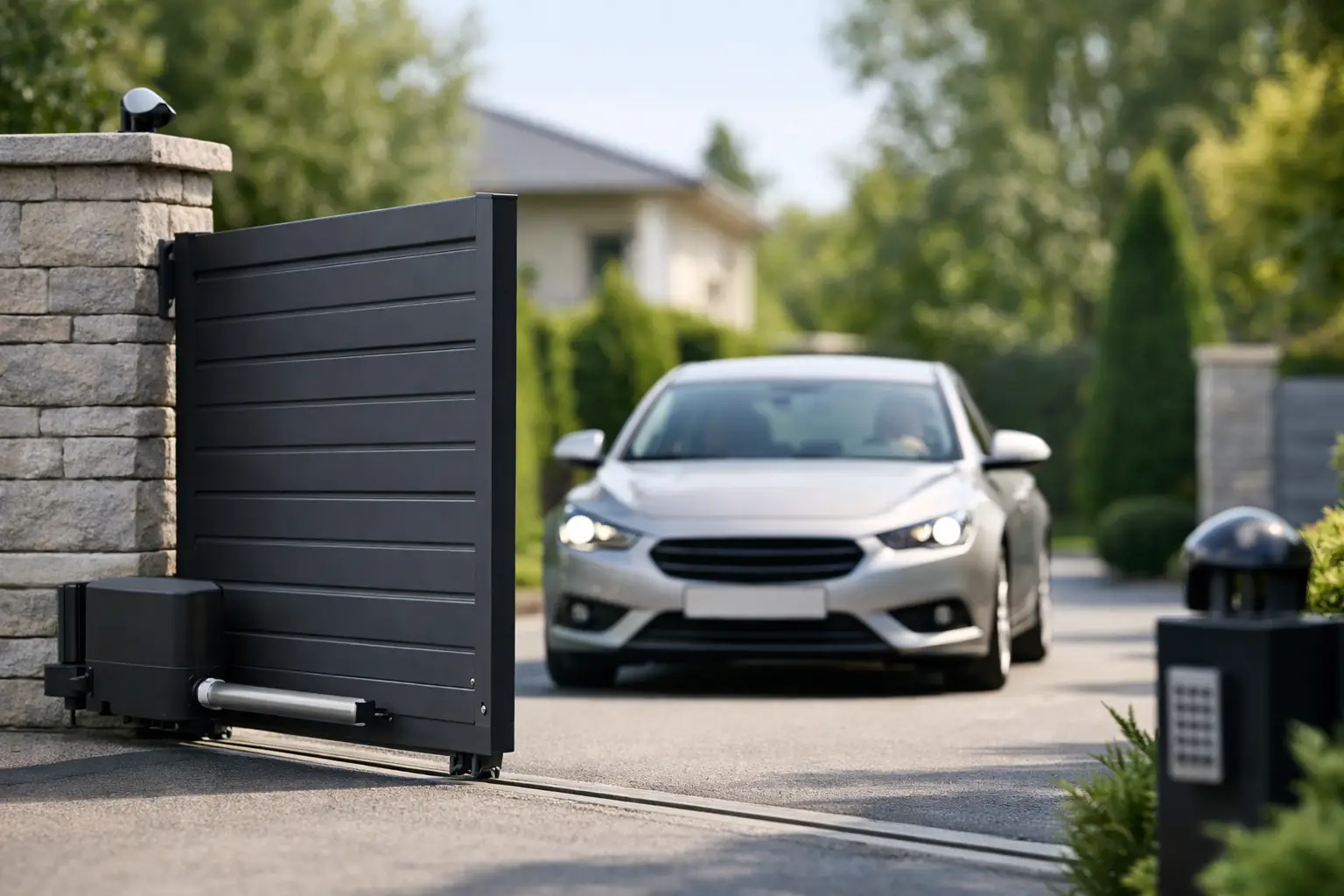
A gate should make arriving home or managing a site easier, not create another daily task. Automatic gates give property owners control over access without leaving a vehicle, while adding a clear physical boundary at the entrance. For homes, estates and commercial premises, the right system can improve convenience, security and presentation – provided it is designed around the site rather than chosen from a catalogue.
What Automatic Gates Can Do for Your Property
An automated gate is more than a gate with a motor attached. It is a complete access system, combining the gate structure, automation equipment, safety devices, electrical supply and method of entry. Each part needs to work properly with the others if the installation is to be dependable over the long term.
For a private driveway, that may mean opening the gate from a handset, keypad or intercom before pulling in. For a commercial yard, it can mean controlling access for staff, visitors, deliveries and authorised vehicles, with equipment selected to cope with more frequent daily use. Estate managers may need several entry methods, clear visitor communication and a system that does not obstruct normal traffic flow.
The benefits are practical. You can avoid getting out of the car in poor weather, manage who enters the property and create a more secure first line of access. Gates can also add kerb appeal, but appearance should never take priority over safe operation and suitable engineering.
Choosing Between Swing and Sliding Automatic Gates
The layout of the entrance usually determines whether a swing or sliding system is the better choice. Both can provide reliable automated access, but they use space very differently.
Swing gate systems
Swing gates open inwards or, in some circumstances, outwards across a clear area. They suit many residential driveways and can be fitted to existing or new gate leaves where the structure, posts and hinges are suitable. Above-ground motors are often visible on the rear of the gate, while underground automation provides a more discreet finish.
Underground systems are popular where the appearance of a traditional timber or metal gate matters. However, they need careful installation below ground, including drainage and access for future servicing. They are not simply a cosmetic upgrade. The ground conditions, gate weight and expected usage all need checking before this option is specified.
Sliding gate systems
Sliding gates run sideways alongside the entrance, making them useful where there is limited space behind the gate or where a sloping drive makes swinging impractical. They can be a sensible option for wider openings and commercial entrances, particularly when there is enough clear run-back space for the gate to travel.
A sliding installation relies on solid foundations, correctly aligned track or cantilever equipment, and a gate structure that is made for the job. It may be more involved than a swing gate installation, but it can offer an effective answer to difficult entrances. The decision depends on the site, not a one-size-fits-all preference.
Start With a Proper Site Survey
The most valuable stage of an automatic gate project happens before any equipment is installed. A proper survey considers the width and gradient of the entrance, the condition of the existing gates and posts, the available electrical supply, drainage, vehicle movements and where visitors will stand while using an intercom or keypad.
Gate weight and wind loading matter too. A large solid gate may look impressive, but it places greater demands on the hinges, structure and motors than an open-bar design. A system that is under-specified can become unreliable, while one that is needlessly oversized may add cost without a useful benefit.
For commercial sites, the survey should also consider the number and type of vehicles using the entrance. Cars, vans, lorries and pedestrians need different clearances and controls. Busy sites may benefit from ground loops that detect a vehicle leaving, helping to avoid unnecessary delays and reducing the temptation for drivers to follow another vehicle through the entrance.
Access Control Should Match How You Use the Gate
The gate motor controls movement. Access control decides who can request entry. Choosing the right method is central to making the system convenient without weakening security.
A simple remote-control handset may be enough for a family home with a small number of regular users. A keypad can give trusted visitors, contractors or staff a code, although codes should be changed when access arrangements change. Intercom systems allow occupants to speak to visitors before releasing the gate, with video options offering an extra level of reassurance where sightlines from the property are limited.
Commercial properties often need more control. This may include keypads for staff, intercoms for deliveries, vehicle detection loops and timed access arrangements. The best approach is usually straightforward: give regular users a simple way in, give visitors a clear way to call, and avoid leaving the gate open because the system is awkward to use.
It is also worth planning for power cuts and emergencies. Gates should have a suitable manual release arrangement, and the people responsible for the property should know how to use it safely. This is particularly relevant for sites that need dependable access outside normal working hours.
Safety Is Part of the Installation, Not an Extra
Automated gates move heavy structures. Safe design, installation and commissioning are therefore essential. Safety devices should be selected according to the gate type, layout and risks at the entrance, rather than added as an afterthought.
Depending on the system, this can include photocells to detect an obstruction, safety edges that respond to contact, warning signage, controlled closing forces and emergency release equipment. The gate must be installed so that people cannot easily become trapped between moving parts, posts, walls or the gate itself. Pedestrian access also needs thought. Where people regularly walk through the entrance, a separate pedestrian gate is often the safer and more convenient option.
A professional installer will test the system when it is commissioned and explain its operation to the customer. This is not a box-ticking exercise. A gate that appears to work normally can still present a risk if its safety measures are poorly positioned, incorrectly set or not maintained.
Electrical Work and Long-Term Reliability
Automation depends on sound electrical installation. Cable routes, weatherproof connections, earthing, control enclosures and protection from damage all influence how well a gate performs over time. Shortcuts may not be obvious on the day of installation, but they can lead to faults, water ingress and difficult repairs later.
Reliability also depends on regular care. Leaves should remain aligned, tracks kept clear, hinges checked and safety devices tested. Trees, gravel, leaves and surface water can interfere with moving parts, especially on sliding systems. A gate that slows, jerks, stops unexpectedly or needs repeated manual assistance should be inspected rather than forced to continue operating.
For sites with frequent use, planned servicing is a sensible investment. It gives the installer an opportunity to check mechanical wear, test safety functions and identify small issues before access is disrupted. The required frequency depends on usage, environment and the system fitted.
A Specialist Installation Gives You Clear Accountability
Gate automation sits between electrical work, mechanical installation and access control. It needs an installer who understands all three, and who can take responsibility for the finished system rather than treating the automation as an add-on.
Crabtree Electrical Gates provides tailored gate automation installations across Dorset and the South of England, with options for swing and sliding gates, underground motors, intercoms, keypads and vehicle detection. An insured specialist with guaranteed workmanship gives you a clear point of contact from the first survey through to handover and aftercare.
Before accepting a quote, ask what is included: groundwork, electrical supply, safety equipment, access controls, commissioning and any alterations needed to the existing gates or entrance. A clear scope helps avoid surprises and makes it easier to compare proposals fairly. The cheapest initial figure is not always the best value if key safety or electrical work has been left out.
A well-planned automatic gate should feel uncomplicated every time it opens. Arrange a site assessment, explain how the entrance is used day to day, and let the installation be designed around the property, the people using it and the level of control you need.
0 Comments