
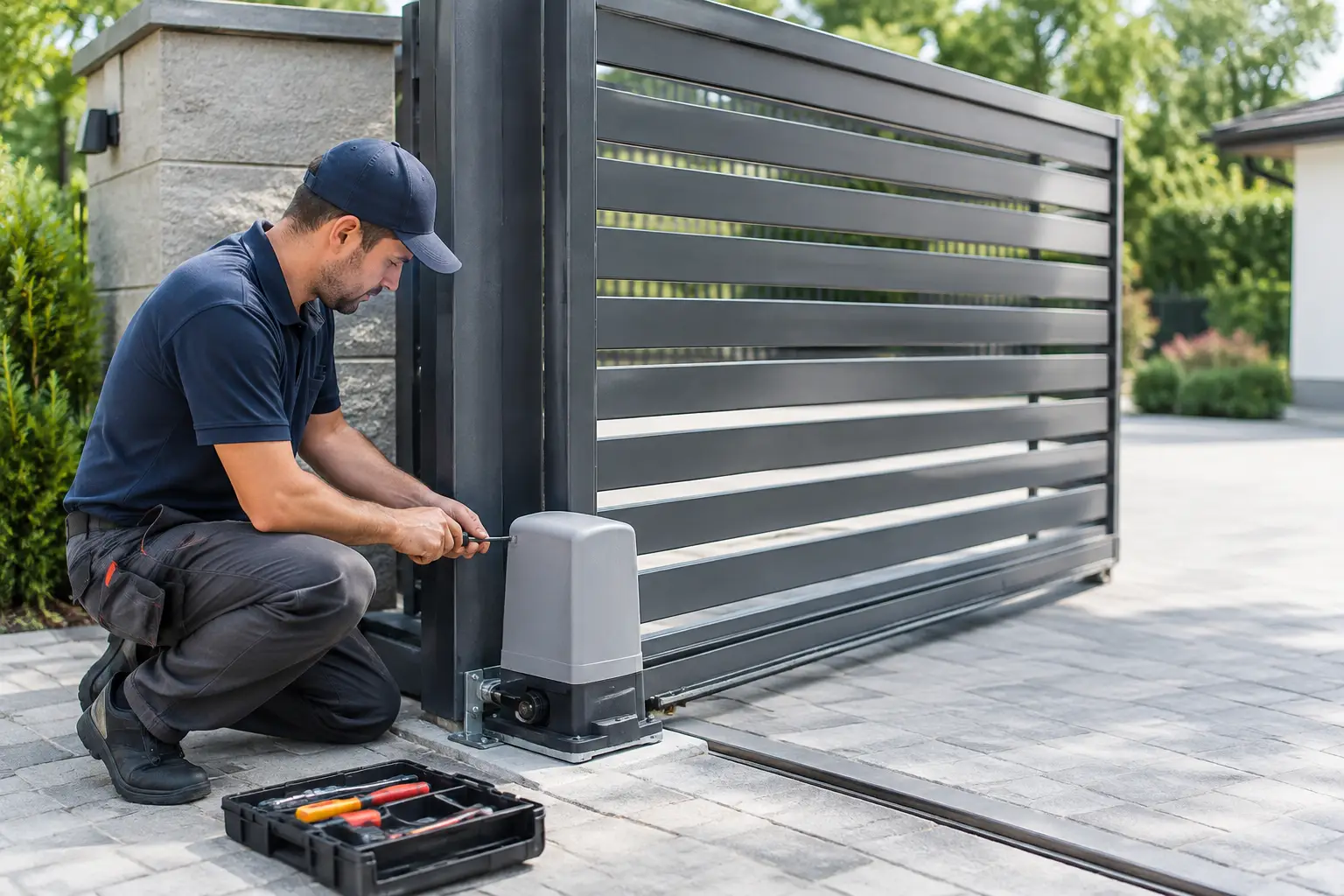
A gate that slows halfway across a driveway, reverses without reason or refuses to respond is more than an inconvenience. It can compromise access, security and safety at a property. This automatic gate maintenance guide explains the routine checks that homeowners, estate managers and commercial operators can carry out, as well as the work that should always be left to a qualified gate automation specialist.
Electric gates work hard in all weather. Motors, hinges, tracks, safety devices, control panels and access equipment must operate together correctly. Regular attention helps identify small issues before they become an unexpected breakdown or a more costly repair.
Automatic Gate Maintenance Guide: Start With Safe Operation
Before inspecting any part of an automated gate, make sure you understand how to isolate the system and where the manual release is located. Keep the release key accessible, but never leave it on or beside the gate where it could be used by an unauthorised person.
Do not work on wiring, motor housings, underground operators or control panels unless you are suitably qualified. Gate systems combine moving machinery and electrical components, often outdoors and exposed to moisture. A visual inspection and basic cleaning are sensible owner tasks; electrical diagnosis, adjustment and repairs require professional attention.
It is also worth setting a simple maintenance record. For a domestic driveway, a note of checks, faults and service visits is useful. At a commercial site, a more formal record helps show that safety-critical equipment has been monitored and defects have been acted upon.
Check the Gate Structure First
Automation cannot compensate for a gate that is poorly aligned, damaged or difficult to move. With the automation safely disengaged where appropriate, the gate should move freely by hand without scraping, catching or excessive force.
For swing gates, inspect hinges, posts, brackets and the gate leaf itself. Look for sagging, loose fixings, cracks around welded sections, timber movement and signs that either leaf is dropping. A gate that has moved even slightly can place unnecessary strain on a ram, articulated arm or underground motor.
Sliding gates need particular attention to the track, wheels, rollers and rack. Remove leaves, grit, mud and stones from the running path. In Dorset and across the South of England, wind-blown debris and wet ground can quickly affect a sliding gate track. Check that the gate is not rubbing against guide rollers or fencing as it travels.
Avoid applying lubricant without checking the manufacturer’s guidance. The wrong product can attract dirt, affect plastic components or make a sliding track worse rather than better. Where lubrication is specified, use the correct product sparingly and keep it away from electrical equipment.
Test Safety Devices Every Month
Safety features are not optional extras. They are essential to the proper operation of an automated gate. Depending on the installation, these may include photocells, safety edges, force limitation, induction loops and warning lights.
Keep photocell lenses clean and free from cobwebs, condensation, vegetation and dirt. Test them by interrupting the beam while the gate is closing. The expected response depends on the system configuration, but the gate should not continue closing through an obstruction. If the gate behaves unpredictably, stop using it automatically until it has been checked.
Safety edges should be secure, undamaged and responsive. Inspect their rubber profile and cabling for splits, crushing or water ingress. On commercial entrances, delivery vehicles and regular traffic can damage equipment positioned close to the opening. A damaged safety edge should be dealt with promptly, not left until the next planned visit.
Never test a gate by standing in its path or placing a person, pet or vehicle in a risk area. Use a suitable non-living obstruction only where it is safe to do so and you understand the intended operation. If there is any doubt, arrange a professional safety inspection.
Keep Access Control Equipment Clean and Protected
Intercoms, keypads, key switches, fob readers and vehicle loops are central to day-to-day access. They deserve the same attention as the gate motor.
Wipe intercom and keypad surfaces with a soft, lightly damp cloth. Do not spray cleaner directly into a keypad, camera, reader or call panel. Check that the housing is secure, the buttons respond properly and the caller can be heard clearly at the receiving handset or app.
If a keypad has intermittent buttons, an intercom has poor audio or a fob only works at close range, do not assume the device simply needs replacing. The cause could be a power supply issue, damaged cable, moisture ingress, signal problem or programming fault. A specialist can diagnose the system before unnecessary parts are ordered.
For sites using ground loops, watch for changes in detection. A gate that does not stay open for a vehicle, or closes too soon, needs attention. Ground loop faults can affect safety and traffic flow, particularly at busy commercial premises.
Watch for Early Warning Signs
Most gate failures give some warning before the system stops altogether. Acting early usually reduces disruption and helps protect the automation from further damage.
Arrange an inspection if you notice any of the following:
- The gate is slower, noisier or less smooth than usual.
- It stops, reverses or opens only part way through its cycle.
- The gate moves differently in wet, cold or windy conditions.
- The motor makes a humming, grinding or repeated clicking sound.
- Photocells, warning lights or access controls operate inconsistently.
- The manual release is stiff, difficult to engage or does not return correctly.
A gate may still appear to work after an occasional fault, but repeated resetting is not a repair. Do not override safety devices or increase force settings to make the gate close. These actions can create a serious risk and may conceal the actual cause, such as a mechanical obstruction or failing component.
Seasonal Care Makes a Difference
Autumn and winter are demanding seasons for gate automation. Clear fallen leaves from tracks and drainage channels, especially around underground motors. Standing water, blocked drainage and frozen debris can prevent reliable movement and shorten the life of components.
After high winds, inspect the gate leaves, posts, hinges and catches. A solid gate presents a large surface area to the wind, and even a small shift in alignment can affect operation. For sliding gates, check that no branches or gravel have entered the track.
In spring and summer, cut back hedges, climbing plants and overhanging growth around photocells, control cabinets and moving areas. Vegetation can obstruct safety beams, hold moisture against equipment and make future servicing more difficult. Do not allow plants to grow around underground operator access points.
Why Professional Servicing Is Worthwhile
A planned professional service goes beyond a quick visual check. A competent gate automation engineer can assess mechanical alignment, motor performance, control settings, safety devices, electrical connections, drainage and access control equipment. They can also identify wear that is not obvious during everyday use.
The right servicing interval depends on the type of gate, how often it operates, its exposure to weather and the consequences of failure. A lightly used domestic gate may require a different schedule from a shared development entrance or a commercial yard with frequent vehicle movements. High-use and safety-critical sites often benefit from more regular inspections.
Crabtree Electrical Gates provides specialist support for automated swing and sliding gates, underground systems and integrated access control across Dorset and the South of England. For owners, the value of specialist attention is clear: work is assessed as a complete automated system, rather than treating the electrical and mechanical elements as separate problems.
When to Stop Using the Gate
Take the gate out of automatic operation and seek professional advice if it has been struck by a vehicle, has visible structural damage, repeatedly trips electrical protection, fails a safety test or moves unpredictably. The same applies if there is exposed wiring, a damaged motor casing or water inside a control enclosure.
Where access is essential, use the manual release only if it is safe and you have been shown how to operate it. Secure the gate in a safe position if necessary, and make sure users of the property know that the automatic system is not in service.
A well-maintained gate should feel dependable, quiet and predictable. A few regular checks, prompt attention to changes and a planned specialist service will help keep access controlled and your entrance working as it should.
0 Comments