
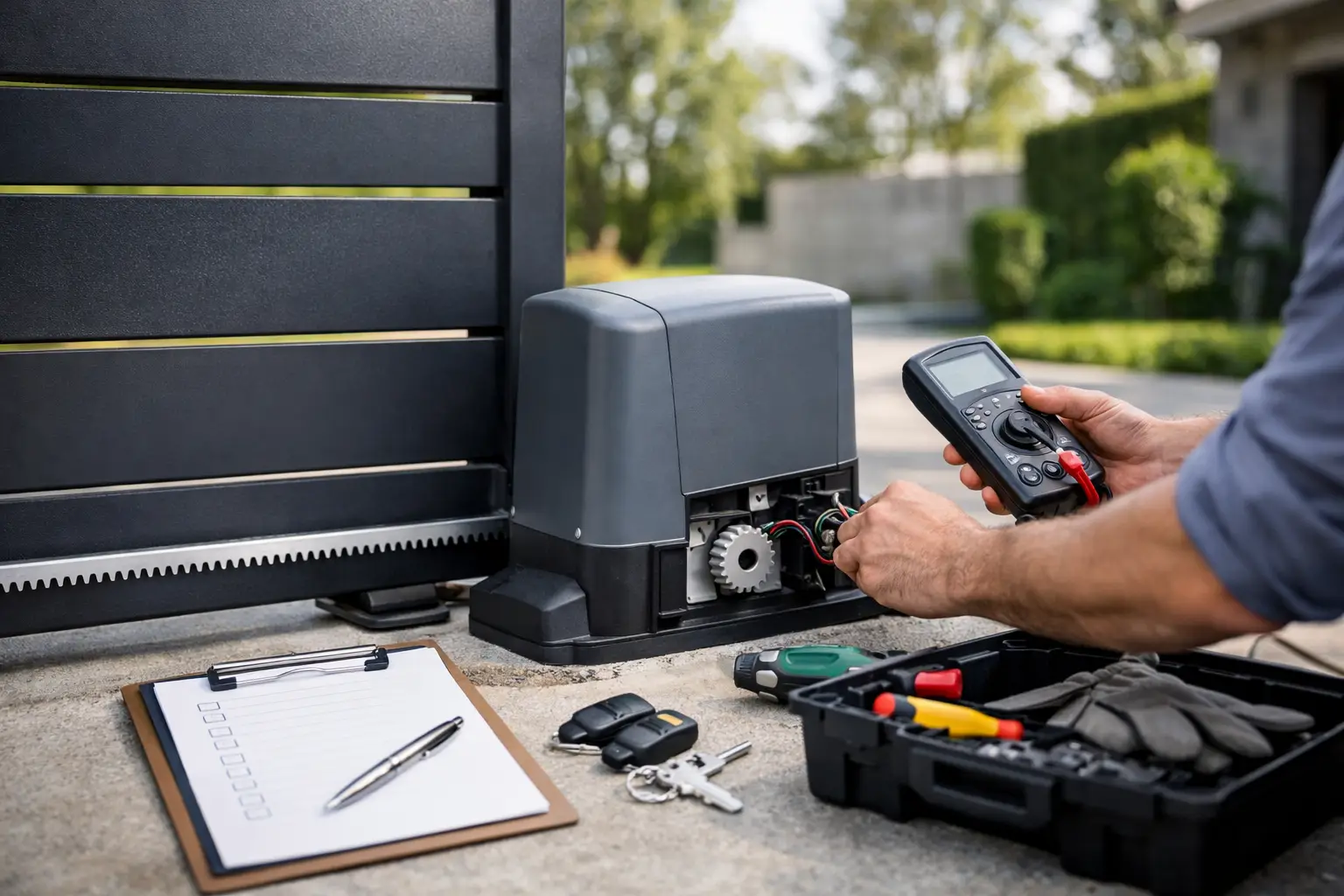
A gate can look straightforward on paper, then become far more complicated once the ground is opened up, power routes are checked and safety requirements are properly considered. That is why an electric gate installation checklist matters. It helps you spot practical issues early, avoid poor system choices and make sure the finished gate is safe, reliable and suited to the property.
For homeowners, that usually means balancing security, convenience and appearance. For commercial sites and managed estates, it often means adding controlled access, dependable operation and a system that stands up to regular use. In both cases, the right installation starts long before the motors are fitted.
What should be on an electric gate installation checklist?
The best checklist starts with the site itself. A gate automation system is only as good as the entrance it is being fitted to, so the first question is not which keypad or intercom to choose. It is whether the opening, ground conditions and gate structure are suitable for automation in the first place.
A proper survey should look at the entrance width, the available space for the gates to open, levels across the driveway and whether swing or sliding gates are more appropriate. Swing gates need room to open safely and consistently, while sliding gates need sufficient run-back and stable tracking. On sloping driveways, the choice becomes even more important because some gate styles simply will not operate well without additional groundworks or design changes.
The condition of the gate itself also matters. If existing gates are being automated, they need to be structurally sound, properly hung and suitable for motorisation. Automation will not correct poor alignment, weak posts or worn hinges. In many cases, dealing with those issues early is what prevents repeat faults later.
Access, usage and day-to-day operation
A gate that looks right but works badly soon becomes frustrating. That is why any electric gate installation checklist should include how the entrance will actually be used every day.
Think about who needs access and when. A private driveway may only need simple remote entry with an intercom for visitors. A commercial yard may need keypads, fobs, timed access, vehicle detection loops and better control over delivery traffic. A block of flats or estate entrance may need multiple user permissions and dependable visitor communication.
Traffic volume matters too. A gate serving a single home has very different demands from one opening dozens of times a day at a busy site. Motor choice, duty cycle, control equipment and safety setup should reflect that. Over-specifying can be unnecessary, but under-specifying usually shows up quickly in wear, faults and poor performance.
You should also consider what happens when vehicles queue near the entrance. If there is limited stacking space off the road, that may influence gate speed, opening width or access control layout. For some sites, separate entry and exit arrangements make more sense than a single automated point.
Power supply and cabling requirements
This is where many installations either go smoothly or become expensive. Electric gates rely on more than motors. They often need power to gate operators, control panels, intercoms, safety devices, lighting and access control equipment. If the power supply has not been planned properly, the installation can become disruptive very quickly.
A clear cable route should be established before work starts. That includes where power is coming from, how cables will cross the driveway, where control equipment will be housed and what additional wiring may be needed for intercoms, photocells, loops or exit devices. Retrofitting these elements later is usually less tidy and more costly.
Electrical capacity should be checked as well. Most domestic systems are not unusually demanding, but they still need a safe, suitable supply installed to current standards. On larger properties and commercial sites, there may be more complexity, particularly where long cable runs or multiple control points are involved.
This is one area where specialist electrical knowledge makes a real difference. Good automation depends on correct power provision, protection, control wiring and fault finding from the outset.
Safety is not optional
An electric gate is a powered machine. It has moving parts, force, pinch points and the potential to cause injury if it is not correctly designed, installed and tested. A serious electric gate installation checklist must therefore include safety from the start, not as an afterthought.
That means identifying hazards around the opening and around the moving leaf or sliding section. It means specifying the right safety devices for the gate type and usage, which may include photocells, safety edges, force limitation and correctly configured control logic. It also means considering pedestrians, children, delivery drivers and anyone else who may use or pass through the entrance.
There is no one-size-fits-all answer. A domestic gate on a quiet private drive may need a different arrangement from a commercial gate with frequent vehicle movements and mixed pedestrian traffic. The important point is that risk is assessed properly and the system is tested and commissioned correctly.
Documentation matters here as well. A professional installer should be able to explain how the system has been set up, what safety devices are included and what the user needs to know about safe operation.
Choosing the right automation system
Not every operator suits every gate. The automation should be selected around the gate design, site layout and expected usage, not simply on budget or appearance.
Above-ground operators can be an effective option where practicality and ease of access for maintenance are priorities. Underground systems often appeal where a cleaner visual finish is preferred, but they require careful installation and drainage planning. Sliding gate motors can be ideal where space behind the gate line is limited, but they rely on a properly prepared track and stable support.
The right choice depends on site conditions. Coastal exposure, frequent use, heavy gates and poor drainage all influence what will perform well over time. This is where honest advice is worth more than a quick quote. A cheaper system that struggles with the gate weight or local conditions is rarely good value.
Access control and user convenience
Most customers are not just buying a moving gate. They are buying easier control over access to their property. That part of the project should be planned with the same care as the mechanics.
An intercom may be enough for a private home, especially where visitors need to call ahead before entry is granted. A keypad can work well for regular users, but codes need to be managed properly. Fob access may suit shared sites. Ground loops or exit loops can improve convenience for vehicles leaving the property without needing to stop and use a control device.
It is worth thinking about future needs too. If you may later want additional controls, more users or integration with other entry systems, it makes sense to allow for that during installation. Even if every feature is not fitted on day one, sensible planning can save further disruption later.
Groundworks, drainage and the parts people forget
A well-finished gate installation often depends on work that is barely visible once the project is complete. Posts need stable foundations. Tracks need accurate levels. Underground motors need proper housings and drainage. Cable ducts need to be in the right place before surfaces are made good.
This is often the difference between a gate that performs reliably and one that starts developing avoidable faults. Water ingress, movement in posts, poor levels and badly planned ducting all create problems that no control board can solve.
If the entrance is being built from scratch, these details should be coordinated early. If an existing entrance is being upgraded, the installer should check whether the current layout supports automation properly or whether remedial works are needed first.
Commissioning, handover and aftercare
Installation is not finished when the gates first move. Final testing, force checks, safety verification and control setup are all part of the job. Users should be shown how the system works, how to operate it safely and what to do if there is a problem.
Maintenance should also be discussed at this stage. Electric gates need servicing if they are to remain safe and dependable. The required level of maintenance will vary according to gate type, environment and frequency of use, but no automated entrance should be treated as fit-and-forget.
For that reason, your checklist should include who will look after the system once it is installed. A specialist installer with direct experience in gate automation is usually far better placed than a general trades business when faults, adjustments or future upgrades are needed.
At Crabtree Electrical Gates, that practical, specialist approach is central to how installations are planned and delivered across Dorset and the South of England.
If you are considering an automated entrance, the best next step is not guessing which motor to buy. It is arranging a proper site assessment so the gate, power supply, safety setup and access control are all planned as one complete system.
0 Comments