
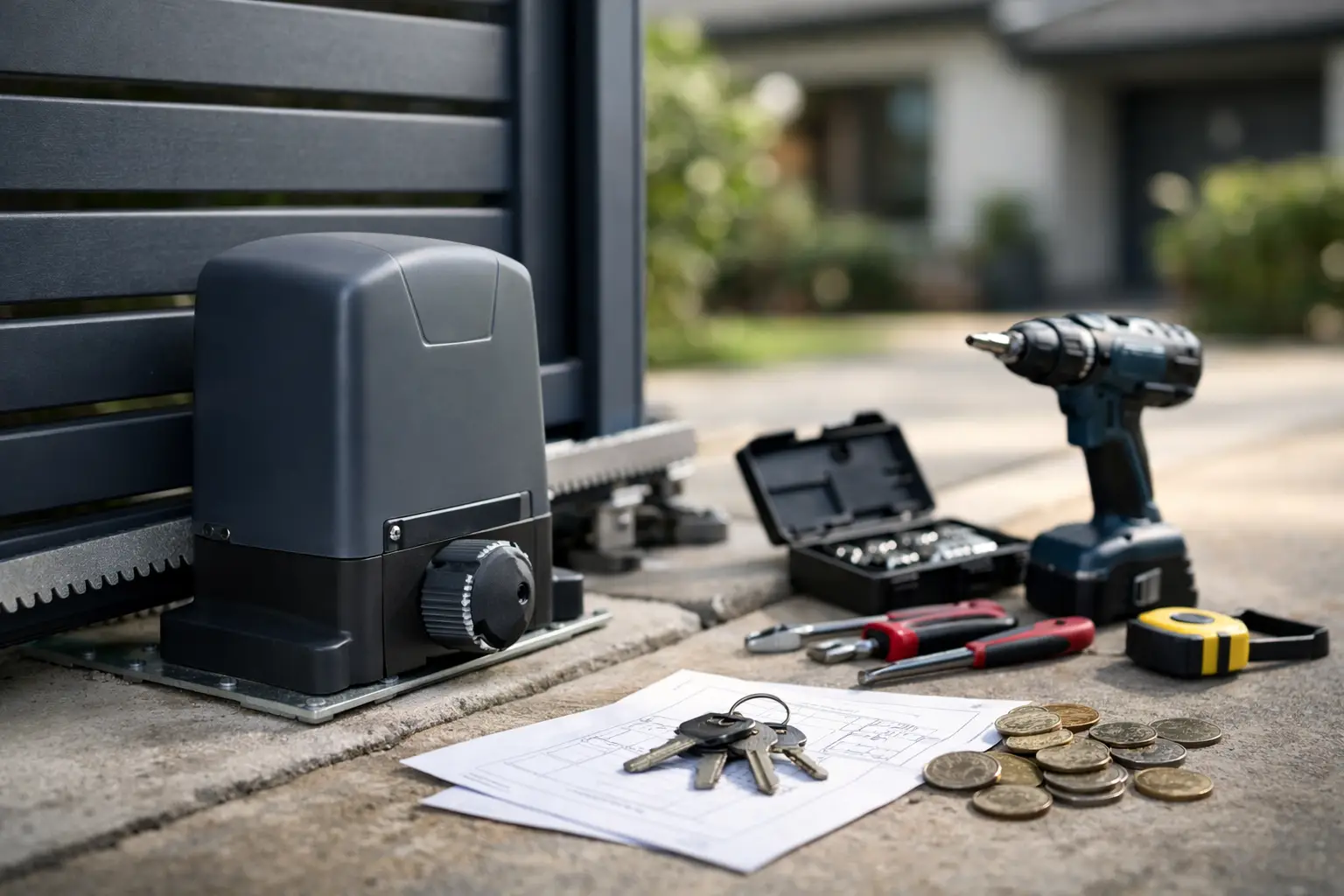
If you are comparing gate motor installation prices, the quickest way to go wrong is to treat every automated gate as the same job. A pair of timber swing gates on a sloping drive is a very different installation from a commercial sliding gate with intercom access, safety loops and high daily use. Price follows specification, and specification should follow the way the gate will actually be used.
That is why sensible pricing starts with the site, the gate type and the level of control you need. For some properties, a straightforward domestic automation setup is enough. For others, especially shared entrances, estates and commercial sites, the system needs more safety devices, more durable components and more involved electrical work.
What affects gate motor installation prices?
The biggest factor is the type of gate being automated. Swing gates and sliding gates use different motor systems, and the installation method changes the labour involved. Swing gates may use above-ground ram motors or underground operators. Sliding gates need a motor, track or cantilever arrangement, and accurate alignment. Underground systems often look neater, but they usually take more time to install and can involve additional drainage and groundwork.
The weight and size of the gate also matter. Heavier gates need motors with the right pulling or pushing force, and they place more demand on posts, hinges, running gear and safety settings. A lightweight aluminium gate is generally simpler to automate than a large hardwood or steel gate. Where existing gates are poorly aligned or already under strain, remedial work may be needed before any motor is fitted.
Power supply is another major part of the price. If there is a suitable electrical feed close to the entrance, installation is usually more straightforward. If power has to be run over a long distance from the property or an outbuilding, trenching and cabling can increase the cost. Mains power, isolation, control panels and safe routing all need to be handled properly. This is one reason specialist electrical experience matters in gate automation.
Access control can move the price significantly. A simple pair of remotes is one level of system. Add a keypad, audio intercom, video entry, GSM control, photocells, safety edges or vehicle detection loops, and both material and labour costs rise. None of these extras are unnecessary if they suit the site. They simply need to be specified for the right reason.
Typical gate motor installation prices in the UK
As a general guide, domestic gate motor installation prices for a basic swing or sliding setup often start from around £1,500 to £3,000 for automation equipment and installation, assuming the gates are already suitable and there is a nearby power source. More complex domestic systems commonly fall between £3,000 and £6,000 once groundwork, access control and higher-spec motors are included.
For underground operators, expect costs to sit towards the upper end of the range or beyond it. The cleaner appearance appeals to many homeowners, but the install is more involved and the surrounding ground conditions matter. If drainage has to be improved or existing surfaces lifted and reinstated, the final figure will reflect that.
Commercial projects are often higher again. A busy entrance serving staff, deliveries or multiple users may need heavier-duty operators, safety devices, loops, traffic management and more durable access control. That can place commercial gate motor installation prices anywhere from around £4,000 upward, depending on the layout and the frequency of use.
These are useful guide figures, not fixed tariffs. The gap between one quote and another is usually explained by what is included, what has been left out, and whether the installer has properly assessed the site.
Why some quotes look cheaper than they really are
A low quote can be tempting, but gate automation is not the place to buy on headline price alone. Some prices are based on supply and fit only, with little attention paid to the condition of the gate, the quality of the electrical work, or the safety equipment needed. Others may exclude groundwork, cabling, intercoms or commissioning, which means the total climbs later.
There is also a difference between fitting motors to gates and delivering a properly planned automation system. Gates need to open and close reliably, stop safely, and suit the daily demands of the property. If the installation is rushed or under-specified, the customer often pays for it afterwards through faults, poor performance or premature wear.
For that reason, it is worth checking whether a quote includes site assessment, motor specification, control equipment, safety devices, electrical supply work, setup and testing. Insurance and guaranteed workmanship should also be part of the conversation, not an afterthought.
Gate type makes a real difference
Swing gate automation
Swing gates are common on private driveways and can work very well where there is enough clear space for the leaves to open. Installation can be relatively straightforward if the gate posts are sound, the hinges are correctly set and the entrance is level enough for smooth operation. Above-ground motors are often the more cost-effective route.
Where appearance matters most, underground motors offer a discreet finish. They are popular on higher-end domestic properties, but they are not automatically the best choice for every site. If the ground is prone to water build-up or access for future maintenance is awkward, that needs to be weighed up at the quotation stage.
Sliding gate automation
Sliding gates are often chosen where space behind the gate is limited or where a single moving leaf better suits the entrance. They can be a strong option for domestic and commercial settings, but they depend on accurate installation. The track, support structure and travel path all need to be right.
If the site needs significant groundwork, new support posts or surface preparation, prices rise accordingly. The benefit is that a well-installed sliding system can offer excellent control and reliable day-to-day use, particularly on wider entrances.
Access control and safety features
Most customers asking about gate motor installation prices are not only buying a motor. They are buying a way to manage entry to the property. That might mean remote fobs for a family home, a coded keypad for trades access, or intercom entry for a shared or commercial site.
Safety features are equally important. Automated gates are moving machines, and the right protection needs to be built into the system. Photocells, safety edges, obstacle detection and correctly configured force settings all play a role. On commercial sites, vehicle loops and managed entry and exit can also be required.
This is where bespoke quotations matter. A quiet private driveway has different demands from a business entrance with regular traffic. The right installer will explain what is needed and why, rather than applying the same package to every site.
Is it cheaper to automate existing gates?
Sometimes yes, but not always. If the existing gates are structurally sound, correctly hung and suitable for automation, using them can reduce the overall project cost. If they are warped, too heavy for the intended motors, or mounted on unstable posts, trying to automate them can become false economy.
In many cases, the condition of the gates determines whether automation is sensible. A proper site visit should identify this early. It is better to know at quotation stage that upgrades or replacement are needed than to fit a system to gates that were not ready for it.
Getting an accurate price
The most reliable way to assess gate motor installation prices is to arrange a proper quotation based on the actual entrance, the gate design and how you want the system to operate. Photos can help, but they rarely show everything. Ground levels, cable routes, gate condition and power availability are easier to judge in person.
A good quote should be clear about what is included, what optional extras are available, and whether any preparatory work is required. It should also leave you confident that the installer understands both the automation side and the electrical side of the job. That is especially important where long cable runs, intercoms or integrated access control are involved.
For homeowners, estate managers and commercial clients across the South of England, that clarity usually matters more than chasing the cheapest starting figure. A gate system should be safe, dependable and suited to the property for the long term.
If you are planning a new automated entrance or upgrading an existing gate, the best next step is a site-based quote from a specialist who can price the job properly and explain the options in plain terms. It is the surest way to spend once, and spend wisely.
0 Comments