
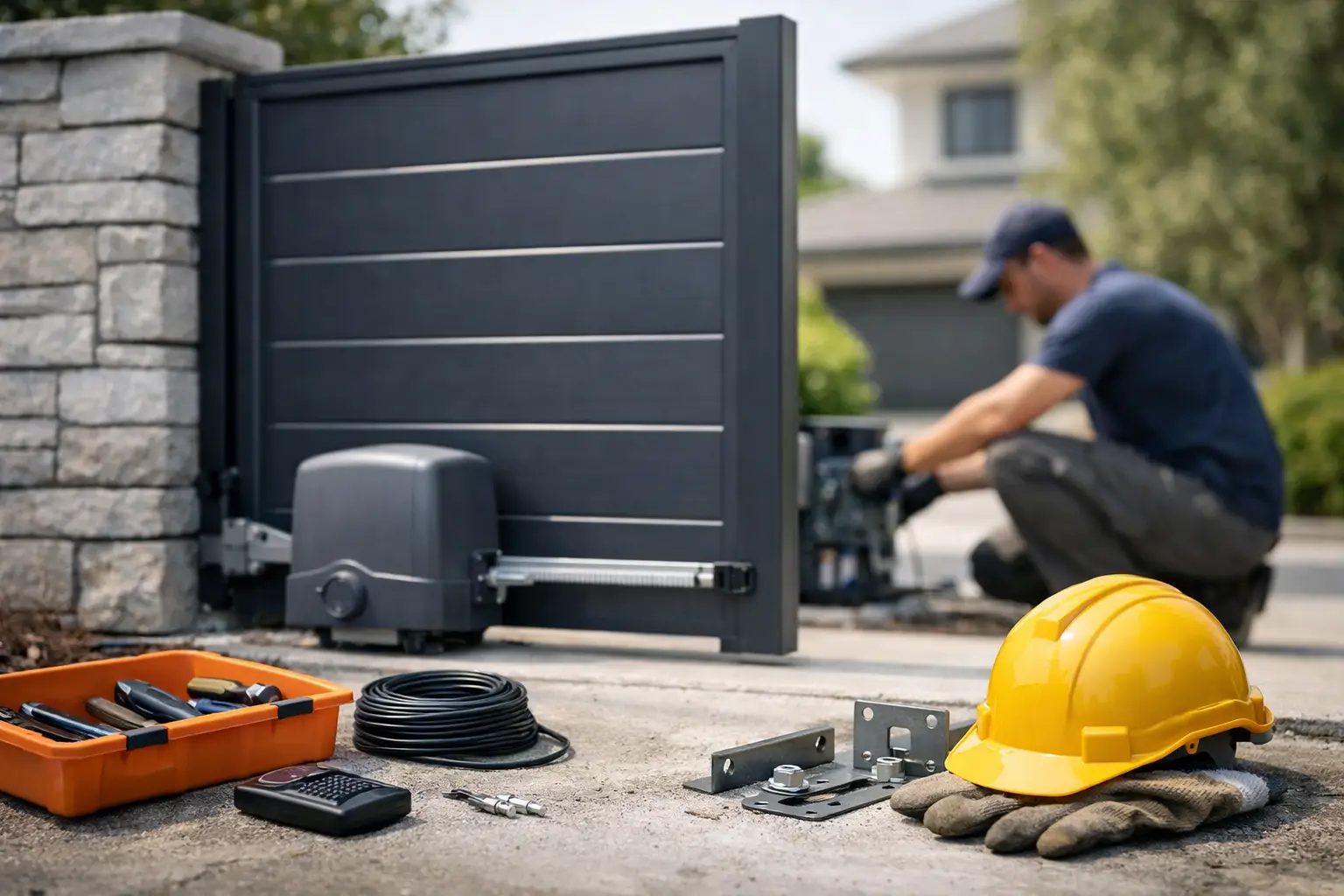
If you are pricing up a new electric gate, the first thing to know is that automatic gate installation cost can vary widely from one property to another. A straightforward domestic upgrade on an existing entrance will sit in a very different bracket to a full commercial installation with groundworks, access control and safety equipment. The right figure depends on the gate style, the site, the automation system and the standard of finish you expect.
That is why any genuine quote should start with the entrance itself, not a guessed number over the phone. A specialist installer will want to understand how the gates will be used, what power is available, how the ground levels behave and what level of access control is needed. Those details make the difference between a system that simply opens and closes and one that performs reliably for years.
What affects automatic gate installation cost?
The biggest cost factor is usually the combination of gate type and site conditions. Swing gates and sliding gates are built and automated differently, and each has its own practical demands. Swing gates often suit wider residential driveways, but they need room to open and solid hinge posts or piers. Sliding gates are often chosen where space behind the gate is limited, although they usually require a track or cantilever system and more involved groundwork.
The gate material also matters. Timber, steel and aluminium all come with different supply costs, maintenance expectations and weight. Heavier gates may need more substantial automation equipment, which can increase the overall price. A light aluminium gate may reduce strain on motors, while a hardwood or steel gate may deliver a more traditional or high-security finish but cost more to automate properly.
Then there is the entrance itself. An existing set of well-built brick piers with power close by is one thing. A rural entrance that needs excavation, ducting, new posts, cabling and intercom provision is another. This is why two projects that look similar from the road can end up with very different final figures.
Typical automatic gate installation cost in the UK
As a broad guide, a basic residential automation upgrade to existing gates may start from a few thousand pounds where the gates are already suitable, power is in place and the site is straightforward. A full new automatic gate installation with supplied gates, automation, safety devices and professional fitting will often fall into a higher range, commonly from around £7,000 to £15,000 or more depending on specification.
For larger domestic entrances, bespoke gates, underground motors or more advanced access control, costs can move beyond that. Commercial sites can also sit at the upper end because they often require heavier-duty equipment, more frequent duty cycles, better control of vehicle access and stricter site management during installation.
These are useful guide prices, but they should only be treated as a starting point. A proper quotation should reflect the exact layout, usage and electrical requirements of your site.
Swing, sliding and underground systems
Swing gate automation
Swing gates are a common choice for private homes and estates. They can be automated with above-ground rams or articulated arm motors, and in some cases underground operators for a cleaner appearance. Above-ground systems are often more cost-effective because installation is simpler and future maintenance access is easier.
If appearance is a priority, underground automation can be very attractive because the mechanism is hidden. The trade-off is that installation is usually more involved. It often requires more excavation, drainage consideration and careful setting out, which increases labour and materials.
Sliding gate automation
Sliding gates are often chosen where the driveway rises behind the gate or where there is not enough room for leaves to swing inward. They can be an excellent solution for both domestic and commercial settings, particularly where controlled entry and security are priorities.
They do, however, need adequate run-back space and proper foundations. If the ground is uneven or drainage is poor, installation costs can rise. The automation equipment itself is not the whole story – the structural base and track arrangement are just as important to long-term performance.
Underground installations
Underground systems tend to appeal to customers who want a discreet finish and are investing in the appearance of the entrance as much as the convenience. They can work very well, but they are not always the cheapest route. If the site is exposed to standing water or the existing entrance needs significant preparation, the cost will reflect that.
A reputable installer will explain whether underground automation is the right fit or whether a more accessible above-ground option would offer better value and easier servicing.
Access control, safety and electrical work
Automatic gates are not just motors and leaves. The control side of the system plays a major part in the final price. A simple setup with remote fobs will cost less than a system that includes an audio intercom, GSM calling, keypad entry, vehicle detection loops and timed opening functions.
For many domestic customers, a pair of remotes and an intercom is enough. For larger homes, flat entrances or commercial sites, more control is often needed. Keypads, proximity access, ANPR integration and separate entry and exit logic can all be added, but each feature increases both equipment cost and installation time.
Safety equipment is another essential area. Photocells, safety edges, warning signage, force testing and compliant control logic are not optional extras on a properly installed system. Any professional installer should build these into the specification. Cutting corners here may lower the quote on paper, but it can create reliability, liability and insurance problems later.
Electrical work also affects the cost significantly. If power already exists at the gate position, that helps. If a new supply has to be run from the property or from a separate outbuilding, with trenching and ducting across a long drive, the budget will rise accordingly. This is one area where specialist electrical knowledge matters, because a gate system needs a reliable and correctly installed supply, not a makeshift feed.
Groundworks and site conditions
Groundworks are often the hidden part of automatic gate installation cost. Customers understandably focus on the visible gate and automation kit, but the unseen preparation can be a major part of the job.
Uneven levels, poor drainage, narrow access for machinery, unstable posts, old piers and long cable runs all add labour and materials. In rural parts of Dorset and across the South of England, entrances are often not perfectly prepared for automation from the outset. A site visit allows those issues to be identified before work starts, which helps avoid surprises later.
The same applies to existing gates. Some can be automated economically. Others are too heavy, poorly hung or structurally unsuitable, and trying to force automation onto them can be a false economy. In those cases, replacement is often the more sensible investment.
Why the cheapest quote is rarely the best value
When comparing prices, it is worth looking beyond the headline number. A lower quote may exclude groundwork, cabling, access control, safety devices or commissioning. It may also be based on lighter-duty equipment that is not ideal for the size or expected usage of the gate.
A dependable installation should include correct specification, careful setup and aftercare support if adjustments are needed. Insurance, guaranteed workmanship and a clear handover all matter. So does using an installer who understands both the mechanical and electrical side of gate automation.
For homeowners, that means fewer call-backs and better day-to-day reliability. For commercial operators and estate managers, it means reduced disruption and a system that can cope with regular use.
Getting an accurate price for your property
The best way to understand your likely automatic gate installation cost is to arrange a proper site assessment. That allows the installer to look at the entrance width, levels, gate style, power source, access requirements and preferred control options. It also gives you the chance to discuss whether swing or sliding gates are more suitable and whether features such as intercoms, keypads or ground loops are worth including from the start.
At Crabtree Electrical Gates, this is the practical approach we take because no two entrances are the same. A clear quote should explain what is included, what assumptions have been made and where optional extras sit, so you can make a confident decision without guesswork.
If you are budgeting for a new gate system, it helps to think in terms of long-term value rather than simply the lowest upfront price. A well-installed automated gate should improve security, simplify access and add to the overall presentation of the property. Done properly, it becomes part of how the entrance works every day, not another item on the repair list.
If you are considering electric gates for your home, estate or site, the sensible next step is to speak to a specialist and get a quote based on the entrance you actually have.
0 Comments