
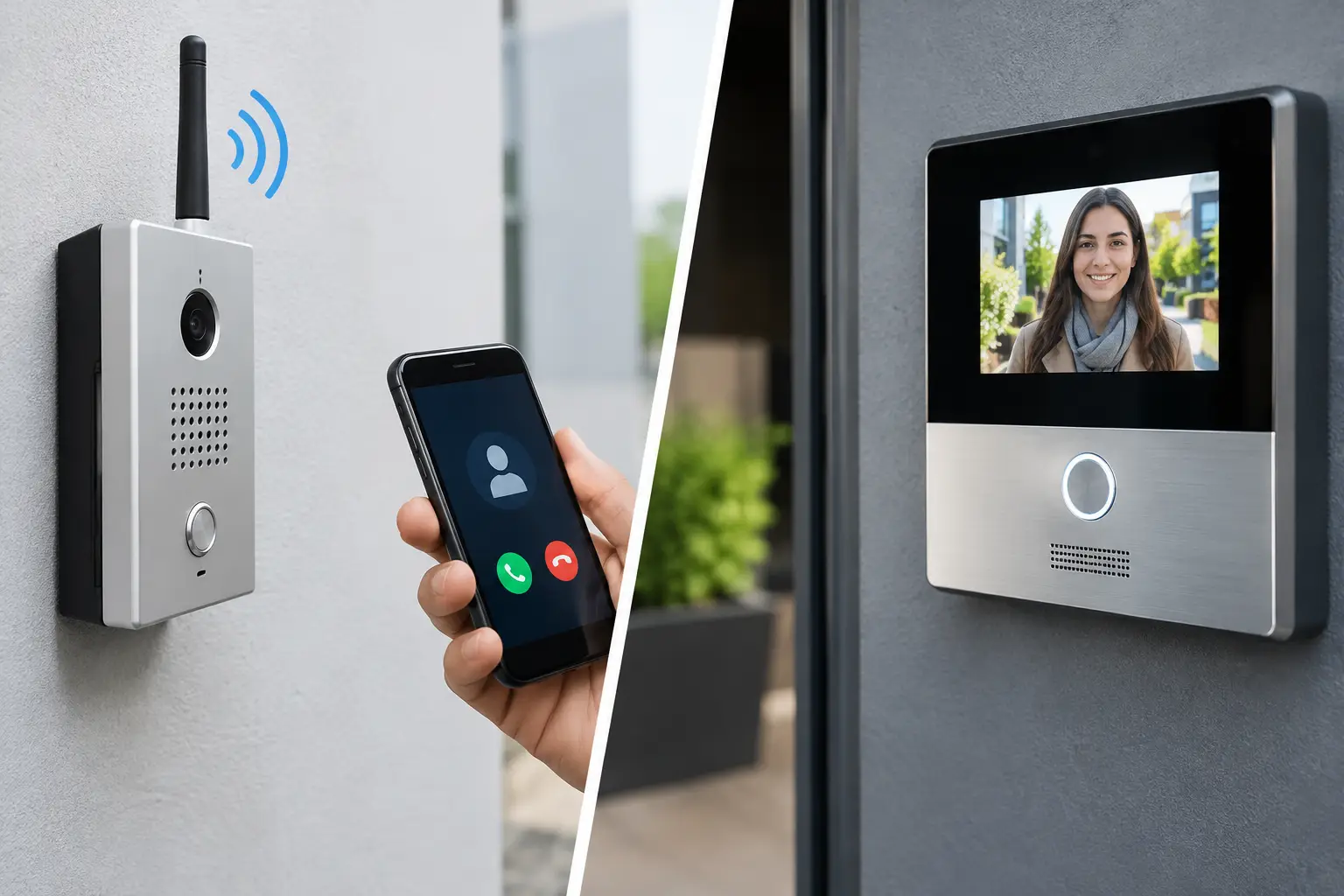
A gate intercom should make entry easier without creating a new point of frustration for residents, visitors or site staff. When customers ask us about GSM intercom versus video intercom options, the right answer depends on how the property is used, who needs access and what infrastructure is already in place.
A GSM system is often the practical choice where a long driveway, listed building or remote entrance makes cable runs difficult. A video system can provide greater reassurance where seeing the caller matters as much as speaking to them. Both can work very well with automated swing or sliding gates when specified and installed correctly.
GSM intercom versus video intercom: the main difference
A GSM intercom uses the mobile phone network. A visitor presses the call button and the intercom calls one or more stored telephone numbers. The person receiving the call can speak to the visitor and, on many systems, open the gate by pressing a key on their phone. It does not require the homeowner to be inside or close to a fixed handset.
A video intercom adds a camera and usually sends a live video call or notification to an indoor monitor, smartphone app or both. The user can see who is at the entrance before choosing whether to speak with them or release the gate.
The choice is not simply between a basic system and a more advanced one. GSM intercoms offer a dependable, straightforward form of access control. Video intercoms offer visual verification, but they need a suitably planned network connection and careful positioning to deliver a consistently useful image.
When a GSM intercom is the better fit
GSM intercoms are particularly useful for rural homes, larger properties and entrances a considerable distance from the house. Instead of installing a cable all the way back to an internal monitor, the system uses a SIM card and a mobile signal at the gate. This can reduce disruption to driveways, gardens and finished landscaping.
They also suit people who are frequently away from the property. A delivery driver, contractor or family member can call the same number whether you are at home, at work or travelling. For a holiday home or a managed property, several authorised users can often be programmed to receive calls, subject to the chosen equipment.
For commercial premises, GSM systems can be useful where an office is not permanently staffed at the entrance. Calls can be routed to a receptionist, site manager or duty phone, allowing access decisions to be made without someone walking to the gate.
There are limitations to allow for. GSM performance is linked to the strength and reliability of the mobile network at the gate location. Before installation, signal should be checked where the intercom will be mounted, not merely at the house or office. A system may also have an ongoing SIM charge, depending on the provider and the call, data or remote-management requirements.
Audio-only calling gives less information about a visitor. If a resident is concerned about an unexpected caller, a GSM intercom cannot show whether it is a courier, a neighbour or someone else. A separate camera can be installed, but that is usually less convenient than an integrated video solution.
GSM access for regular users
Many GSM units can recognise authorised mobile numbers. When an approved user calls the intercom, the gate opens without the call being answered. This is convenient for household members, employees and trusted contractors, and it avoids the need for every user to carry a remote control.
It does need to be managed properly. Numbers should be removed promptly when staff change, tenants move out or a contractor no longer needs access. For sites with frequent personnel changes, a keypad, fob reader or more managed access-control arrangement may be a better addition to the intercom.
Where a video intercom earns its place
A video intercom is often the preferred option for a main residential entrance where the owner wants to see callers before releasing an electric gate. The visual check is valuable for families, vulnerable residents and anyone receiving regular deliveries or visitors they may not recognise.
Modern video systems can send calls to a wall-mounted screen inside the property and to an app on a smartphone. That means a homeowner may answer from the kitchen, upstairs or away from home, provided the system and network have been set up correctly. Some systems can also provide event notifications or saved images, although features vary widely between products.
For commercial locations, video can help staff verify visitors, vehicle drivers and contractors before allowing entry. This is useful at offices, yards, private estates and sites where deliveries need to be directed to the correct area. It should complement sensible site procedures rather than replace them.
Image quality matters. A camera facing low winter sun, headlights or a dark entrance may struggle unless it has appropriate low-light performance and is positioned with care. The camera height, viewing angle and lighting around the gate should all be considered during the design stage. A clear picture of a person standing at the call point is more useful than a wide but poorly lit view of the road.
Network and power requirements
Video intercoms generally require a stable connection between the gate, the property network and the receiving device. This may be achieved with dedicated cable, a wired network connection or, in some circumstances, a properly designed wireless link. Relying on weak Wi-Fi reaching across a long driveway can lead to delayed calls, dropped video or unreliable app control.
Power supply arrangements also need attention. Gate automation, safety equipment, intercoms and any external network equipment should be installed as part of a coordinated electrical system. This produces a tidier finish and makes fault finding and future servicing far more straightforward.
Costs, maintenance and long-term use
The initial price of an intercom is only one part of the decision. A GSM intercom may reduce cabling work but require a SIM subscription over its lifetime. A video intercom may cost more to install where networking, power supplies or trenching are required, yet it can provide the visual reassurance some owners consider essential.
Both types need professional installation and periodic checks. Outdoor call stations are exposed to rain, dirt, insects and changing temperatures. Gate posts can move, landscaping can grow around equipment, and a damaged cable or failing power supply can affect access at inconvenient times.
It is also worth considering what happens during a power cut or internet outage. Electric gates usually need a suitable manual release arrangement, and users should understand how to operate it safely. Video app functions may be affected by a loss of broadband, while GSM operation depends on mobile coverage and the system’s power supply. A properly planned installation sets realistic expectations from the start.
Privacy and security considerations
Video intercoms should be positioned to focus on the entrance rather than unnecessarily recording neighbouring property or public areas. If footage is stored, the owner should know where it is held, who can view it and how long it is retained. This is especially relevant for businesses, estates and landlords.
For either system, use secure account details, keep authorised user lists current and do not rely on an intercom as the only security measure. Good gate safety systems, suitable lighting, physical boundaries and sensible access procedures all have a role to play.
Choosing the right intercom for your gate
Choose GSM when straightforward phone-based access, long-distance operation and reduced cabling are the priorities, provided there is reliable mobile coverage. Choose video when being able to identify visitors is a priority and the property can support a well-planned network connection.
In many cases, the strongest arrangement is not an either-or decision. A video intercom can sit alongside a keypad for regular visitors, remote controls for family members, and ground loops or exit devices for vehicles leaving the site. The best setup reflects the way the entrance is used every day, not just the first week after installation.
Crabtree Electrical Gates can assess the gate location, power supply, signal and access requirements before recommending an approach. A clear site survey helps ensure the intercom is convenient for the people using it and dependable when it matters.
0 Comments