
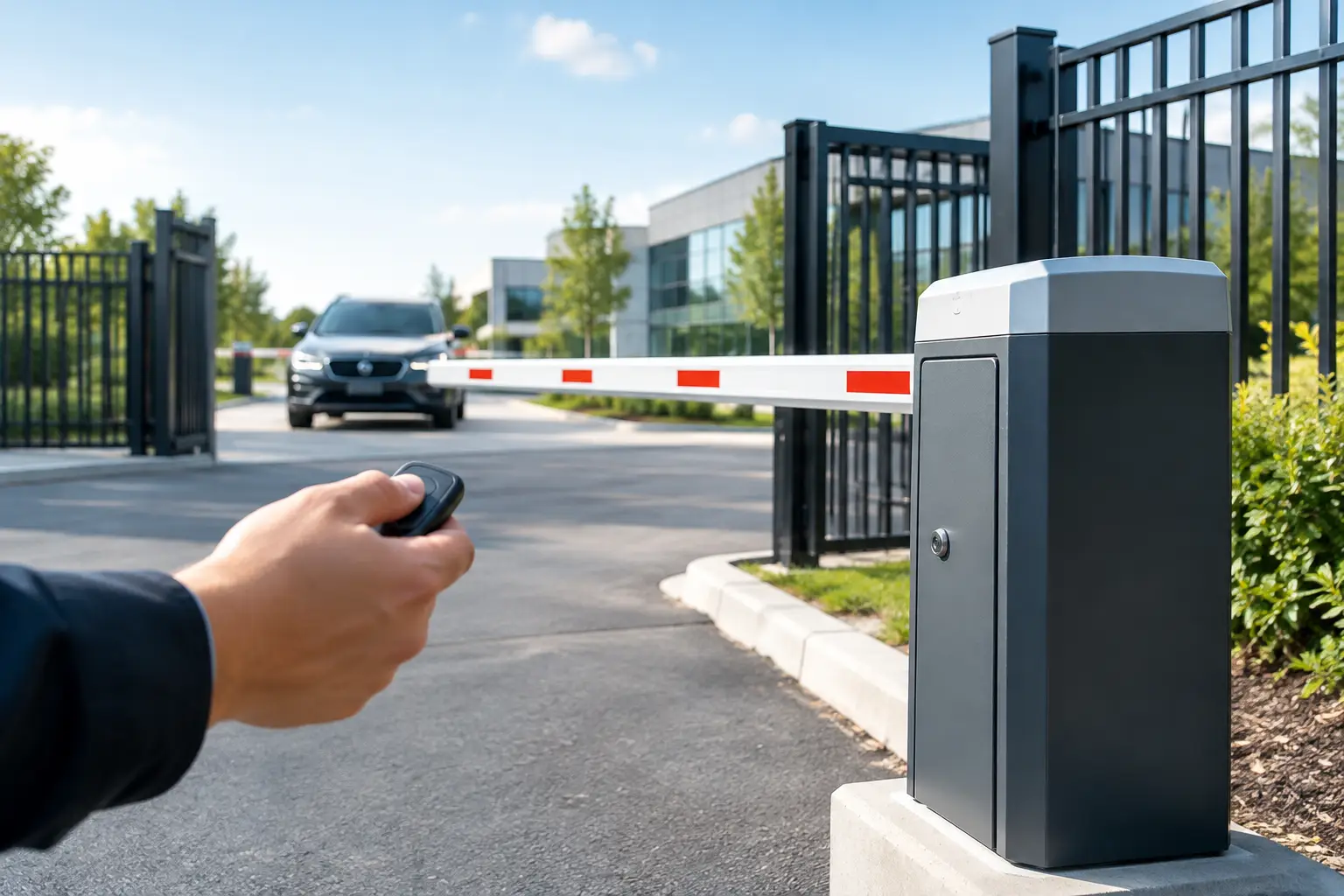
A gate can be beautifully made, correctly hung and fitted with a quality motor, yet still feel inconvenient or unreliable if the controls are wrong. Gate controller selection is where the practical details of an automated gate system come together: how the gate opens, who can use it, what happens during a power cut and how it responds when an obstruction is detected.
For homes, estates and commercial sites across the South of England, the right controller should suit the way the entrance is used every day. It is not simply a matter of choosing a remote control. The controller is the central part of the automation system, coordinating motors, safety devices and access equipment.
What a gate controller does
The control panel receives instructions from a remote fob, keypad, intercom, phone entry system, key switch or vehicle detection loop. It then tells the gate motor when to open, close or stop. It also monitors connected safety devices, such as photocells and safety edges, so the gate can react appropriately if a person, vehicle or object is in its path.
A suitable controller needs to match the type of gate and its intended use. Swing gates and sliding gates operate differently, and a pair of swing gates requires a controller that can manage two leaves, including the correct opening and closing sequence. Underground motors, above-ground ram motors and sliding gate motors may each have different electrical and programming requirements.
The best choice is therefore based on the whole installation, not the controller in isolation.
Start with how the entrance is used
A private driveway used by one household has very different demands from a busy commercial yard, managed estate or shared access road. Before choosing controls, consider who needs entry, how often the gate will operate and whether visitors need a simple way to call the property.
For a typical residential driveway, remote fobs combined with an intercom or video entry system are often a sensible arrangement. Residents can enter without leaving the vehicle, while visitors can request access at the gate. A keypad can provide an additional option for trusted family members, cleaners, gardeners or regular contractors.
Commercial sites commonly need more control. Staff may require fobs, keypads or proximity credentials, while deliveries and authorised vehicles may need access through a ground loop or monitored intercom. If different users require different levels of access, the access control system should be planned from the outset rather than added as an afterthought.
It also helps to consider future use. A property owner may initially only need two remote controls, but later want a keypad, video intercom or extra fobs for tenants. Choosing equipment with the capacity to expand can avoid unnecessary replacement work later.
Gate controller selection and the gate type
The physical gate has a direct bearing on the controller required. A sliding gate needs controlled travel in one direction and must work with appropriate stopping positions, safety devices and limits. It is often a practical choice where there is limited room for gate leaves to swing into the driveway or public highway.
Swing gates need careful set-up because the leaves may open together or one may need to move first. The controller must be configured for the gate geometry, motor type and opening direction. On wider entrances, the timing of each leaf matters both for reliable operation and for achieving a neat close.
For underground automation, the controller is usually housed separately in a protected location. This makes good electrical installation and weather protection particularly important. The discreet appearance of underground motors is attractive for many residential properties, but access for servicing and correct drainage around the motor boxes should be considered at the design stage.
The weight, length and construction of the gates also matter. A heavy timber gate and a lightweight aluminium gate do not place the same demands on a motor or controller. An installer should assess the gates themselves, the hinge arrangement, the ground conditions and the expected duty cycle before recommending a system.
Safety equipment is not optional
Automated gates are moving machinery. A controller must work with suitable safety devices and be properly configured to minimise risk to people, vehicles and property. This is especially significant at entrances used by children, visitors, delivery drivers or members of the public.
Photocells create an invisible beam across the entrance. If that beam is broken while the gate is closing, the controller can stop or reverse the movement. Safety edges are fitted to parts of the gate where crushing or trapping risks may exist and can trigger the same response when contact is detected.
The right safety arrangement depends on the site layout. A straightforward domestic driveway may require a different set-up from a commercial entrance with pedestrians, lorries and frequent vehicle movements. Poor visibility around the gate, sloping ground, tight turning areas and public access all require additional consideration.
Safety should not be treated as an optional extra added to reduce cost. It is a core part of a professional automated gate installation, alongside appropriate force settings, emergency release provision and thorough testing when the work is complete.
Choose access methods that people will actually use
The most capable access system is of little value if it makes everyday entry difficult. The aim is controlled access without creating frustration for residents, staff or approved visitors.
Remote fobs are convenient and familiar, but they can be lost or passed on. Keypads remove the need for a physical fob, although codes should be changed when a contractor no longer needs access. Intercom systems offer direct visitor communication and can be particularly useful where the house or office is set back from the entrance. Video entry adds visual confirmation before the gate is released.
For commercial premises, ground loops can automatically open a gate for authorised vehicle movements when used as part of a correctly designed system. Timed opening and closing settings may also be useful, but should be selected carefully. An entrance that opens automatically at set times may not provide the level of security needed outside normal working hours.
There is no single best combination. A rural home may benefit most from fobs and a reliable intercom, while a multi-user site may need keypad access, vehicle detection and controlled credentials. The right answer depends on security expectations, the number of users and how often access arrangements change.
Plan for power, weather and manual operation
Gate automation relies on a sound electrical installation. The controller needs a suitable power supply, correctly installed cabling and protection from moisture and damage. Outdoor equipment must be selected and installed with the British weather in mind, particularly where the entrance is exposed to driving rain, standing water or coastal conditions.
Power cuts are another practical consideration. Most automated gates include a manual release so the gate can be opened when power is unavailable. However, the people who need to use it must know where it is and how it works. On sites where uninterrupted access is essential, battery back-up may be worth considering.
A manual release is also needed if the automation develops a fault. It should be accessible to authorised users but not easily available to anyone outside the property. This small detail can make a significant difference when access is needed urgently.
Installation and aftercare matter as much as the product
A controller can have excellent features on paper, but reliability depends on correct installation, set-up and testing. Cable routes, motor alignment, photocell positioning, force settings and programming all affect how the system performs over time.
A specialist installer should assess the entrance before specifying equipment. This includes the gates, available space, power supply, drainage, ground levels, intended access methods and safety risks. Clear advice at this stage helps prevent common problems, such as selecting a system that is underpowered, awkward to use or difficult to maintain.
Crabtree Electrical Gates provides bespoke automation and access control installations for domestic and commercial customers, with the practical electrical expertise needed to bring these elements together. A site visit and clear quotation provide the opportunity to discuss how the entrance is used before any equipment is selected.
Make the decision around daily use
The best controller is rarely the one with the longest feature list. It is the one that gives the right people dependable access, supports suitable safety measures and works properly with the gates, motors and site conditions.
Before committing to an installation, ask how the gate will be used on an ordinary weekday, not just how it should look when it is new. A short discussion with a qualified gate automation specialist can turn that answer into a system that remains safe, convenient and dependable for years to come.
0 Comments