
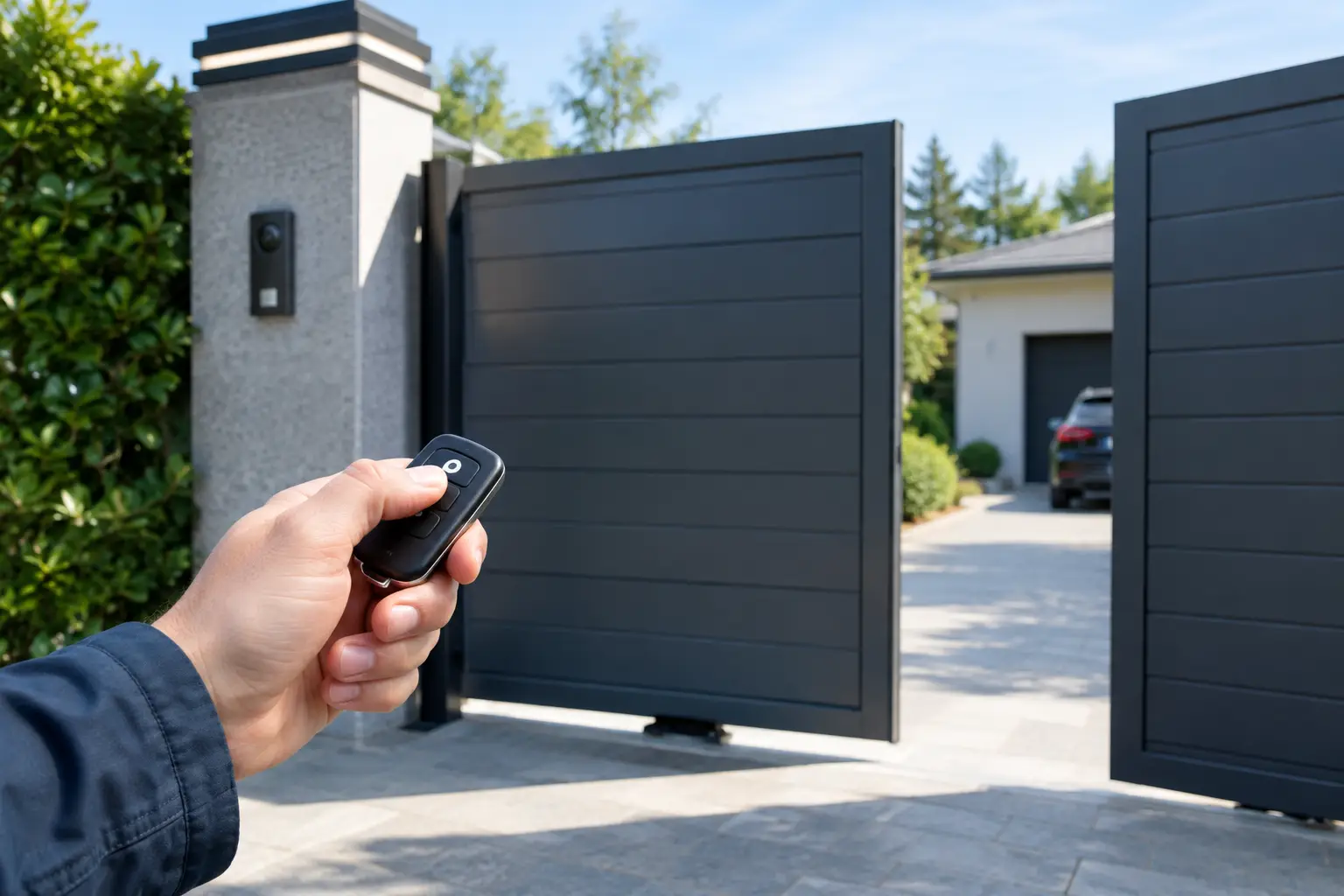
A gate is only as useful as the way people use it. The right access control lets family, visitors, staff and deliveries enter without leaving a gate open or relying on a physical key being passed around. The wrong setup can create delays, missed callers and unnecessary security gaps.
For a private driveway, the priority may be convenience and a clear view of the visitor. For a commercial yard, it is more likely to be managing regular vehicle movements, authorised staff and out-of-hours access. A properly specified system considers the property, the gate type, daily traffic and the people who need to use it.
What access control means for an automated gate
Access control is the equipment and programming that decides who can operate an electric gate and how. It can be as straightforward as a handset remote or keypad, or it can combine several methods: an intercom at the entrance, vehicle detection loops, coded entry for contractors and exit controls from within the site.
The gate automation and the access equipment must work together. A well-built gate, operator and control panel can still be frustrating if the intercom has poor audio, the keypad is hard to use in the dark, or a vehicle loop is positioned incorrectly. Equally, access equipment should never override the safety features of the installation.
This is why an assessment on site is worthwhile. Cable routes, distance from the house or office, mobile signal, lighting, existing power supplies and the gate’s position all affect the most suitable solution.
Choosing the right access control method
There is no single best option for every entrance. In many cases, combining two methods gives the most practical result: perhaps an intercom for visitors and remote controls for household members, or a keypad for staff alongside vehicle detection for exit.
Intercoms for visitors and deliveries
An intercom allows a visitor to call the property before entry is granted. Audio systems are a dependable choice where the gate is close enough for clear communication and the user simply needs to speak with callers.
Video intercoms add reassurance by showing who is at the gate before it opens. They suit homes, flat developments, offices and commercial sites where visual identification matters. Depending on the system and site conditions, calls can be answered from an internal monitor or a mobile device.
The important question is not whether video is more advanced, but whether it will be used. A homeowner who is often away may value mobile call handling. A busy office may prefer a fixed internal handset or screen at reception. Reliable cabling and sensible equipment placement are more important than adding functions that do not suit the site.
Keypads and coded entry
A keypad gives authorised users a straightforward way to enter without a remote or key. It is useful for regular visitors, cleaners, tradespeople and staff, especially where the code can be changed when access needs to be withdrawn.
Keypads work well where users arrive on foot or can safely stop beside the gate. On a roadside entrance, the position needs careful thought. Drivers should not need to reach awkwardly from a vehicle or stop where they obstruct the highway.
Codes should be managed properly. A code shared too widely soon becomes difficult to control. For commercial premises, separate codes for different groups can make it easier to update access when staffing changes. For domestic properties, it may be preferable to issue a temporary code to a contractor rather than hand over a remote control.
Remote controls, fobs and proximity readers
Remote controls remain a simple, familiar solution for residents and frequent users. They are quick to operate from a vehicle and are often paired with an intercom for visitors. Fobs and proximity readers offer a similar benefit for commercial sites, where individual credentials can be issued and removed as needed.
The trade-off is administration. Lost remotes and fobs need to be cancelled or replaced, and the person responsible for the site should keep a record of who has them. A system that allows individual credentials to be deleted is generally more manageable than one requiring every user device to be replaced after a loss.
Ground loops and exit controls
A ground loop is installed beneath the driveway surface and detects a vehicle above it. It can open the gate automatically for exit, avoiding the need for a driver to press a button, use a remote or enter a code when leaving.
This is particularly useful on busy commercial entrances, shared developments and long private driveways. The loop must be designed around the vehicle movements and gate position. It should detect vehicles reliably without causing the gate to open for passing traffic or vehicles waiting in the wrong area.
An exit push button or access control reader may be more appropriate where vehicle detection is not needed. The choice depends on how people leave the property, not just how they enter.
Safety must sit alongside security
Electric gates involve moving machinery. Safety is not an optional add-on to access control, and a secure entrance should never compromise safe operation.
A professionally installed system uses safety devices appropriate to the gate and its location. These can include photocells that detect an obstruction across the opening, safety edges that respond to contact, warning lights and controls set to suitable operating forces. The exact arrangement depends on whether the gate slides or swings, the available clearances and the risk points around the entrance.
Access equipment must be positioned so that users are not encouraged to stand in a danger area or walk through a moving gate. For example, a keypad should be installed where a pedestrian can use it safely, and an intercom should not cause a delivery driver to stop in the gate’s path.
There should also be a clear plan for a power cut or fault. Most automated gates have a manual release mechanism, but those who need it should know where it is and how to use it safely. For sites with critical access requirements, backup power or a defined alternative entry procedure may be sensible.
Planning access around the way the property operates
The best installations begin with practical questions. How many people need regular access? Do delivery drivers need to call at the gate? Is the entrance used by cars, vans, lorries, pedestrians or all of them? Does the property need separate entrance and exit arrangements?
For a family home, a video intercom, remotes and a safe exit arrangement may cover most needs. A rural property with a long drive may also benefit from mobile-connected calling, so visitors can be answered without walking to an internal handset.
For a commercial site, access often needs more structure. Staff, contractors and deliveries may require different routes or permissions. A keypad could be suitable for a small team, while fobs or readers give stronger control where personnel change regularly. Vehicle loops can keep regular traffic moving, but they should not be used as a substitute for a considered security policy.
Appearance also matters, especially at a residential entrance. Intercom panels, keypads, posts and cabling should complement the gate and surrounding boundary rather than look like an afterthought. Good installation is as much about tidy, durable finishing as it is about the equipment itself.
Installation and ongoing reliability
Most access control faults are not caused by the concept of the system. They arise from unsuitable equipment, weak signal, poor cable protection, water ingress or a setup that has not been planned for everyday use.
Electrical expertise is central to a reliable gate installation. Outdoor equipment must be correctly installed, protected and tested, while underground cables and loops need proper routing before drive surfaces are completed. Retrofitting is possible in many cases, but planning access control alongside a new automated gate normally provides the cleanest result.
Once installed, users should be shown how the system works, including manual release, adding or removing credentials and basic checks. Gates and access equipment also benefit from regular servicing. Moving parts, safety devices and control settings need inspection so that small issues can be addressed before they affect security or availability.
Crabtree Electrical Gates supplies and installs tailored electric gate automation and access control across Dorset and the South of England. A site visit allows the gate, entrance layout and daily use of the property to be considered together, rather than selecting equipment from a list.
A reliable entrance should make access easier for the right people while keeping control firmly with the property owner. Start with how the site is used each day, then choose equipment that is safe, practical and built to last.
0 Comments