
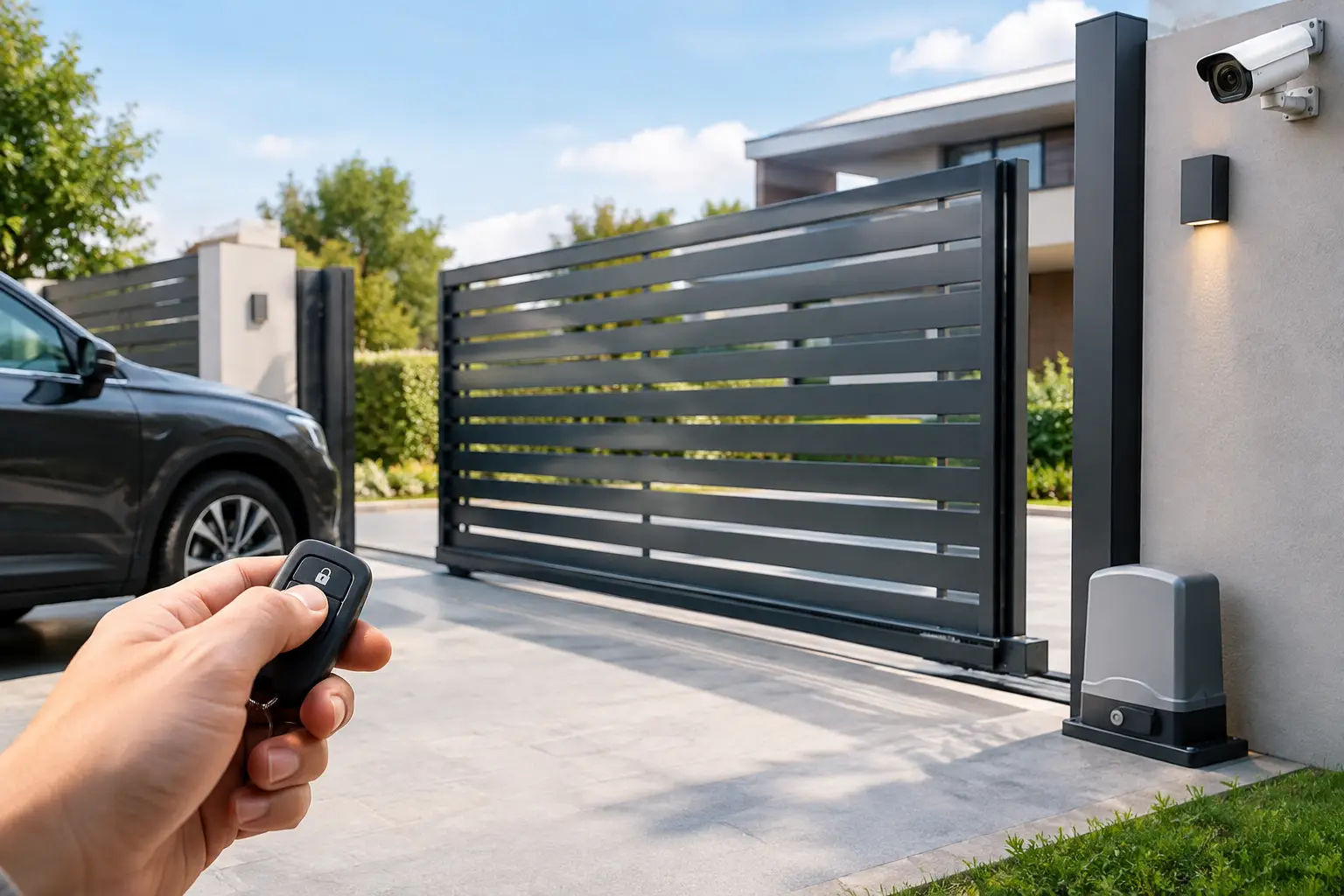
A gate that looks impressive but is awkward to use, unreliable in poor weather or unsafe around people and vehicles soon becomes a costly frustration. The best gate automation features are the ones that suit how your property actually operates: who arrives, how often, what vehicles need access and how much control you need over entry.
For a private driveway, that may mean opening the gate from the car with a handset or video intercom. For a commercial yard, it may mean controlled access for staff, delivery drivers and authorised vehicles, with safety systems that work consistently throughout the day. The right equipment starts with a proper assessment of the gate, the site and the electrical supply – not a one-size-fits-all kit.
Best gate automation features to consider
Safe obstacle detection
Safety must come before convenience. An automated gate should detect an obstruction and respond appropriately, whether that obstruction is a vehicle, person, pet or item left in the gate’s path.
Photocells are commonly fitted across the entrance to create an invisible safety beam. If the beam is broken while the gate is closing, the system stops or reverses according to its set-up. Safety edges add another layer of protection by sensing contact with an object. These are particularly valuable where gate movements could create trapping points, or where children, pedestrians or frequent visitors use the entrance.
The exact safety arrangement depends on the gate design and site layout. A sliding gate has different risk areas from a pair of swinging gates, while a busy commercial entrance may need more protection than a quiet, enclosed residential driveway. Professional installation includes identifying those risks before the automation is selected.
Reliable access control
Access control determines how people enter when a vehicle is not at the gate, and how you manage visitors when you are not nearby. A simple keypad can be a practical choice for family members, regular contractors or staff. Codes can be changed when circumstances change, avoiding the need to retrieve a physical key.
Audio and video intercoms provide more confidence at entrances where you want to speak to, or see, a visitor before granting access. A video intercom is often a sensible addition for larger homes, rural properties and sites with a gate some distance from the building. Depending on the system, calls can be answered from an internal monitor or a compatible mobile device.
For commercial premises, access credentials such as fobs, cards or keypads help limit entry to authorised users. The best option is not necessarily the system with the most features. It is the one staff and visitors can use clearly, consistently and without creating delays at the entrance.
Vehicle detection and exit control
A gate needs a safe and dependable way to open from the inside as well as the outside. Ground loops are installed beneath the driveway surface and detect a vehicle positioned above them. They are commonly used for automatic exit, preventing drivers from having to stop and press a release button when leaving a site.
Ground loops can also help stop a gate closing onto a vehicle that remains in its path. Their reliability makes them particularly useful at commercial sites, shared entrances and properties with regular vehicle movements. However, they require suitable groundwork and planning before the driveway surface is completed or reinstated.
Other exit options may include push buttons, key switches, remote handsets or intercom release. The practical choice depends on traffic levels, the size of the entrance and whether pedestrians use the same route.
A motor matched to the gate
Gate automation is not simply a matter of attaching a motor. The operator must be correctly matched to the gate’s weight, length, construction and expected usage. A heavy timber swing gate, for example, places different demands on an operator than a lightweight aluminium sliding gate.
Swing gates can use above-ground arms or underground operators. Above-ground automation is visible but can be straightforward to service and well suited to many domestic installations. Underground automation offers a more discreet finish, preserving the appearance of the gate, but requires careful drainage and installation below ground level.
Sliding gate automation can be an excellent choice where there is limited space behind the gates for leaves to open inward. It needs adequate run-back space along the fence or boundary line, as well as a correctly built track or cantilever arrangement. The motor, rack, gate structure and foundations all need to work together for dependable operation.
Choosing an undersized operator may reduce the initial cost, but it can lead to poor performance and premature wear. Choosing equipment suited to the duty cycle is more important than selecting on price alone.
Battery backup and manual release
Power cuts are uncommon, but they are a reality, particularly in exposed or rural locations. Battery backup can keep an automated gate operating for a limited period during an interruption, giving residents or authorised staff continued access. The available running time depends on the battery condition, gate size and number of cycles.
Every automated gate should also have a secure manual release mechanism. This allows the gate to be operated by hand if there is a power failure or fault. The release must be accessible to authorised users, but not so easily accessible that it compromises security. During handover, the installer should show you how it works and explain when to use it.
Remote control that fits daily use
Remote handsets remain a simple and effective option for many homes. They allow the gate to be opened before reaching the entrance, which is especially useful in wet weather, on busy roads or after dark. Extra handsets can be provided for household members, regular users or vehicles.
App-based control can be useful if you want to manage entry remotely, check whether the gate is open or grant access to a visitor when you are away. It does rely on a suitable network connection and should not replace sensible on-site access arrangements. At properties with weak mobile signal or unreliable internet, a traditional handset, keypad or hard-wired intercom may be the more dependable choice.
Features that protect the installation
Good gate automation includes the less visible details that help the system last. Correct cabling, weather-protected enclosures, stable foundations, drainage around underground motors and well-aligned hinges or tracks all affect reliability. A premium operator cannot compensate for a gate that drags, posts that move or poor drainage around the equipment.
Electrical expertise matters here. The supply needs to be safely planned, appropriately protected and installed in a way that suits the location. Outdoor equipment is exposed to moisture, temperature changes and regular use, so workmanship has a direct impact on long-term performance.
Lighting is also worth considering where gates are used in the evening. Entrance lighting can improve visibility for drivers, visitors and camera systems, while helping the gate become a more welcoming and practical part of the property boundary. It should be positioned to support safe use without causing glare for road users or neighbouring homes.
Residential and commercial priorities differ
For homeowners, the main priorities are often privacy, convenience, appearance and reassurance. A quiet operator, a neat installation, video entry and simple remote access may matter most. If the gate is used only a few times each day, the system can be designed around lower use while still providing reliable safety measures.
Commercial sites usually need more control and greater durability. A gate may operate dozens or hundreds of times per day, with vans, lorries, staff cars and visitors arriving at different times. Here, the operator duty rating, access permissions, ground loops and safety provision need closer attention. A delay at the gate can affect deliveries, security and the working day.
Shared private roads, estates and managed properties sit between these two situations. They often need an access system that is easy for residents but controlled enough to protect everyone using the entrance. Clear procedures for issuing codes, fobs and remotes are as useful as the hardware itself.
Plan the system before choosing the extras
It is tempting to begin with a preferred intercom or app, but the gate and site should lead the decision. Consider the available opening space, slope of the driveway, width of the entrance, gate material, wind exposure, drainage and electrical supply. Think about the largest vehicles that need to pass through, including refuse lorries, delivery vehicles and emergency access where relevant.
Also consider what happens when the gate is busy. Can a car safely wait off the road while using the intercom? Is there enough room for the gate to open without obstructing a public footpath? Will pedestrians need a separate gate? These questions affect the design long before an operator is installed.
Crabtree Electrical Gates provides specialist advice for domestic and commercial automation projects across Dorset and the South of England. A site survey allows the gate, access requirements and safety measures to be considered together, so the finished system is practical as well as secure.
The most worthwhile feature is often not the most technical one. It is the feature that makes entry safer, simpler and more reliable every day – installed properly, explained clearly and supported when you need it.
0 Comments