
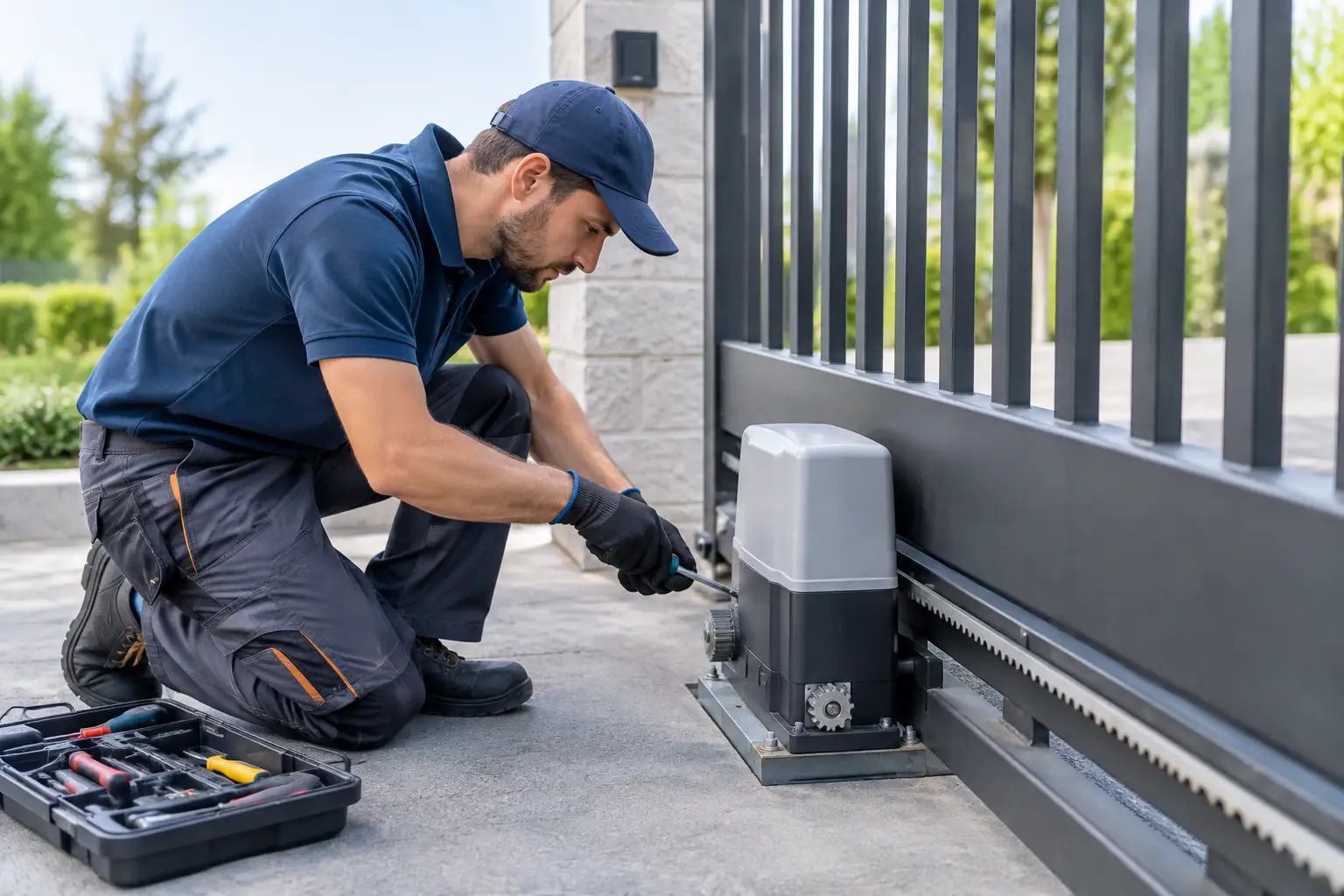
An automated gate that hesitates, stops short or only works intermittently is more than an inconvenience. It can leave a driveway unsecured, disrupt access to a commercial site and, in some cases, create a safety risk. Regular gate servicing is the practical way to keep the system operating as it should, while identifying wear before it becomes a more costly repair.
For homeowners, estate managers and business operators, servicing protects the investment made in automated access. It also provides reassurance that the gate, controls and safety devices are being checked by someone who understands both the mechanical and electrical sides of the system.
What gate servicing should include
A proper service is not simply a quick visual check or a spray of lubricant on moving parts. Electric gates rely on several components working together: the gate structure, hinges or track, motor, control board, cabling, safety equipment and access controls. A fault in any one of these can affect reliability.
During a service, the gate’s movement should be assessed from opening through to closing. This helps identify changes in speed, unusual noise, resistance or misalignment. Swing gates need particular attention at the hinges, posts and arms, while sliding gates require checks to the track, rollers, rack and guide hardware.
The automation equipment also needs close inspection. This includes checking motor fixings, enclosures, wiring connections and the control panel for signs of moisture, corrosion, damage or overheating. Outdoor equipment is exposed to rain, frost, dirt and changing temperatures throughout the year, so small issues can develop quietly between visits.
Safety devices are equally important. Photocells, safety edges, pressure sensors and obstacle detection settings should be tested to confirm the gate responds correctly when a person, vehicle or object is in its path. A gate should not continue closing where it presents a foreseeable risk of impact or entrapment.
Finally, a service should cover the controls people use every day. Remote handsets, intercoms, keypads, GSM systems, vehicle loops and manual release mechanisms all need to work when required. There is little value in a well-maintained motor if a resident cannot enter during a power cut or an authorised delivery vehicle cannot access a site.
How often should an automated gate be serviced?
For most domestic installations, an annual service is a sensible starting point. It gives a specialist the opportunity to inspect the system before seasonal weather and everyday use turn minor wear into a breakdown.
The right interval can be shorter for heavily used gates. A shared private road, flat development, commercial yard, school, industrial entrance or busy estate may see hundreds of movements each week. In these situations, six-monthly gate servicing is often more appropriate because moving parts, safety equipment and access controls are under greater strain.
Usage is not the only factor. Gates near the coast may be exposed to salt-laden air, while rural properties can experience mud, leaf build-up and debris around tracks and photocells. Older systems, timber gates that move with the weather, and large or heavy gate leaves may also benefit from more frequent checks.
The warning signs that should not wait
A planned service is the best approach, but some faults need attention sooner. If a gate starts reversing without reason, fails to close fully, moves unevenly or makes a grinding, clicking or straining noise, it should be inspected. Continuing to operate it can place extra load on the motor and damage components that may otherwise have been repairable.
Pay attention if remotes work only at close range, the intercom becomes unreliable, the gate trips the electrical supply, or controls behave differently after heavy rain. These symptoms can point to electrical connections, water ingress, battery issues or a fault in the control equipment.
Safety concerns should always be treated as urgent. If photocells do not respond, a safety edge is damaged, or the gate closes onto a vehicle or object, stop using the automation where possible and arrange a professional inspection. Do not attempt to bypass safety devices to keep the entrance operating. That may create a serious hazard and can conceal the underlying fault.
Why electrical expertise matters
Electric gate systems sit at the meeting point of structural work, mechanics and electrics. A gate may appear to have an automation fault when the real cause is a sagging hinge, a worn wheel, poor drainage beneath a sliding track or gate leaves that are no longer correctly aligned. Equally, a mechanical adjustment alone will not resolve a failing control board, damaged cable or incorrectly configured safety device.
This is why a specialist service is valuable. The engineer should assess the whole installation rather than focus on the most obvious symptom. Correct diagnosis avoids replacing parts unnecessarily and helps ensure repairs address the cause, not just the effect.
For commercial properties, this approach also supports more consistent access control. A barrier, sliding gate or swing gate may be connected to timed access, keypads, intercoms, fob readers or ground loops. Each part must be considered when investigating unreliable entry or exit.
Simple checks owners can make between visits
There are sensible observations a property owner or site manager can make without interfering with the system. Keep the gate track and surrounding area clear of stones, leaves, litter and overgrown vegetation. Check that photocell lenses are clean and unobstructed. If an intercom or keypad is exposed to the weather, look for cracked housings, loose fittings or water collecting around it.
It is also worth listening to the gate. A change in sound is often the first sign that rollers, hinges, motors or fittings are under strain. Record when the fault happens, whether it is worse in wet weather and whether it affects both opening and closing. This information can help a specialist diagnose the issue efficiently.
Avoid making adjustments to force settings, limit switches or safety devices without the right knowledge. These settings affect how the gate responds to an obstruction and how far it travels. An incorrect adjustment can create a safety problem or cause further damage.
Protecting security, safety and convenience
A well-maintained automated entrance does more than open and close on command. It helps control access to a home, business, farm, managed development or private estate. When a system is neglected, owners often find themselves reverting to manual operation at the worst possible time, such as during poor weather, a busy working day or an out-of-hours callout.
Planned maintenance is generally easier to organise than an emergency repair. It offers the chance to replace worn components at the right time, confirm safety systems are functioning and keep access controls dependable for everyone who uses the entrance. For sites with regular visitors, staff, deliveries or contractors, that consistency matters.
Crabtree Electrical Gates provides specialist support for automated swing and sliding gates, underground systems and integrated access control across Dorset and the South of England. Whether the installation is domestic or commercial, a service visit should be tailored to how the gate is used and the equipment fitted.
If your gate has become noisy, slow or unpredictable, arrange an inspection before the problem interrupts access completely. A regular service schedule is a straightforward way to keep your entrance safe, reliable and ready to work when you need it.
0 Comments