
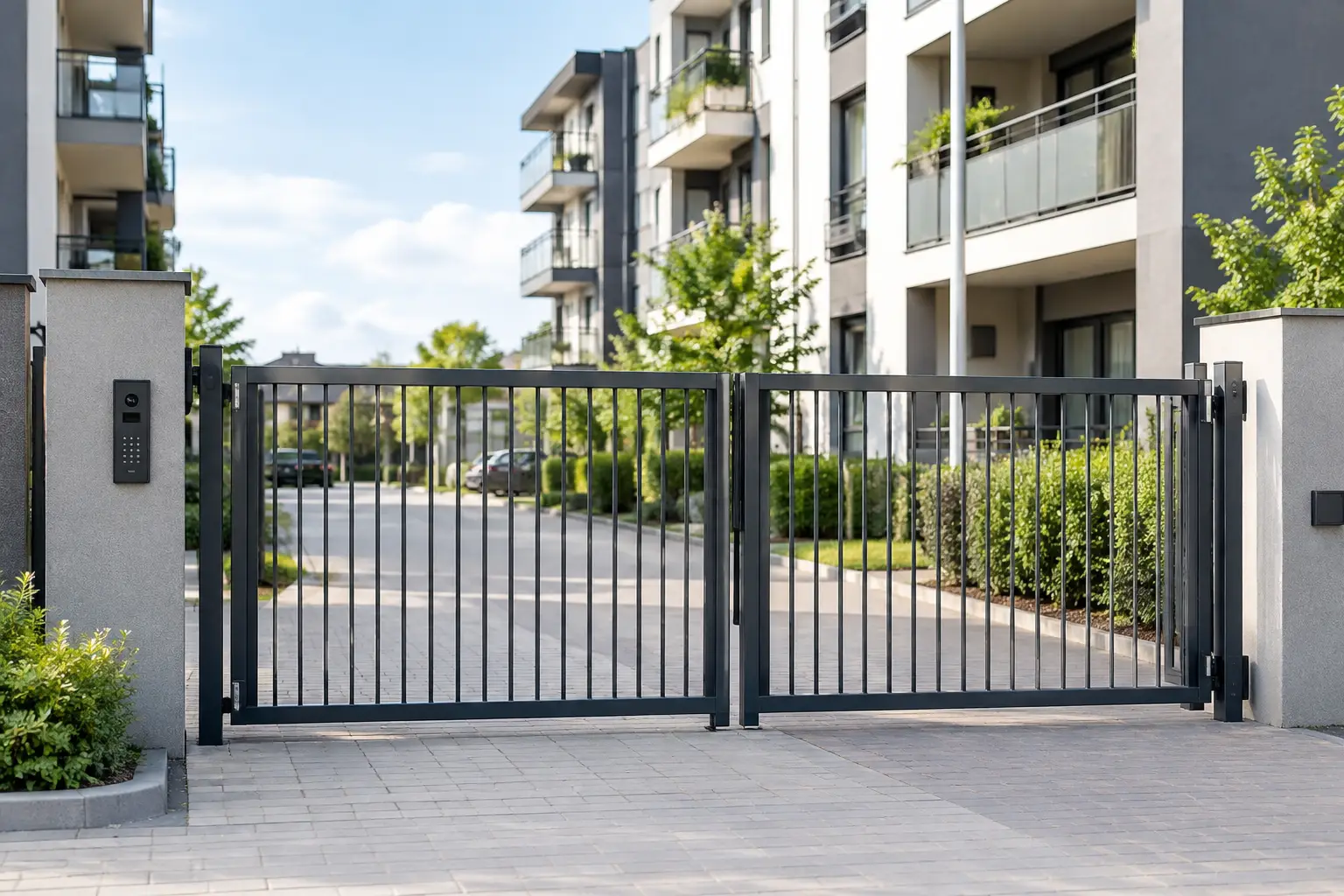
A gate at the entrance to a managed block has a harder job than a private driveway gate. It may need to admit residents throughout the day, allow deliveries and contractors at set times, provide emergency access, and prevent unauthorised vehicles or visitors from entering. The right flat gate features make that daily traffic easier to manage without compromising safety, reliability or the appearance of the property.
For blocks of flats, private estates and mixed-use residential sites, the best solution is rarely the gate alone. The automation, access control and safety equipment must be planned around how the site is actually used.
Flat Gate Features That Matter Most
The starting point is the entrance layout. A narrow driveway, a sloping approach, limited run-back space or frequent vehicle movements can all affect the choice between swing gates and sliding gates. A site with large delivery vehicles may need wider openings and careful positioning of safety devices. A smaller residential development may place greater emphasis on quiet operation and a discreet finish.
A professionally specified system brings the physical gate, motors, controls and safety measures together. The following features tend to make the greatest difference in shared residential settings.
Controlled resident access
Residents need a straightforward way to enter without leaving their vehicle. Remote controls remain a practical option for many blocks, particularly where the number of users is limited. They are simple to issue and easy to use, but lost or unreturned remotes should be removed from the system promptly.
Keypads offer another useful layer of access. A code can be provided to residents, regular visitors or contractors, although shared codes need changing when circumstances change. For larger sites, proximity fobs, key cards or telephone-based access control can provide better administration. These options allow individual credentials to be added or removed without replacing every device in use.
The right choice depends on the number of residents, the turnover of tenants, and whether a managing agent needs clear control over who has access. A small block may be well served by remotes and a keypad. A larger estate generally benefits from a system where individual users can be managed separately.
Intercoms for visitors and deliveries
An intercom is one of the most valuable flat gate features because it gives residents a decision before the gate opens. Audio intercoms are dependable and suit sites where a simple visitor call point is sufficient. Video intercoms add a visual check, which can be particularly useful where residents cannot see the entrance from their property.
Many systems can call an internal handset, while others can direct calls to a resident’s mobile phone. Mobile calling is convenient for residents who are away from home, but it depends on reliable signal or internet connectivity and should be set up with suitable permissions. It is also worth agreeing how visitors will be handled if a resident does not answer.
For multi-occupancy blocks, the entrance panel should be durable, clearly labelled and easy to use. Poorly positioned call panels, unclear flat numbering and inadequate lighting create frustration for visitors and can lead to residents bypassing the intended access arrangements.
Vehicle detection and exit controls
A gate should not rely on a resident finding a remote control simply to leave the site. Ground loops are commonly installed beneath the driveway surface to detect vehicles approaching the gate from inside. When correctly positioned and calibrated, they offer convenient hands-free exit while helping to prevent the gate closing onto a vehicle.
Other exit methods include push buttons, keypads and access-controlled pedestrian routes. The best arrangement depends on the layout and security requirement. An unrestricted exit loop may be right for a residential car park, while a commercial-residential site may need a more controlled exit arrangement.
Loops must be considered early, especially where the driveway is being resurfaced or constructed. Retrofitting is possible in some circumstances, but it can involve additional groundworks and disruption.
Safety systems that protect people and vehicles
Automatic gates must be installed with safety at the centre of the design. The moving leaf of a swing gate, or the leading edge of a sliding gate, creates potential trapping and impact risks if the correct safeguards are not in place.
Safety photocells create an invisible beam across the entrance. If a person, vehicle or object interrupts that beam, the system can stop or reverse as configured. Safety edges can also be fitted to gate edges and other identified risk points, responding if they meet an obstruction. Force settings, travel limits and gate speed all need careful adjustment during commissioning.
A safe installation is not achieved by fitting one device and assuming the job is complete. Each site needs a risk assessment that considers pedestrian movement, children, cyclists, visibility, pinch points and the way vehicles approach the gate. Gates should also have an accessible manual release for use during a power failure, with the relevant residents or site representatives shown how it works.
Pedestrian access beside the vehicle gate
Where pedestrians regularly enter the property, a separate pedestrian gate is usually the better approach. Asking people to walk through a vehicle entrance is inconvenient and can introduce avoidable safety issues.
A pedestrian gate can be linked to the same intercom, keypad or fob system as the main entrance. It should have suitable lighting, a secure latch or electric lock, and clear separation from moving gate leaves. For developments with prams, wheelchairs or mobility needs, the width, threshold and route to the entrance should be considered from the outset.
Lighting and visibility
Good lighting does more than improve kerb appeal. It helps visitors use intercoms and keypads, allows drivers to judge the entrance safely, and supports CCTV where it is installed. Lighting should cover the call point, pedestrian route and gate movement area without causing unnecessary glare for neighbouring homes or drivers.
Timers, photocells and low-energy fittings can keep the system practical to run. At more exposed locations, weather-resistant equipment and well-protected cable routes are equally important. Equipment that looks tidy on installation day should remain protected from water, accidental damage and everyday wear.
Choosing the Right Gate Type for the Site
Swing gates can be a strong choice where there is sufficient clear space inside the entrance for the leaves to open. They can suit traditional properties and may be automated with above-ground or underground motors. Underground systems keep much of the mechanism out of sight, producing a cleaner appearance, but they require proper drainage and accessible maintenance points.
Sliding gates are often preferable where space behind the entrance is limited or a wider opening is needed. They travel sideways rather than into the driveway, which can be useful for busy shared access points. However, they need adequate room alongside the opening and a suitable track or cantilever arrangement. Their foundations and alignment need to be right, particularly where the ground is uneven.
There is no single best style for every flat block. The gate must suit the available space, usage levels, ground conditions and desired finish, while the automation must be capable of handling the weight and frequency of operation.
Reliability Depends on Installation and Aftercare
A gate system serving several homes can see far more use than a typical domestic installation. Choosing motors based only on gate size can lead to premature wear if the daily opening cycle is higher than expected. The power supply, cabling, control cabinet and safety devices should all be specified for the site rather than treated as add-ons.
Maintenance is also part of responsible ownership. Leaves, hinges, rollers, tracks, photocells and safety edges require periodic checks. Dirt, leaves, poor drainage and vehicle strikes can all affect performance. A planned service helps identify small issues before they leave residents unable to enter or exit.
For managed properties, it is sensible to decide who has authority to issue remotes, alter access codes, approve new users and arrange repairs. Clear responsibility avoids delays when a tenant moves out, a fob is lost or the system needs attention.
Crabtree Electrical Gates provides specialist electric gate automation and access control installations for residential and commercial properties across Dorset and the South of England. A proper site survey helps establish which features will give residents convenient access while meeting the practical demands of the location.
A well-planned entrance should feel straightforward for authorised users and unwelcoming to everyone else. Before choosing equipment, consider the people, vehicles and routines the gate will serve every day. That is the clearest route to an installation that remains safe, reliable and easy to manage long after the work is complete.
0 Comments