
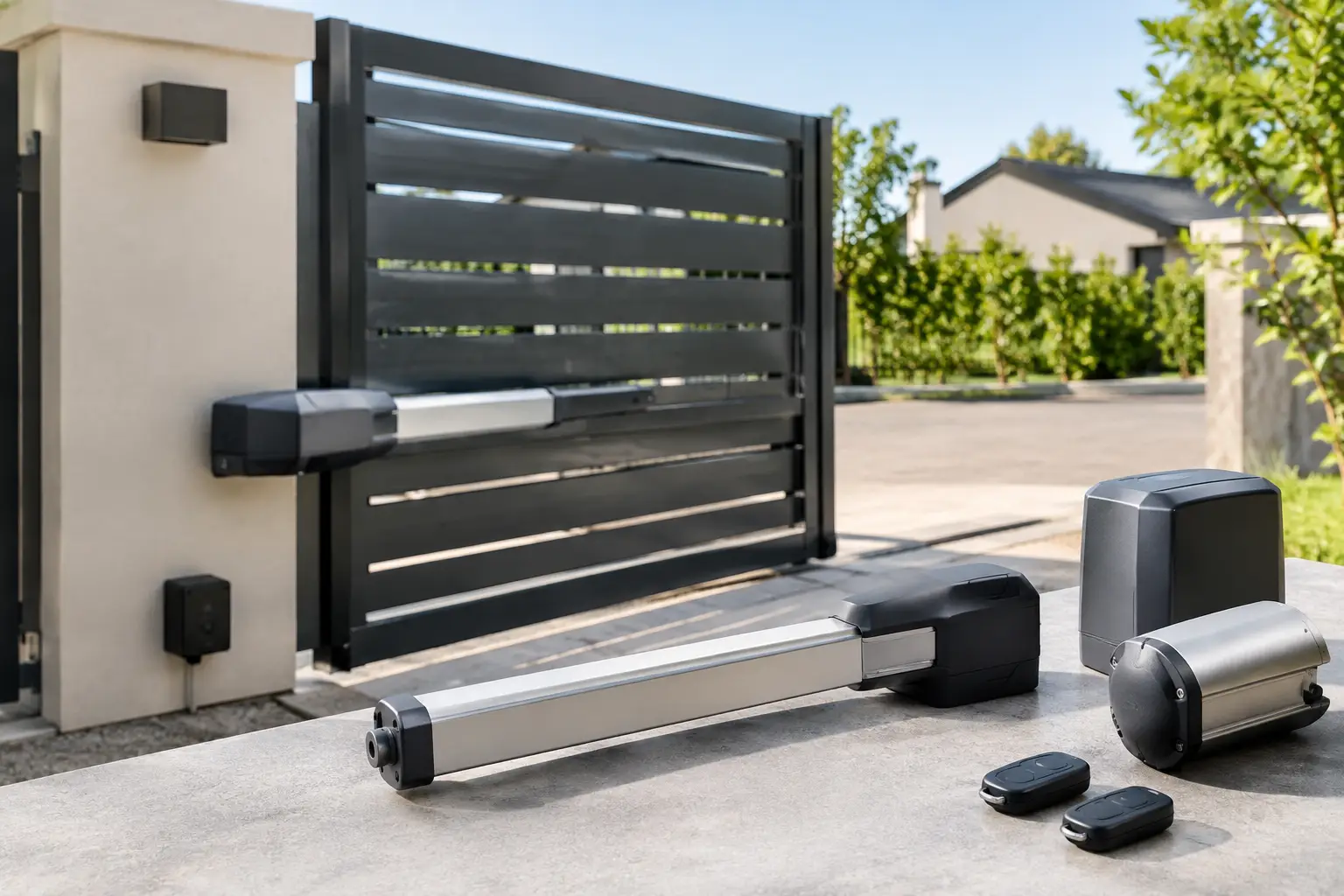
A gate actuator that is too small, poorly positioned or unsuitable for the gate design will cause problems long before the gate reaches the end of its working life. Slow operation, unreliable closing, excessive noise and premature wear are often signs that the system was selected on price or appearance rather than specification. Knowing how to choose gate actuators starts with the gate itself, how it is used, and the level of safety required at the entrance.
For homeowners, the right system should provide dependable access every day without spoiling the look of the driveway. For commercial sites, it must also cope with higher usage, control vehicle access and remain safe for staff, visitors and delivery drivers. There is no single actuator that suits every property. A proper survey is the sensible starting point.
Start with the type of gate
The first decision is whether the gate swings open or slides along a track or cantilever system. These designs require different forms of automation.
Swing gates usually use above-ground ram actuators, articulated arm motors or underground operators. A ram actuator is mounted between the gate leaf and the supporting post or pillar. It is a common choice for many domestic gates because it is neat, effective and available in a wide range of capacities. However, it needs the correct mounting geometry and enough clearance behind the gate.
Articulated arm actuators use a folding arm rather than a straight ram. They can be particularly useful where wide brick piers, large posts or restricted mounting positions make a ram installation impractical. The arms are more visible, so they may not be the preferred option where a discreet finish is the priority.
Underground gate actuators are installed below the hinge point, leaving very little equipment on show. They are often chosen for high-quality timber, aluminium or wrought-iron gates where appearance matters. They need careful drainage, sound groundwork and access for servicing. An underground system can look excellent, but it is not the right choice if the installation area is prone to standing water and cannot be prepared properly.
Sliding gates use a dedicated sliding gate motor rather than a swing-gate actuator. The motor drives a toothed rack fixed to the gate, moving it sideways. This arrangement can be a practical answer where a driveway slopes upwards behind the gate, where space is limited, or where a very wide entrance needs securing.
Match the actuator to gate weight and size
Every actuator has a stated maximum gate weight and leaf length, but these figures should not be treated as a target. Choosing an operator rated only just above the calculated weight leaves little margin for wind pressure, friction, ageing hinges, uneven ground or future changes to the gate.
A long, solid gate can place greater strain on an actuator than a shorter gate of the same weight. Timber gates are a good example. They can be heavy and may gain weight in wet weather, while full-height boarded gates also catch the wind. A lightweight metal gate with open bars may need far less force, even if it spans a similar opening.
The condition of the gate is equally important. Automation does not correct sagging hinges, poor alignment or a gate that drags across the drive. The gate should move freely by hand before motors are fitted. If it does not, the underlying issue needs attention first. Asking an actuator to force a badly operating gate open and shut will shorten the life of both the gate and the automation.
Consider how often the gate will operate
A private driveway with a few movements each day has very different requirements from a commercial yard, block of flats or managed estate. Frequency of use affects motor capacity, control equipment, safety provision and the expected level of aftercare.
For a domestic property, a quality residential actuator is often the most appropriate option when paired with properly maintained gates. It should be capable of regular family use and allow access through remote controls, a keypad, intercom or smartphone-based system where required.
Commercial entrances may need an operator designed for intensive use. Consider shift changes, deliveries, visitor traffic and how long a gate must remain open. A site entrance that handles dozens or hundreds of movements each day needs equipment built for that duty cycle, rather than a domestic motor working beyond its intended limits.
It is also worth thinking ahead. A gate that currently serves one household may later need to accommodate a home office, rental property, holiday let or additional staff parking. Selecting a system with suitable capacity from the outset can avoid an expensive upgrade later.
Do not treat safety as an optional extra
Automated gates create moving-force risks. A safe installation relies on more than a motor stopping at the end of travel. The gate design, the surrounding walls and fencing, the operating controls, and the safety devices must all work together.
Photocells are commonly used to detect a vehicle, person or object in the gate’s path. Safety edges can provide further protection where there are crushing or trapping points, such as between a moving gate and a post. Correctly set force limits, warning signage and safe control positions are also part of a professionally designed system.
A gate should not be capable of closing onto pedestrians or vehicles simply because a remote button has been pressed. The exact protection required depends on the gate layout and how people use the entrance. For example, a gate next to a public footpath, a shared access road or an active commercial yard may need a more detailed safety assessment than a private entrance used only by the household.
Manual release is another practical consideration. In the event of a power cut, authorised users need a safe way to disengage the operator and move the gate. This should be demonstrated at handover, rather than left as a key on a keyring with no clear instructions.
Choose a power and access arrangement that suits the site
Most hard-wired gate systems are powered from a suitable electrical supply. This is generally the best option for regular use, as it supports reliable operation and allows accessories such as intercoms, lighting, keypads and safety devices to be integrated properly.
Solar automation can be useful where bringing mains power to the entrance would involve substantial excavation or disruption. Its suitability depends on the gate’s usage, local shading, panel location and the amount of power needed by accessories. A solar system may work well for a lightly used rural entrance, but it may not be the best answer for a frequently operated commercial gate with video entry and multiple controls.
Access control should be selected alongside the actuator, not added as an afterthought. Remote fobs are simple and convenient, while keypads suit regular visitors or contractors. Audio and video intercoms provide greater control at the entrance, particularly for properties set back from the road. Ground loops can detect vehicles automatically and are often useful for managed or commercial exits.
Check the practical details before choosing
A site survey should establish more than gate measurements. The installer needs to assess the ground levels, hinge positions, post or pier dimensions, drainage, cable routes and the available electrical supply. They should also consider where vehicles wait while the gate opens and whether the entrance allows sufficient room for safe operation.
Before agreeing a gate automation proposal, make sure you understand these points:
- whether the operator is suited to the gate’s size, weight and construction;
- what safety devices are included and why they are needed;
- how the gate will operate during a power failure;
- which access controls are included, and whether more can be added later;
- what servicing, warranty and workmanship cover apply after installation.
The cheapest quotation can become costly if it excludes essential safety equipment, electrical work or groundwork. Equally, the most expensive actuator is not automatically the right one. The best choice is a system that is properly sized, safely installed and appropriate for the way the entrance is used.
Choose an installer with electrical and gate expertise
Gate automation sits between mechanical work, electrical installation and safety planning. A good installer will inspect the gates, explain the available options clearly and identify limitations before work begins. They should not simply attach motors to an existing gate and hope for the best.
Look for clear workmanship guarantees, appropriate insurance and a realistic explanation of the work involved. Ask who will carry out the electrical installation, how cables will be protected, and what support is available if an issue develops after commissioning. For commercial properties, it is sensible to discuss planned servicing as well as the initial installation.
Crabtree Electrical Gates installs tailored automation systems for swing and sliding gates across Dorset and the South of England, including access control and safety equipment selected for the individual site. A direct survey and quotation give you the opportunity to discuss your gate, your daily access needs and the finish you want before committing to a system.
The right actuator should feel unremarkable once it is installed: the gate opens when it should, closes safely, and gives you confidence every time you arrive or leave. Start with a proper assessment of the gate and entrance, and the right equipment will follow.
0 Comments