
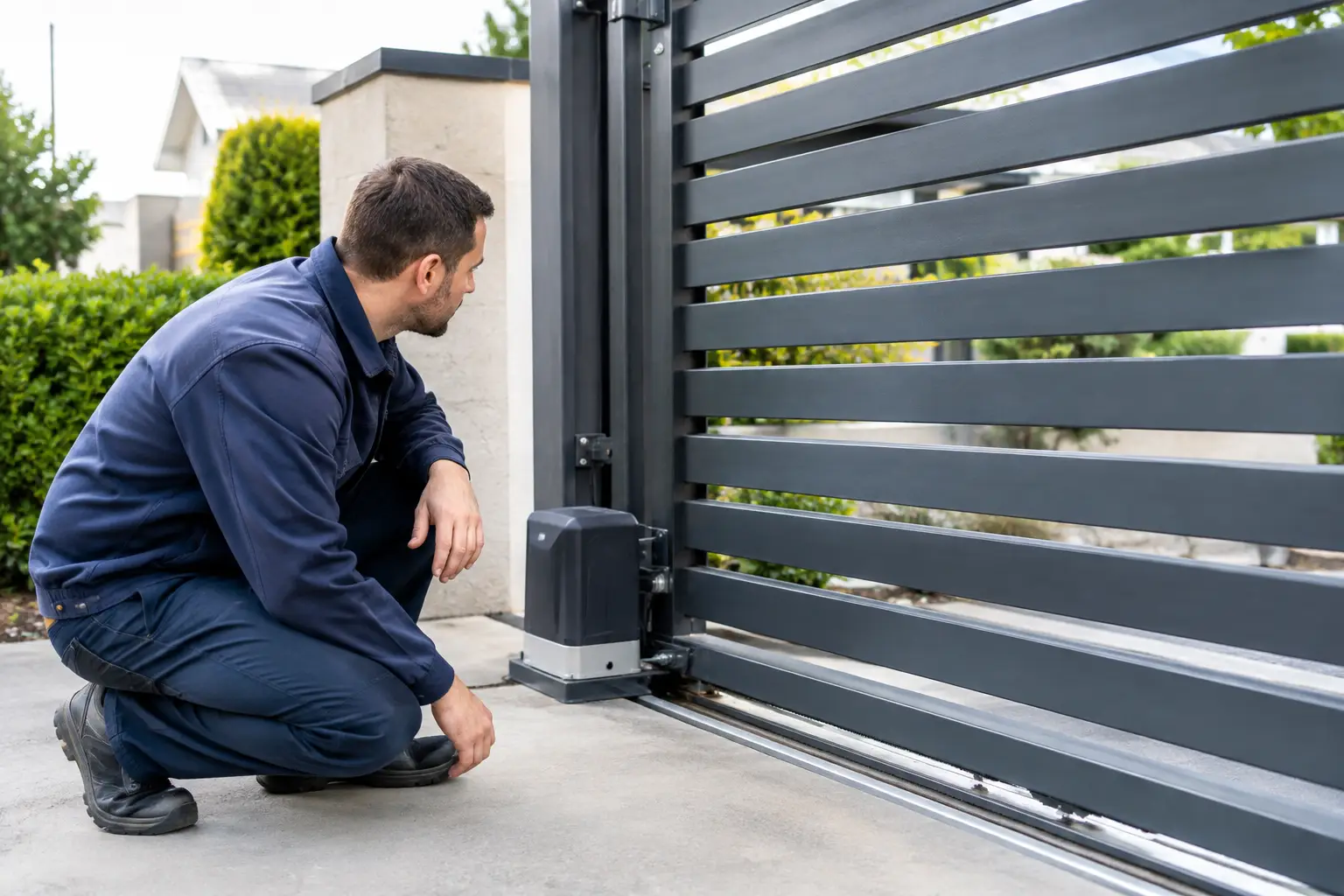
A gate that opens normally but refuses to close is more than an inconvenience. It can leave a driveway, private estate or commercial entrance unsecured, disrupt access, and create a safety concern. If you are asking, why is my gate not closing, the cause is often not the motor itself. Automated gates are designed to stop when they detect an obstruction, fault or unsafe condition, so the problem may sit with a safety device, alignment, control setting or power supply.
The sensible first step is to stop repeatedly operating the gate. Forcing a system to close, holding down a remote button or bypassing a safety feature can cause further damage and, more seriously, put people, vehicles and pets at risk. A few careful checks can help identify what has changed, but faults involving electrics, underground equipment or safety systems should be assessed by a qualified gate automation specialist.
Why is my gate not closing after opening?
When an electric gate opens but will not return, it has usually received a signal telling it that closing is unsafe. Modern swing and sliding gate systems use several protections to prevent the gate closing onto a vehicle, person or object. A fault in any one of them can stop the closing cycle.
Something is in the gate’s path
Start with the obvious, but inspect closely. A stone in a sliding gate track, compacted mud near the wheels, a fallen branch, or a bin left close to a swing gate can be enough to prevent movement. Swing gates also need clear space along their full arc. Even if an object is not directly in front of the gate, it may be catching a leaf, hinge or gate edge as it moves.
For sliding gates, check the track, guide rollers and the area around the closing post. For swing gates, look beneath each leaf and around the hinges. Do not put hands near moving parts or attempt to move a powered gate manually unless you know how to use its manual release safely.
Safety photocells are blocked, dirty or out of alignment
Photocells are the small sensors usually positioned either side of an entrance. They create an invisible beam across the opening. If that beam is broken, the control panel will normally prevent the gate from closing or cause it to reopen.
Cobwebs, rain marks, insects and dirt can interfere with photocells, particularly after poor weather. A slight knock to a post, delivery vehicle contact or ground movement can also put the two units out of alignment. Wipe the outer lens gently with a soft cloth and check that nothing is crossing the entrance. Avoid adjusting wiring or dismantling the units.
If the fault appears only in bright, low sunlight, the photocells may be affected by glare or may require repositioning. This is one reason a proper site assessment matters when safety devices are installed.
A safety edge has been triggered or damaged
Some gates have pressure-sensitive safety edges fitted to the leading edge of the gate leaf, posts or pinch points. If the edge meets an obstacle, it sends a stop signal to the controller. A damaged edge, loose cable or water ingress can make the system behave as though it has detected an impact when it has not.
This is not a part to defeat or disconnect. Safety edges are particularly important on heavy gates, commercial entrances and systems with areas where fingers or limbs could become trapped. A specialist should test the edge, cabling and controller inputs before the gate is returned to normal use.
Mechanical problems that stop a gate closing
An automation system can only move a gate that is correctly installed, supported and balanced. With use, ground movement, weather and accidental contact can affect the gate structure itself.
A swinging gate may sag at the hinges, causing the leaf to catch on the ground or closing post. Timber gates can swell in prolonged wet conditions, while metal gates may shift if posts move. On a sliding system, worn rollers, debris in the track or a misaligned guide roller can create enough resistance for the motor to stop on its safety setting.
You may notice scraping, jerking, a new gap between the gate and its closing catch, or a motor that sounds strained before stopping. These signs should not be ignored. Increasing the force setting may seem like a quick answer, but it can make the gate less safe and place unnecessary strain on the operator. The underlying alignment or mechanical issue should be corrected first.
Underground operators need careful inspection
Underground swing gate motors offer a clean appearance because much of the mechanism is hidden below ground level. However, the foundation box, drainage and operating arms still need periodic attention. Leaves, silt and standing water can affect components if drainage is poor, while worn bearings or linkages can stop a leaf completing its travel.
Because the equipment is concealed and connected to the electrical system, this is a job for a gate engineer rather than a general repair. Proper inspection can distinguish between a mechanical restriction, water-related issue and electrical fault without guesswork.
Electrical and control faults to consider
If there is no movement at all, or the gate begins to close and immediately stops, the problem may be in the control system. Gates rely on a control board, power supply, motor connections, safety inputs and programmed limits working together.
A local power cut, tripped circuit breaker, damaged cable or failed power supply can prevent operation. Battery backup systems can also cause confusion: a gate may work briefly during a mains failure, then stop when the battery becomes depleted or reaches the end of its service life.
Control panels often show diagnostic lights or error codes. These can be useful to an engineer, but the meaning varies by manufacturer and installation. Take note of any flashing lights, beeps or display messages, along with when the issue started. That information can speed up diagnosis.
Remote controls and access equipment are not always the cause
If the gate opens from a remote, keypad or intercom but will not close, the command device is unlikely to be the main issue. The system has already received an instruction and moved in one direction. The fault is more likely to be a closing safety input, limit setting or obstruction.
However, automated entrances with intercoms, keypads, ground loops and exit buttons can be programmed in different ways. A vehicle loop that remains activated, a stuck exit button or an incorrectly configured timed-close function may hold the gate open. Commercial sites often have more connected equipment, so a structured electrical test is preferable to replacing parts at random.
Check the closing limits and programming
Every automated gate needs limits – points that tell the operator when the gate has reached fully open and fully closed. Depending on the system, these may be mechanical stops, magnets, encoders or programmed travel positions.
If a gate reaches the closed position but reverses, stops short, or keeps trying to travel beyond its normal point, the limits may have moved or lost their programming. This sometimes follows a power interruption, manual release operation, impact or mechanical movement of the gate.
Limit adjustment affects both reliable operation and safe force control. It should be completed by someone familiar with the specific operator and its safety requirements. A gate that closes too hard or fails to recognise its end position is not simply a nuisance fault.
What you can safely check before arranging a repair
Without removing covers, altering settings or touching electrical connections, you can check a few practical points:
- Clear visible leaves, stones, ice and other debris from the track, hinges and gate path.
- Make sure no vehicle, bin, plant or object is interrupting the photocell beam.
- Clean photocell lenses gently and look for obvious signs that a unit has been knocked out of position.
- Confirm the property has power and check whether a relevant circuit has tripped.
- Note any error lights, unusual noises, recent weather damage or changes to the gate’s movement.
Do not continue cycling the gate if it is straining, making grinding noises, moving unevenly or failing to stop safely. Isolate the system only if you can do so safely and in line with the installation instructions, then keep the entrance secure by other means until it has been inspected.
When to call a gate automation specialist
A professional visit is advisable when the gate is heavy, commercial, electrically hard-wired, fitted with underground motors, or has a fault involving photocells, safety edges or control equipment. It is also the right choice if the gate has been struck by a vehicle, shows signs of sagging, or has become unreliable after rain or a power issue.
A competent engineer will check the gate’s physical movement before testing the electrical controls, safety devices and settings. This order matters. Replacing a motor will not solve a misaligned gate, and changing a photocell will not correct a damaged track or failed closing limit.
For homeowners, estate managers and site operators across the South of England, Crabtree Electrical Gates can assess automated swing and sliding gate faults with the electrical and practical installation knowledge the work requires. A clear diagnosis helps avoid unnecessary parts and restores controlled access safely.
If your gate is not closing, treat it as a safety and security issue rather than a problem to work around. Record what the system is doing, keep the entrance clear, and arrange expert attention before a minor fault becomes a damaged operator or an unsecured property.
0 Comments