
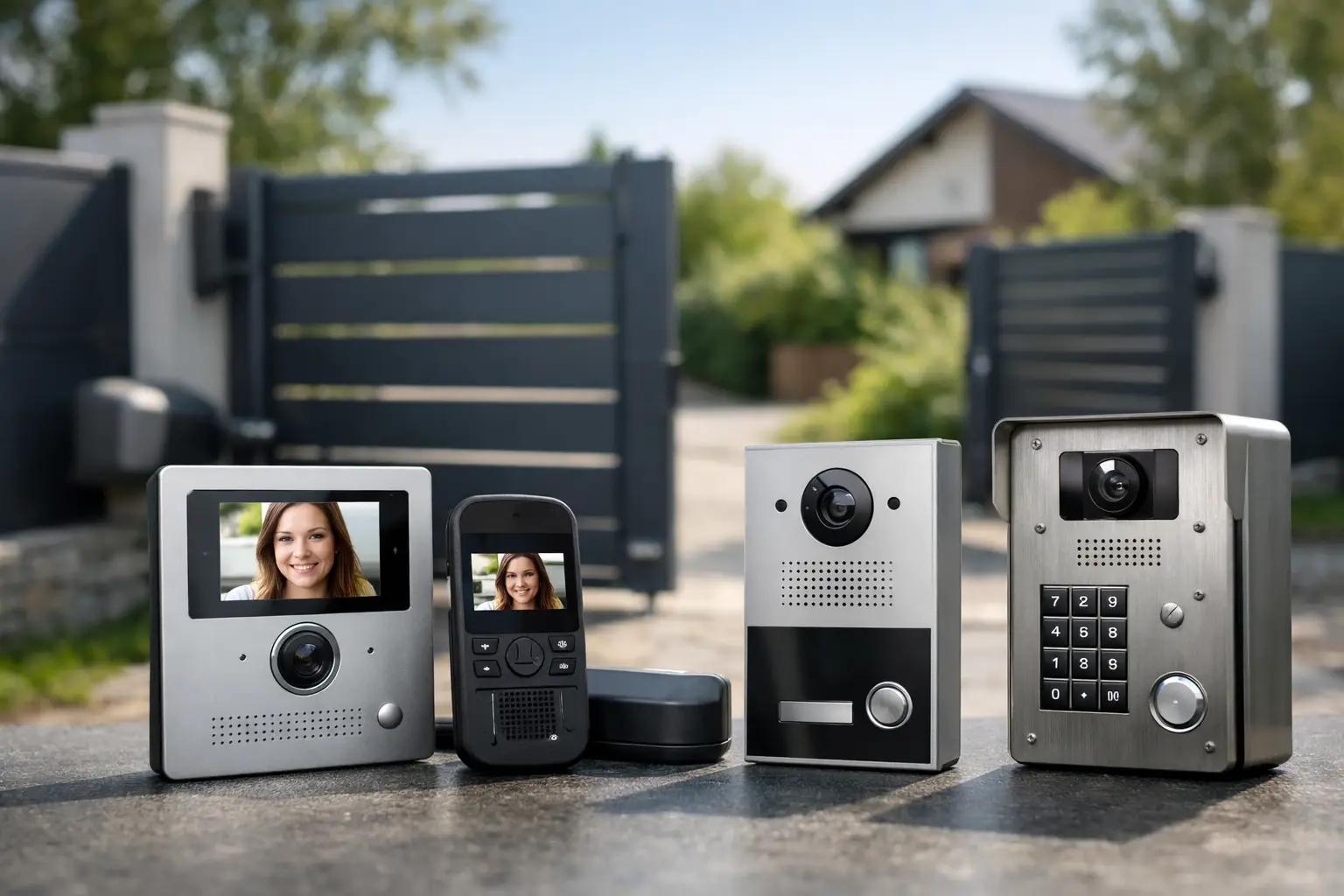
A gate intercom is often the part of an automated entrance that gets used most. It needs to work clearly in poor weather, be simple for visitors to understand, and give you reliable control of the gate from inside the property. That is why choosing the best intercoms for electric gates is less about selecting the longest feature list and more about matching the system to the gate, site layout and daily use.
For a private driveway, a straightforward video intercom may be the right answer. For a busy commercial entrance, controlled access, multiple users and clear audit trails may matter more. The best result comes from considering the whole access system together, rather than adding an intercom as an afterthought.
What makes an intercom right for an electric gate?
An electric gate intercom should provide secure communication and a dependable way to release the gate. It also has to suit the distance between the entrance and the building, the available power and cable routes, mobile signal at the site, and the number of people who need access.
A system that performs well on a short, clear driveway can be unsuitable for a long rural entrance with thick stone walls or limited mobile coverage. Similarly, a domestic system intended for one household may not be practical for offices, farms, blocks of flats or managed estates where several users need separate access permissions.
The quality of installation matters just as much as the equipment. Correct cable sizing, suitable containment, protected external connections and careful positioning of the entrance panel all affect reliability. The panel should be easy for legitimate visitors to find and use, without creating a weak point in the perimeter.
Best intercoms for electric gates: the main options
Audio intercoms
Audio-only intercoms remain a sensible option where simple, reliable communication is the priority. A visitor presses the call button, the property owner answers at an internal handset, and the gate can be released if required.
They are usually more cost-effective than video systems and can be ideal for properties where the entrance is already visible from the house or where budget is a key consideration. The trade-off is clear: you can speak to a visitor but cannot confirm who is standing at the gate visually. For a low-traffic private entrance, that may be perfectly adequate. For security-conscious properties, video is generally the stronger choice.
Video intercoms
Video intercoms allow the person answering to see the visitor before opening the gate. This is particularly useful on driveways that are out of sight of the house, at entrances used by delivery drivers, or where children and vulnerable occupants may answer calls.
A good video system needs more than a camera. The image must remain usable in changing light, including bright sun behind a visitor and darkness during winter evenings. Wide-angle cameras help cover the approach, while infrared or other low-light capability can improve night-time identification. Positioning is crucial: an excellent camera mounted at the wrong height will still give an unhelpful view.
Video intercoms typically use an indoor screen, a phone app, or both. A dedicated internal monitor is often valued because it works without relying on a mobile phone being charged, connected or close to hand. App access adds convenience when you are elsewhere on the property or away from home, but it should complement a properly designed access system rather than be its only means of operation.
GSM intercoms
GSM intercoms call a nominated mobile or landline number when a visitor presses the call button. You can speak to the visitor and release the gate from your phone, whether you are in the house, at work or away.
This can be a practical choice for rural properties and sites where running a cable from the gate to the building would be disruptive or expensive. It is also useful for holiday properties, yards and small business premises where the person responsible for access is not always on site.
However, GSM systems depend on a suitable mobile signal and an active SIM arrangement. Signal should be checked at the actual gate location, not assumed from coverage maps. Call forwarding, multiple authorised users and caller ID access can be very useful, but they need to be set up carefully. A system that rings several people at once may sound convenient, yet it can create confusion if more than one person tries to operate the gate.
IP and app-based intercoms
IP intercoms connect through a network and can provide high-quality video, remote answering, multiple users and detailed control options. They are well suited to larger homes, commercial premises and managed sites where users may need access from different locations.
The attraction is flexibility. A receptionist can answer from an internal desk, an estate manager can respond remotely, and authorised users may have app access. Some systems can also integrate with other building systems, depending on the equipment selected.
The consideration is network quality. Wi-Fi at the gate is not always dependable, especially across large grounds, through external walls or near metal gate structures. A hardwired network connection is normally the more reliable approach where practical. Cybersecurity also deserves attention: strong passwords, managed user permissions and software updates help protect an access system connected to the internet.
Keypad and proximity access alongside an intercom
An intercom controls visitor entry, but regular users should not need to call every time they arrive. Adding a keypad, proximity fob reader, vehicle transmitter or number-plate-based access method can make everyday use quicker and more controlled.
For households, a keypad gives family members and trusted tradespeople a simple access route without handing out remotes. For commercial sites, individual fobs or codes can be issued and withdrawn as staff, contractors or tenants change. This gives better control than a shared remote that can easily be lost or copied.
These options should be planned alongside the intercom. The entrance panel, keypad and safety devices need to be positioned so visitors can reach them safely without obstructing traffic or stepping into the gate’s movement area.
Choosing between wired and wireless installation
Wired intercoms are generally the preferred option when a suitable cable route can be installed. They offer consistent performance, avoid dependence on local wireless conditions and can support high-quality audio, video and gate release functions over longer distances.
Wireless systems can reduce groundwork and may be appropriate where excavating a driveway is impractical. Their performance depends on the site. Distance, walls, trees, vehicles and nearby electrical interference can all affect the connection. Battery-powered equipment also introduces a maintenance requirement that should not be overlooked.
For new gate installations, installing appropriate cabling from the beginning usually gives the best long-term result. It also provides scope for future upgrades, such as adding video, extra call points or access readers later.
Questions to ask before selecting a system
Before deciding on an intercom, establish who will answer it, where they will be when visitors arrive, and how often the entrance is used. A gate at a family home has different demands from a delivery entrance, a farm track or a shared commercial yard.
Consider whether the entrance is visible from the property, whether visitors arrive after dark, and whether you need to grant access when away from site. Check the practical details too: cable routes, mobile coverage, network availability and the distance from the gate to the main building.
It is also worth thinking about aftercare. Access credentials occasionally need changing, names on call buttons may need updating, and damaged external panels should be addressed quickly. Choosing equipment that can be supported and maintained locally is often more valuable than selecting a system with features that will never be used.
Safety, reliability and professional installation
An intercom must work alongside, not instead of, a correctly designed automated gate system. Gate safety depends on suitable control equipment, safety edges, photocells, force limitation and a proper risk assessment. Releasing a gate remotely should never compromise the safe movement of people, vehicles or the gate itself.
External equipment must also withstand the British climate. Entrance panels need appropriate weather protection, secure fixings and durable cabling. On exposed coastal or rural sites, materials and enclosure quality deserve particular attention.
Crabtree Electrical Gates installs access control as part of a complete automated gate solution across Dorset and the South of England. Assessing the entrance, electrical supply, communications options and intended use before installation helps avoid the common problems of poor signal, inconvenient positioning and unreliable gate release.
The right intercom should make arriving home or managing a site feel straightforward, not add another system to worry about. A site survey gives you the opportunity to choose an arrangement that suits the way your entrance is actually used, with dependable access for the right people and clear control over everyone else.
0 Comments