
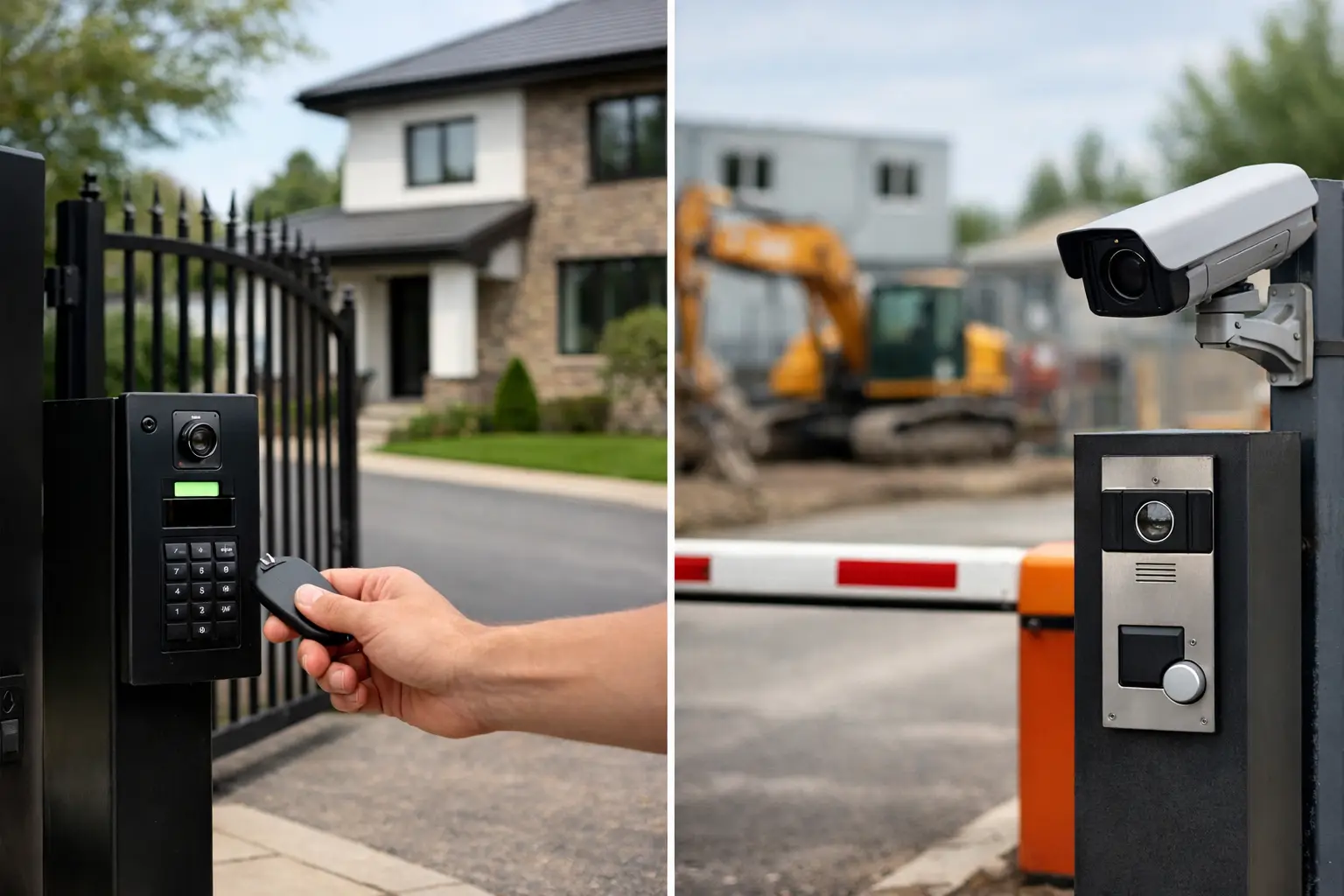
A gate is only as useful as the way people are allowed through it. This gate access control guide is designed to help homeowners, estate managers and commercial operators choose an entry system that is practical every day, secure when it matters, and properly matched to their gate automation.
The right arrangement should make arrival straightforward for authorised visitors while giving you control over everyone else. That may mean a simple keypad at a private driveway, video intercoms at a busy office entrance, or multiple credentials and vehicle detection at a managed commercial site. The best choice depends on who uses the entrance, how often they use it and what happens when there is a power cut or fault.
What gate access control actually does
Access control is the equipment that sends a command for an automated gate to open. It can identify a person, vehicle or approved device, then pass that instruction to the gate control panel. It also allows the property owner or site manager to decide who has access and when.
For a domestic property, this is often about convenience as well as security. You may want to speak to a caller from inside the house, issue family members with remote controls, or allow a delivery driver to use a keypad code. For commercial premises, the priority is more likely to be consistent control, safe vehicle movements and the ability to remove access quickly when staff or contractors leave.
The access system must work with the gate itself, its automation controls and its safety equipment. Treating these as separate decisions can create avoidable limitations later. A specialist installer should assess the whole entrance, including the gate type, cable routes, power supply, traffic flow and the position of pedestrians.
Choosing access control for your gate
Start with the people and vehicles that need to enter. A quiet private driveway has different requirements from a farm, industrial unit, school, flat development or estate road. There is no single system that suits every entrance.
Keypads and coded entry
A keypad is a straightforward choice where regular visitors need access without carrying a remote control. It can be fitted on a suitable post or pedestal and programmed with a code for residents, staff, tradespeople or guests.
The main benefit is simplicity. However, codes are easily shared, especially on commercial sites or properties with frequent contractors. A keypad is often best used alongside another method of entry, rather than as the only measure. Codes should also be changed when circumstances change.
Audio and video intercoms
Intercoms allow visitors to call the property before the gate is opened. An audio intercom gives two-way speech, while a video intercom adds a camera so that the resident or receptionist can see who is at the entrance.
For many homes, video offers welcome reassurance. It is useful for confirming a visitor’s identity before releasing the gate, particularly where the entrance is some distance from the house. On commercial premises, an intercom can direct calls to an office, reception point or authorised member of staff.
The practical question is where the internal unit will be located and how calls will be answered. Some systems can route calls to a mobile phone, which can be convenient when nobody is at a fixed desk. This should be selected carefully, as mobile signal, network reliability and user permissions all affect day-to-day use.
Remote controls, fobs and cards
Remote controls are familiar and convenient for private gates. They allow the driver to open the gate before reaching the entrance, provided they are within range. Fobs and proximity cards are more common in shared residential developments and workplaces, where each user can be issued with their own credential.
These options are quick to use and do not require a visitor to remember a code. They also give better control than a shared keypad code because a lost fob or departing employee’s card can be removed from the system. The trade-off is administration. Someone needs to keep a record of issued devices and deal promptly with lost or stolen items.
Vehicle detection and ground loops
Ground loops are vehicle detection systems installed beneath the driveway surface. They can detect a vehicle approaching or waiting at a gate and trigger an appropriate action. They are particularly useful at commercial entrances, private roads and sites where lorries or regular traffic need efficient entry and exit.
A loop can be set up to open a gate for authorised traffic leaving a secure site, avoiding the need for drivers to stop and press a button. It can also help prevent a gate closing while a vehicle remains in the detection area. The final design must take account of site layout, vehicle types and safety requirements. Ground loops are not a substitute for properly specified gate safety devices.
Safety must be part of the access design
Automated gates need safety measures that suit the installation. A gate can cause serious injury or damage if it closes on a person, vehicle or object. Safety edges, photocells, force settings and carefully planned operating areas all have a part to play.
Access control affects safety because it determines when and how the gate starts moving. For example, a release button should be positioned where the person using it is not placed in danger. A keypad should be reachable without forcing a driver to stand in the path of a sliding gate. Pedestrian access should be considered separately where people may walk through the entrance.
Emergency access also deserves proper thought. If the mains supply fails, you may need battery back-up, a manual release mechanism or a clear procedure for staff and residents. The right approach depends on whether the gate protects a family home, a business with operating hours, or a site that requires uninterrupted access.
Plan for visitors, deliveries and daily use
Many installations are chosen around the owner’s usual routine, then become frustrating when guests, deliveries and service providers arrive. Before selecting equipment, consider the less frequent but important situations.
Think about refuse collections, postal deliveries, gardeners, cleaners, emergency services, tradespeople and larger vehicles. If delivery drivers cannot safely turn around or use the intercom, the gate arrangement may cause unnecessary delays. At commercial sites, identify whether HGVs need wider opening angles, separate intercom positions or a holding area before entry.
It is also worth deciding who will manage the system. A home owner may be happy to add or delete a remote control when needed. A larger business may need a nominated person to manage staff credentials, visitor procedures and access permissions. The more users a system has, the more valuable clear management becomes.
Installation details that affect reliability
A reliable access control system starts with sound electrical installation and sensible equipment placement. External keypads, intercoms and readers must be suitable for outdoor use and positioned at a practical height. Cabling needs protection from weather, accidental damage and future groundwork.
The distance between the gate and the property can influence the system selected. Long driveways may require additional cable work, wireless equipment or a network-based solution. Each has advantages, but wireless devices should not be chosen simply to avoid groundwork if signal strength is uncertain.
Gate type matters too. Swing gates, sliding gates and underground operators each have different movement areas, control positions and safety considerations. A good installation considers access control before the gate is commissioned, rather than adding it as an afterthought.
When to choose a combined system
For most properties, combining two access methods gives the best balance. A homeowner might use remotes for family members and a video intercom for visitors. A commercial site may use fobs for staff, an intercom for deliveries and vehicle loops for controlled exit.
This approach avoids relying on one method for every situation. It also provides a useful fallback if a remote is misplaced, a code is forgotten or the usual contact is unavailable. The system should remain easy to understand, not overloaded with features nobody will use.
Crabtree Electrical Gates can assess the entrance, recommend suitable automation and access options, and install the system as one properly planned package. For properties across Dorset and the South of England, a site visit is often the clearest way to establish what will work safely and reliably.
A well-chosen access system should fade into the background after installation. People who should enter can do so without delay, visitors can be verified before the gate moves, and the owner remains in control. That is the practical standard worth aiming for when planning an automated entrance.
0 Comments