
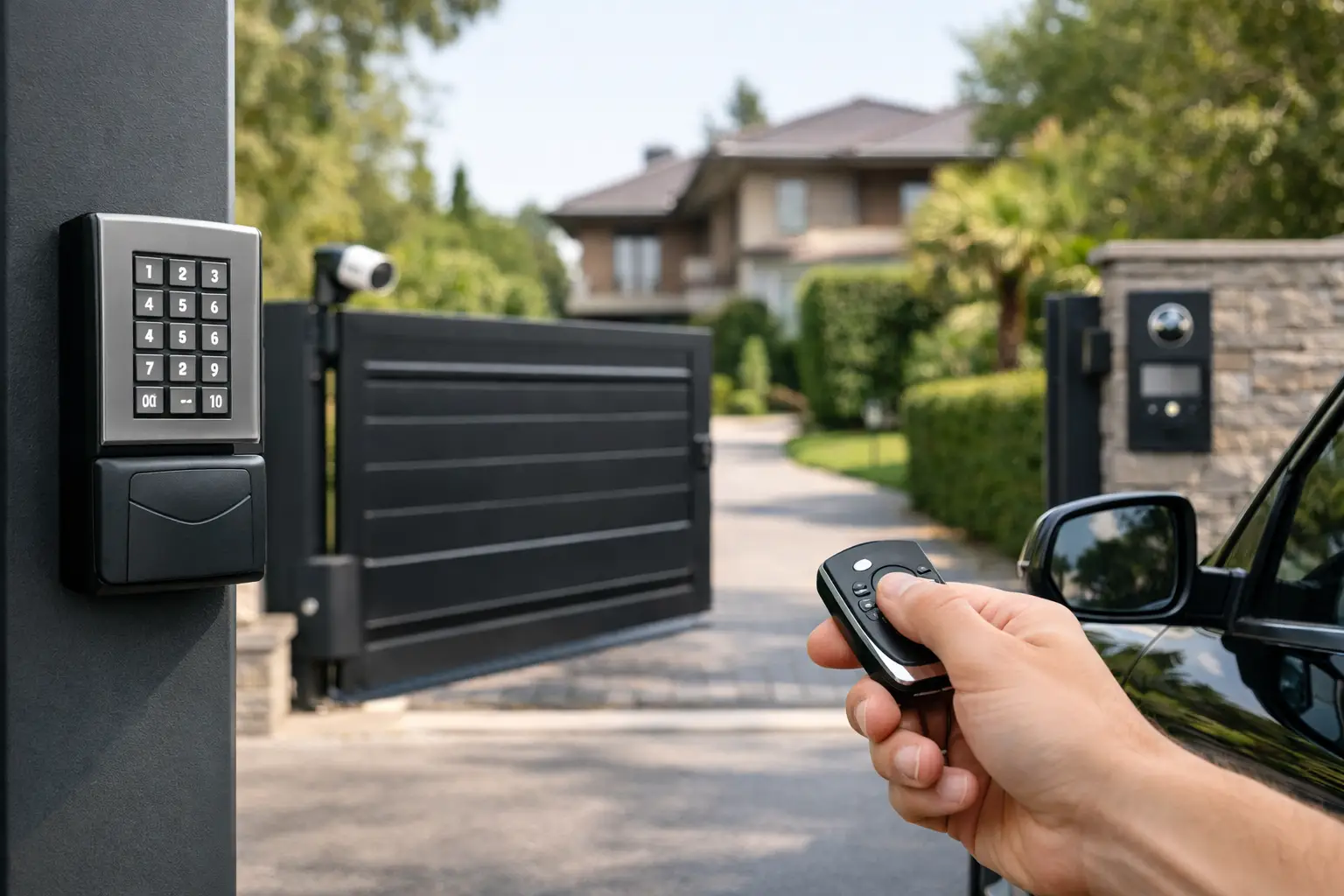
A gate operator is only part of the job. The best driveway gate access systems make entry straightforward for the people you trust, while giving you control over everyone else. For a private home, that may mean answering a video intercom from indoors. For a commercial site, it may mean allowing authorised vehicles through without asking staff to leave their post.
The right choice depends on how the property is used, who needs regular access and what happens when the gate is closed. A good installation should suit the gate, driveway layout and electrical supply as well as the day-to-day routine of the people using it.
What makes a driveway gate access system work well?
A well-designed system is reliable before it is clever. Residents, visitors, deliveries, tradespeople and emergency access all need to be considered at the planning stage. It is usually better to install a clear, dependable access method than add features that no one will use.
The gate style matters too. Swing gates need a safe opening area, while sliding gates need enough room to travel along the fence line. Underground automation can provide a discreet finish on suitable swing gates, whereas above-ground motors may be more practical where access for maintenance is a priority. The access control should be selected alongside the automation, not treated as an afterthought.
Power and signal routes also deserve proper attention. Hard-wired equipment is generally the most dependable option for permanent installations, particularly where video, multiple handsets or long cable runs are involved. Wireless equipment can be useful where trenching is difficult, but range, interference and battery maintenance need to be assessed honestly.
The best driveway gate access systems to consider
Video intercoms for homes and managed entrances
A video intercom is often the strongest all-round choice for a residential driveway. A visitor presses the call button, the property owner can see and speak to them, then release the gate remotely if appropriate. This gives far more reassurance than opening a gate for an unidentified caller.
Video is particularly useful for properties set back from the road, homes with children, and entrances that regularly receive deliveries. Systems can be fitted with indoor monitors, mobile phone calling or both, depending on the preferred setup and available connection. Mobile access is convenient when you are away from the property, but it should not be the only method of entry for household members if the internet connection is unreliable.
For commercial premises, video intercoms are useful at offices, compounds and managed developments where a person needs to verify visitors before allowing entry. The key question is whether someone will normally be available to answer. If not, a keypad, fob reader or vehicle detection method may be needed alongside it.
Keypads for controlled shared access
A keypad gives approved users an easy way to enter without carrying a remote control. It can work well on private driveways where cleaners, gardeners, family members or regular contractors need access at different times. On commercial sites, keypads are common where staff need to enter outside normal office hours.
The trade-off is code management. A single shared code can quickly become difficult to control if it is passed on, forgotten or not changed after a member of staff leaves. For higher-use entrances, a system that supports individual codes is usually the better option. It allows access to be removed without changing the code for everyone else.
Keypads should be positioned where drivers can reach them safely without obstructing the road or gate movement. Good lighting and clear signage make a noticeable difference after dark, especially on rural properties.
Remote controls for simple private entry
Remote controls remain a practical option for many homes. They are quick to use from the car and suit households where the same few people use the driveway every day. They can also be combined with an intercom for visitors, giving residents a fast entry method without compromising the front-gate experience.
Their limitation is administration. Lost remotes should be removed from the system, and additional handsets need to be programmed correctly. Remote controls are best suited to a small, known group of users rather than a busy site with frequent staff changes.
Proximity fobs and card readers for commercial control
Fob and card access gives a site operator more control than a shared keypad code. Each user can have their own credential, making it easier to issue, replace or cancel access. This is useful for business premises, storage yards, workshops, private estates and multi-user facilities.
For a gate used by staff vehicles and pedestrians, a reader can be installed at an appropriate point inside or outside the entrance. The layout must prevent people from standing in the path of a moving gate, and pedestrian access may need its own controlled route. This is where an experienced installer’s site assessment is essential.
GSM and mobile-phone entry for flexible permissions
GSM access control lets authorised phone numbers operate the gate, often by calling or using an app. It can be a sensible option for properties with changing users, such as holiday lets, service yards or premises managed remotely. Permissions can be added or removed without collecting physical remotes.
This convenience depends on mobile signal and the chosen system’s management features. It is worth checking whether the equipment requires a SIM card, ongoing subscription or data connection before deciding. A physical backup method, such as a keypad or fob, is advisable where poor signal could leave users unable to enter.
Ground loops and vehicle detection for frequent traffic
Ground loops detect a vehicle at a selected point in the driveway. They are especially useful for commercial entrances where vehicles need to exit without staff action, or where a gate should only operate once a vehicle is positioned safely. They can also help avoid unnecessary gate movement when pedestrians are nearby.
A loop is not an automatic answer for every driveway. It requires suitable ground works and careful positioning, and it may not identify all vehicles in the same way. For busy sites, however, it can improve traffic flow and reduce the need for drivers to stop, get out or search for a remote.
Choosing the right system for your property
Start with the users rather than the equipment. A family home with occasional visitors may need a video intercom and remotes. A long private driveway with several regular service providers may benefit from a video intercom plus keypad. A business with shift workers may need fobs or cards, while a yard with regular vehicle movements may require loops and separate entry and exit arrangements.
Think about deliveries as well. If couriers cannot reach a call point safely from their vehicle, they may leave parcels at the roadside or block the entrance while trying to make contact. A clearly located intercom, good lighting and a sensible turning area can prevent a great deal of frustration.
It is also sensible to plan for exceptions. What happens during a power cut? How will the gate be opened for maintenance, emergency access or a lost credential? Gates should have an appropriate manual release arrangement, and the people responsible for the property should know how it works. On commercial sites, this should form part of the site’s operating procedure.
Safety and installation should not be compromised
Powered gates can cause serious injury if they are poorly designed, incorrectly installed or left without proper maintenance. Safety devices, force settings, control locations and the gate’s structure all need to work together. The gate itself must be suitable for automation, not simply fitted with a motor because it looks substantial enough.
Professional installation also means considering drainage, foundations, cable protection, isolation and the condition of existing gate posts. On older entrances, the practical work around the gate can be as important as the access control equipment chosen. Cutting corners at this stage can lead to unreliable operation and avoidable repair costs later.
For properties across Dorset and the South of England, Crabtree Electrical Gates can assess the entrance as a complete system – automation, access control, safety and practical daily use. A site visit allows the right options to be discussed before work begins, rather than trying to adapt a generic package to a driveway it was never designed for.
The most useful next step is to consider who needs access on an ordinary week, who needs it occasionally and what level of verification you want before opening the gate. With those answers, a specialist can recommend an access system that feels straightforward every time you arrive home or open up for the day.
0 Comments