
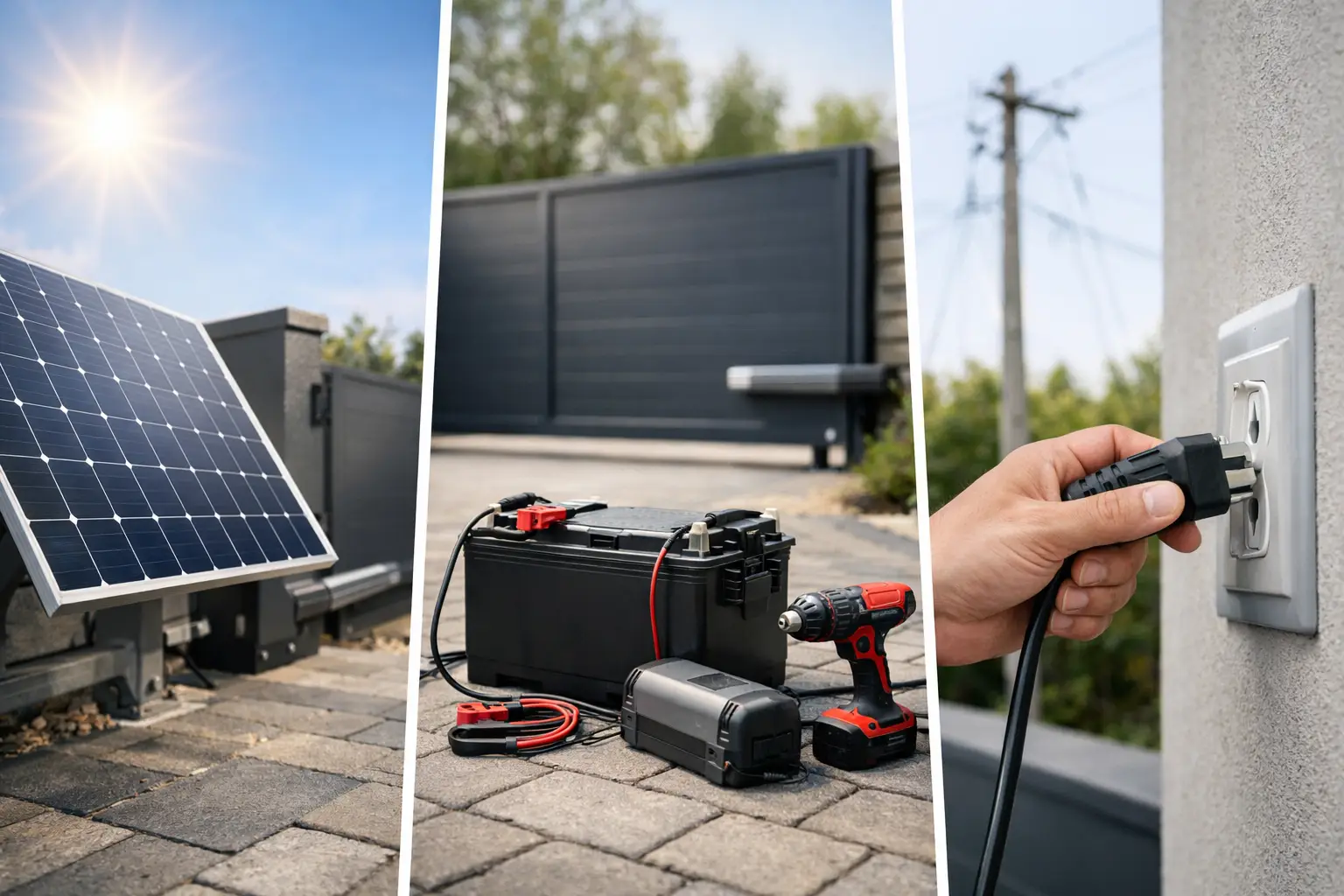
A gate may look like a straightforward addition to a driveway or site entrance, but the power supply behind it determines how reliably it works every day. When considering how to power electric gates, the right answer depends on the gate type, distance from the property, expected use, ground conditions and the access controls you need.
For most homes and commercial premises, a properly installed mains supply is the best long-term option. Where this is difficult or disproportionately costly, solar power and battery systems can be practical alternatives. The key is designing the system around the site, rather than choosing a power source first and trying to make it fit.
How to power electric gates from the mains
A mains-powered installation provides the most consistent supply for electric swing gates, sliding gates and underground automation. It is usually the preferred choice where the gate is used regularly, where the entrance is some distance from the road, or where several accessories are required.
The supply will normally be taken from the property’s consumer unit or another suitable electrical distribution point. A dedicated circuit is then installed to serve the gate equipment, with the correct protective devices and isolation arrangements. The cable is generally run underground in suitable ducting or as armoured cable, depending on the installation design and local conditions.
This is not simply a matter of running a cable to the gate. Cable size must account for the distance, expected load and voltage drop. A long driveway may need a different cable specification from a short run beside a house. The route also needs planning around drains, existing services, landscaping and future maintenance.
A correctly designed mains supply supports more than the motors themselves. It can also power an intercom, keypad, vehicle ground loop, safety photocells, warning lights and other access control equipment without placing unnecessary strain on the system. This is particularly relevant for commercial sites, shared entrances and properties with frequent deliveries or visitor traffic.
What a professional mains installation should include
The electrical installation should be installed and tested by a competent electrician, with protection suited to an outdoor environment. The gate system also needs accessible local isolation, so it can be safely maintained without affecting the rest of the property.
At the gate, enclosures, cable joints and connections must be protected from water ingress and mechanical damage. Equipment exposed to rain, frost and occasional flooding needs to be selected and installed accordingly. Neat cable routes and secure containment matter just as much as the visible finish of the gate.
For an established property, the installer should also check whether the existing consumer unit has suitable capacity and whether any upgrades are needed before work begins. It is better to identify this at survey stage than to find it after groundwork has started.
Solar-powered electric gates: when do they work?
Solar can be an excellent solution for rural driveways, agricultural land and remote entrances where installing a mains cable would involve extensive excavation or crossing difficult ground. A solar panel charges a battery, which then runs the gate automation and, in some cases, selected access control equipment.
The attraction is clear: less trenching, no need to run a supply from a building and lower reliance on the grid. However, solar power is not a universal replacement for mains. Its suitability depends on the location and how the gate will be used.
A solar system needs a panel position with good daylight exposure throughout the year. Trees, neighbouring buildings, roof lines and seasonal shading can greatly reduce charging performance. A panel that appears well placed in summer may struggle during shorter, darker winter days.
Gate usage is equally important. A private driveway opening a few times a day is very different from a commercial entrance with repeated vehicle movements, timed access periods and an intercom in regular use. The more operations and accessories the system has, the larger the battery and solar capacity need to be.
Solar is often best suited to low-to-moderate usage systems with efficient 24-volt motors. It should be specified with a realistic allowance for winter performance, not just ideal sunny conditions. A professional survey can establish whether solar is a sensible investment or whether a mains connection will provide better value and reliability over time.
Battery backup for electric gates
A battery backup is not normally a primary power source for a busy gate, but it is a valuable addition to a mains-powered system. If there is a local power cut, the battery allows the gate to continue operating for a limited number of cycles.
This can be especially useful where the gate is the only vehicle entrance to a property, at sites where staff need reliable access, or for residents who may find manual operation difficult. The number of available cycles will depend on the battery capacity, motor type, gate weight, weather conditions and any connected accessories.
Backup batteries need routine checks and eventual replacement. They should not be treated as a fit-and-forget solution. During servicing, the installer can test battery condition and confirm that the gate behaves correctly when the mains supply is interrupted.
Every automated gate should also have a safe manual release method. In the event of a prolonged power outage or an equipment fault, authorised users need to know how to release and operate the gate safely. This should be explained at handover, not left for an emergency.
Choosing the right supply for your gate type
The physical gate affects the power requirement. Swing gates may use above-ground ram motors, articulated arm motors or underground operators. Underground systems offer a discreet appearance but need careful drainage and cable planning beneath each gate leaf.
Sliding gates use a motor positioned alongside the track or cantilever arrangement. They can be a strong choice for entrances with limited space behind the gates, but they require a stable foundation, correct safety devices and a supply capable of supporting the motor under load.
Heavier timber, steel or composite gates can require more from the automation system than lighter aluminium gates. Wind exposure also matters. A wide solid gate leaf in an exposed coastal or open setting presents greater resistance than an open-design gate in a sheltered driveway.
The supply should therefore be considered alongside gate weight, dimensions, duty cycle and operating environment. Selecting a motor purely by the width of the entrance can lead to poor performance and premature wear.
Do not overlook safety and access control
Powering the gate is only one part of the installation. An automated gate must be designed to operate safely around people, vehicles and pets. Depending on the site, this may involve photocells, safety edges, force limitation, warning signs and correctly configured control settings.
Access control also changes the electrical brief. A simple remote-controlled domestic gate has different requirements from a commercial entrance with a video intercom, keypad, fob access and vehicle detection loop. Planning these features from the outset avoids avoidable disruption and helps ensure the system works as one coordinated installation.
For commercial premises, it is worth considering how visitors, delivery drivers and emergency services will gain entry. For homes, think about pedestrian access and whether the gate needs to remain open at particular times. These decisions affect both the equipment choice and the way the power supply is designed.
Plan the electrical work before the driveway is finished
The best time to plan gate power is before a new driveway, boundary wall or landscaping project is completed. This gives the installer a clear route for cables, ducts and foundations, while keeping disruption to a minimum.
Existing driveways can also be upgraded successfully, but the route may require more careful planning. A site survey should identify the consumer unit location, cable route, gate position, ground levels, drainage, signal requirements and any likely obstacles before a quotation is prepared.
Crabtree Electrical Gates provides tailored electric gate automation installations across Dorset and the South of England, with the electrical work, gate automation and access control considered as one complete system. A well-planned supply gives your gate the dependable operation, safety and convenience you expect long after installation day.
0 Comments