
A gate should do more than open at the press of a button. The right gate entry systems give you control over who arrives, when they can enter and how safely vehicles and pedestrians move through your property. For a private driveway, that may mean answering a video intercom from inside the house. For a commercial site, it may mean managing regular staff, deliveries and visitors without leaving an entrance unsecured or unattended.
The best arrangement is rarely chosen from a standard package. Gate type, available space, traffic levels, power supply, ground conditions and the people using the entrance all affect the specification. A well-planned installation makes access easier while keeping safety, reliability and day-to-day use firmly in view.
What a gate entry system includes
An automated entrance is a combination of mechanical, electrical and access-control components. The gate itself is only one part of the system. Whether it is a pair of swing gates or a sliding gate, it needs correctly matched automation, secure cabling, safety devices and a practical way for authorised people to request entry.
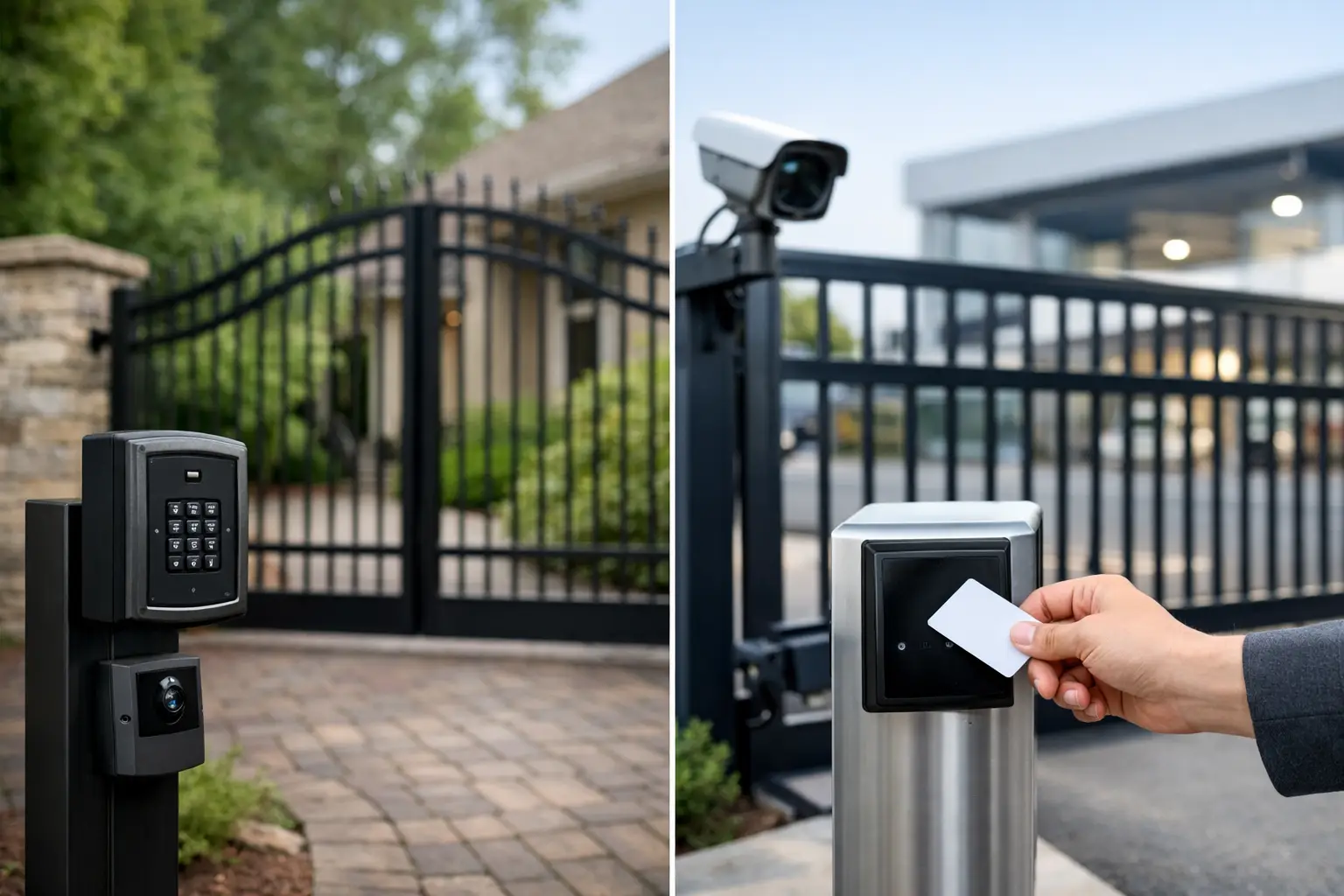
For homes, access is often controlled by a keypad, remote controls, telephone intercom or video intercom. Residents can open the gate without approaching it, while visitors can call from the entrance. This is particularly useful on long driveways, rural properties and homes set back from the road.
Commercial and managed sites may need a more structured approach. A keypad can provide a code for staff or contractors, while proximity fobs, card readers and GSM intercoms can give different users suitable access. Ground loops can detect a vehicle at the entrance or exit, allowing the gate to operate automatically where that is appropriate.
The key is to decide how the site actually works before selecting equipment. A busy entrance used by cars, vans, pedestrians and delivery drivers has different requirements from a domestic driveway used a few times each day.
Choosing between swing and sliding gates
Swing gates
Swing gates remain a popular option for residential properties. They can provide a traditional appearance and work well where there is sufficient clear space inside the property for the leaves to open. Automation can be fitted above ground or, where a discreet finish is required, installed underground.
Underground motors are often chosen when appearance matters, as the operating equipment is largely hidden below ground. They require careful groundwork, drainage and installation, so they are not always the simplest or most cost-effective choice. In the right setting, however, they can give a clean result without visible motors on the gate leaves.
Above-ground swing gate operators are generally easier to access for servicing and can be a sensible choice for many domestic and commercial entrances. The most suitable operator depends on the gate weight, length, construction and frequency of use. Fitting an operator that is too light for the job can lead to poor performance and unnecessary wear.
Sliding gates
Sliding gates are often the practical choice where a driveway slopes, space behind the gate is limited or a wider opening is needed. Instead of swinging into the property, the gate travels along the boundary line. This can make them particularly suitable for commercial yards, flat developments and entrances with frequent vehicle movement.
A sliding gate needs adequate run-back space and a sound track or cantilever arrangement, depending on its design. Ground preparation is important. Drainage, foundations and the route for cables should be considered before installation begins, rather than treated as an afterthought once the gate is in place.
Access control should suit the people using it
The most sophisticated intercom is of little value if visitors cannot use it easily, or if staff routinely have to wait at the gate. Good access control balances security with convenience.
A keypad is straightforward and effective for a household, small office or contractor entrance, but codes need to be managed carefully. If a code is widely shared, it should be changed when staff leave or after regular work is complete. Remote controls are convenient for regular users, although lost handsets should be removed from the system promptly.
Audio and video intercoms offer more reassurance when you want to speak to, or see, a visitor before granting access. Systems can be positioned at a convenient point on the gate post and connected to internal handsets or, where suitable, to mobile phones. Signal strength, network arrangements and the preferred method of answering calls should be assessed at the property.
For commercial sites, separating entry and exit arrangements can improve traffic flow. A vehicle may request entry through an intercom or access reader, while an internal ground loop can open the gate automatically for authorised vehicles leaving the site. The correct approach depends on the site layout and whether unrestricted exit is appropriate for security purposes.
Safety is part of the installation, not an optional extra
Powered gates can cause serious injury if they are poorly designed, incorrectly installed or not maintained. Safety devices must be selected around the gate’s movement, pinch points, surrounding fencing and the likelihood of children, pedestrians or members of the public being nearby.
Photocells are commonly used to detect an obstruction in the gate path. Safety edges can help protect crushing and trapping areas, while force limitation and suitable control settings can reduce risk during operation. The exact combination depends on the design of the entrance. A gate that swings across a footpath, for example, needs careful consideration before automation is fitted.
It is equally important that gates are installed on sound posts, hinges, tracks and foundations. Automation cannot compensate for a gate that is dragging, misaligned or structurally unsuitable. Before recommending equipment, a specialist installer should assess the existing gate condition and identify whether repairs, alterations or replacement are needed.
After installation, users should understand how the system works, how to release it manually in a power cut and what to do if it stops operating normally. This is especially relevant for commercial premises where several members of staff may need access.
Plan for power, groundwork and everyday reliability
Reliable operation starts well before the motors are fitted. A suitable electrical supply, protected cable routes and correctly positioned control equipment are essential. On new builds and landscaping projects, planning these details early can avoid visible conduit, unnecessary excavation and compromises to the finished appearance.
Groundwork is often a significant part of an automated gate project. Posts may need foundations, underground operators need drainage provision, and sliding gates require accurately prepared running surfaces. Existing driveways can present challenges too, particularly where levels are uneven or drainage is poor. These factors affect both cost and long-term reliability, which is why an on-site survey is valuable.
Weather exposure should also be considered. Coastal, rural and exposed locations across the South of England can place more demand on external equipment. Quality components, correctly sealed connections and sensible positioning help protect the system, but routine inspection remains worthwhile.
A maintenance plan can identify worn hinges, damaged safety devices, debris in tracks and changes to gate movement before they result in a breakdown. The required frequency depends on use. A domestic gate may need a different schedule from a commercial entrance operating throughout the working day.
Questions to ask before choosing gate entry systems
Before committing to a design, think about who uses the entrance and what happens at busy times. Will delivery drivers need to call someone? Do multiple staff require individual access? Is there enough room for a vehicle to wait safely off the road while the gate opens? Does the entrance need to accommodate larger vehicles, refuse collections or emergency access?
It is also sensible to consider the future. A simple remote-control system may meet current needs, but provision for an intercom, keypad or additional users can make later upgrades less disruptive. The right answer is not always the system with the most features. It is the one that works reliably for the property and can be used confidently every day.
Crabtree Electrical Gates provides tailored gate automation and access-control installations for residential and commercial properties across Dorset and the wider South of England. A site visit allows the gate, access requirements, electrical supply and safety measures to be considered together, with clear advice before work begins.
If you are planning a new entrance or upgrading an existing gate, start with how the property needs to operate on an ordinary day. A properly specified system should make arrivals simpler, departures controlled and the entrance safer for everyone who uses it.
0 Comments