
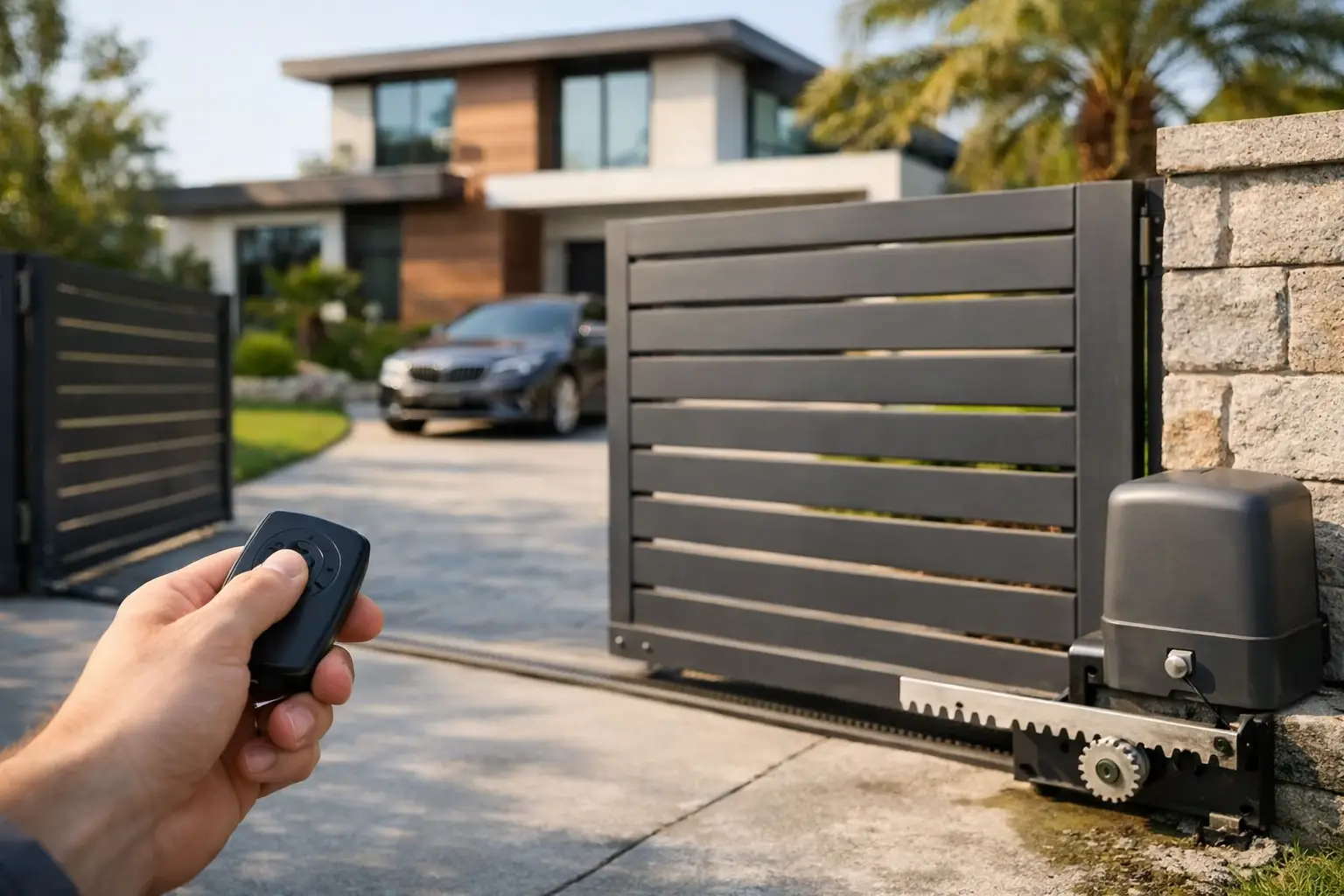
A driveway gate is often the first thing a visitor, delivery driver or prospective buyer sees. So, do automatic gates add value? In many cases, yes – but the value is not simply in the gate itself. It comes from a well-designed entrance that improves security, makes daily access easier and suits the character and practical needs of the property.
For homeowners, an automated gate can make a property feel more private and established. For commercial sites and managed estates, it can provide controlled entry, clearer boundaries and a more professional first impression. The strongest return comes when the system is specified properly, installed safely and maintained as part of the property rather than treated as a standalone feature.
Do Automatic Gates Add Value in Practice?
Automatic gates can make a property more attractive to the right buyer or occupier. They are particularly relevant where a home has a long driveway, a prominent roadside entrance, a rural setting or a need for greater privacy. At commercial premises, gates can help manage vehicle movements and restrict access outside working hours.
They should not be viewed as a guaranteed way to add a fixed percentage to an asking price. Property value is affected by location, condition, local demand and the quality of the wider site. However, an electric gate installation can strengthen the appeal of a property by adding useful features that buyers and tenants already look for: security, convenience and a controlled entrance.
A good system also removes everyday friction. Rather than getting out of the car in poor weather or leaving a gate unsecured during busy periods, users can open it by remote control, keypad, intercom or authorised vehicle detection. That practical benefit is easy to understand during a viewing and can help a property stand apart from comparable homes or sites.
Security Is Often the Main Value Driver
A locked manual gate provides a boundary, but an automated gate gives the owner more control over access. When combined with the right access control equipment, it allows occupants to decide who enters before the gate opens.
For a domestic property, this may mean a video intercom at the entrance, remote controls for family members and a keypad for trusted visitors. A commercial site may need keypads, fobs, timed access settings, ground loops or intercom systems that work around staff and delivery movements. The correct setup depends on how the entrance is used each day.
Visible security measures can deter opportunistic access, especially where a driveway or yard is open to a road. Gates are not a substitute for sensible security across the property, but they create a clear physical and psychological boundary. For many buyers, that added reassurance has real value.
There is also a safety consideration. A professional installation should include appropriate safety devices, such as photocells and safety edges where required, so the gate responds safely to people, vehicles and obstructions. An unreliable or poorly designed automated gate can become a concern rather than an asset, which is why specialist electrical knowledge matters.
Convenience Adds Everyday Appeal
The benefit of automatic gates is most apparent in the moments people do not usually think about until they have them: returning home late, arriving in heavy rain, leaving with children or managing regular visitors. Controlled access from the vehicle or property saves time and avoids the inconvenience of manually opening and closing heavy gates.
This convenience can be especially valuable on busy roads, steep driveways and larger rural properties. A sliding gate may suit an entrance where opening space is limited, while swing gates can work well where there is sufficient clearance and a more traditional appearance is preferred. Underground automation is often chosen when owners want a discreet finish without visible operator arms.
The best option is not always the most expensive one. Gate type, opening width, ground levels, existing services and how frequently the system will operate all need to be considered. A system designed around the site will be more reliable and more likely to retain its appeal over time.
Kerb Appeal Matters, but Quality Matters More
An attractive entrance can improve the perceived quality of a property before anyone reaches the front door. Timber, metal and composite gates can all work well when their style suits the building, boundary treatment and surrounding area. A gate that looks considered and operates quietly suggests that the property has been cared for.
However, appearance alone does not create value. An oversized gate that dominates a modest frontage, or a design that is difficult to use, can have the opposite effect. The same applies to exposed cabling, badly aligned leaves, damaged finishes and unreliable automation.
A professional installation should take account of the gate structure as well as the automation. The posts, hinges, track or cantilever arrangement, foundations, drainage and electrical supply all affect how the system performs. Installing automation onto an unsuitable gate can lead to repeated faults and unnecessary repair costs.
What Buyers and Site Operators Will Notice
Prospective buyers may not ask about motor specifications, but they will notice whether the gate opens smoothly, whether access is straightforward and whether the entrance feels secure. They may also consider who can service the system and whether replacement parts or controls will be available.
Commercial clients tend to look more closely at operational reliability. If a gate controls access to a yard, depot, private car park or managed development, downtime can disrupt staff, visitors and deliveries. A suitable system needs to match the volume and type of traffic, with access controls that are practical for the people using it.
For either type of property, clear handover information is useful. Owners should understand how to operate the gate, what to do during a power failure, how manual release works and when to arrange servicing. These details support buyer confidence because the system feels manageable rather than complicated.
When Automatic Gates May Not Add Much Value
There are situations where automatic gates are unlikely to deliver a strong return. If a property has no off-road parking, limited frontage or an entrance that cannot safely accommodate a gate, installation may create more problems than benefits. Planning restrictions, listed building considerations and shared access arrangements can also affect what is appropriate.
Cost is another factor. A bespoke gate, civil works, electrical supply and access controls are an investment. If the installation is chosen purely to chase a quick sale uplift, it may not be the best use of the budget. It is generally more sensible to install an automated gate because it improves how you live or work at the property, with any added market appeal as a further benefit.
Maintenance should be allowed for as well. Gates operate outdoors throughout the year, so hinges, tracks, safety devices and automation components need periodic checks. Keeping the entrance clean, aligned and professionally maintained protects both performance and presentation.
Choosing an Installation That Holds Its Appeal
The most valuable installations are tailored to the property and completed to a professional standard. Before work begins, an installer should assess the gate opening, ground conditions, power supply, drainage, safety requirements and intended use. They should also discuss who needs access and how the system will be controlled.
At Crabtree Electrical Gates, installations are planned around these practical details, from swing and sliding gate automation to underground systems, intercoms, keypads and ground loops. For customers across Dorset and the South of England, the aim is a dependable entrance system that works properly every day, not an impressive-looking gate that causes avoidable trouble.
Insurance, guaranteed workmanship and clear advice are worthwhile indicators when choosing an installer. Electric gates combine moving machinery with electrical equipment, so competence should come before a low initial quote. A properly specified system is safer, more reliable and easier to support in the years ahead.
If an automated gate would improve security, access or the appearance of your property, arrange a site assessment before deciding on the design. A direct conversation about the entrance, usage and budget will give you a far clearer idea of the value it can bring.
0 Comments