
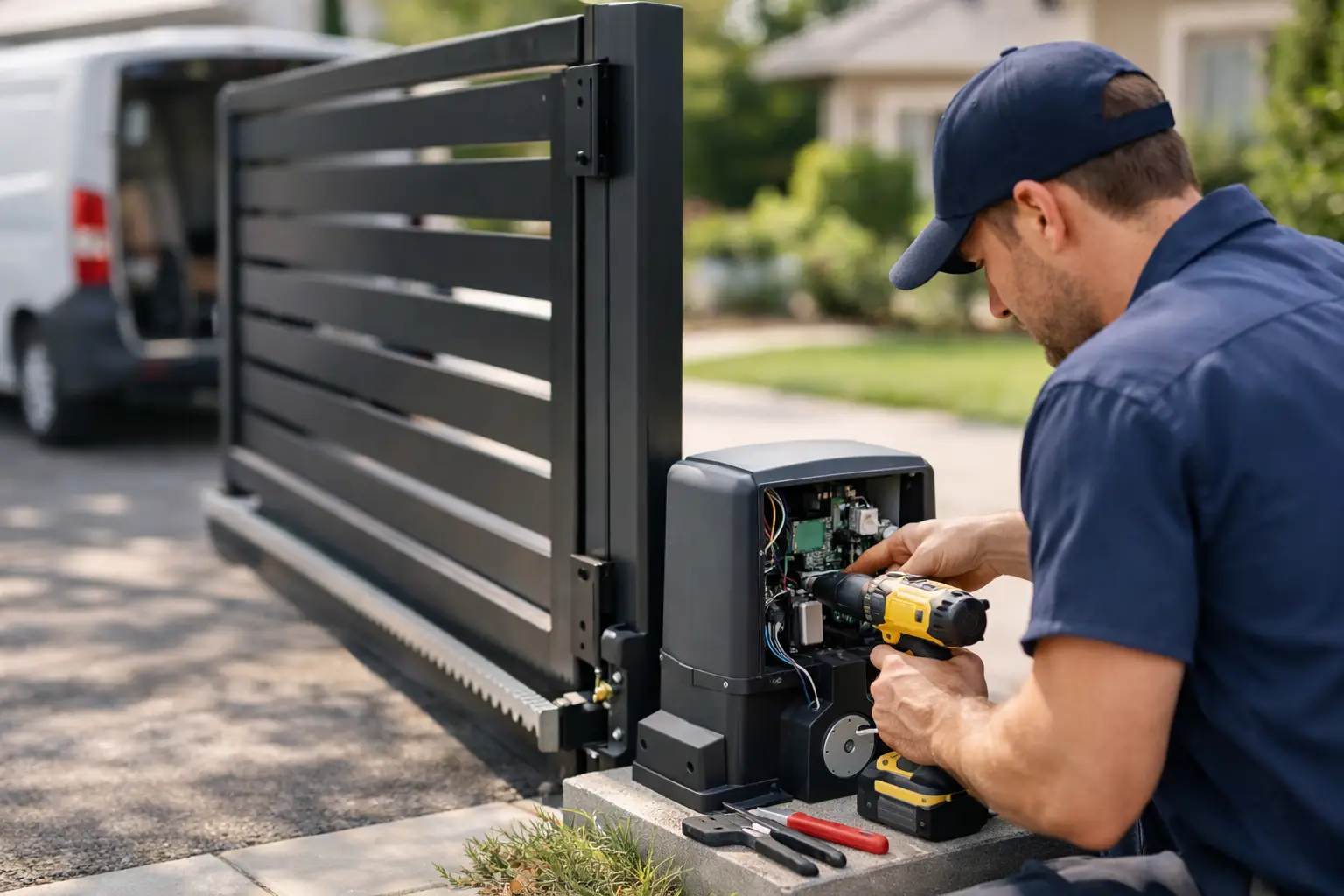
A search for an automatic gate installer near me usually starts when a manual gate has become inconvenient, security needs have changed, or a new driveway entrance needs a more controlled finish. The installation itself may look straightforward from the outside, but a dependable automated gate relies on correct gate movement, sound electrical work, properly selected safety devices and access controls that suit how the property is used.
For a private home, that may mean opening the gate from the car without stopping in the road. For an estate, yard or commercial site, it may mean controlling deliveries, staff entry and visitor access throughout the day. In either case, choosing the right installer matters as much as choosing the gate.
What a local automatic gate installer should assess
A proper quotation should be based on a site visit or a detailed assessment of the entrance, not simply the size of the gate opening. Every driveway and site presents different practical considerations. Ground levels, the condition of existing gate posts, available space, drainage, power supply and the gate’s weight all affect the type of automation that will work reliably.
The installer should also ask how the gate will be used. A gate opening a few times a day at a domestic property has different requirements from one serving a busy commercial entrance. Frequency of use, vehicle types, pedestrian access and the need for timed or remote operation should all inform the recommended system.
This is where specialist electrical knowledge is particularly valuable. Gate automation is not just a mechanical fitting. The motors, control panel, safety photocells, intercoms, keypads and vehicle detection equipment must work together correctly in an outdoor environment. Wiring needs to be protected, controls positioned sensibly and the system tested before handover.
Choosing the right gate automation system
There is no single best automated gate arrangement. The right option depends on the gate design, the available space and the practical demands of the site.
Swing gate automation
Swing gates are a popular choice for homes, estates and smaller commercial entrances. Above-ground motors can be a practical solution where the gate structure and hinges are in good condition. They provide a visible, accessible installation that can be straightforward to maintain.
Underground automation offers a more discreet result, with the operating equipment concealed below ground. It is often selected where appearance is a priority, particularly for timber, wrought iron or bespoke entrance gates. However, it requires careful groundwork and drainage. An underground system should never be treated as a simple cosmetic upgrade – poor drainage can create avoidable maintenance problems later.
Sliding gate automation
Sliding gates are often the better choice where a gate cannot safely swing into the driveway or towards the road. They can suit entrances on slopes, locations with limited depth behind the gate line, and commercial sites where a wider clear opening is needed.
A sliding gate needs sufficient run-back space to one side, along with a suitable track or cantilever arrangement. The gate must move freely before a motor is fitted. Automating a poorly aligned or heavy gate without addressing the underlying movement issue is likely to lead to unreliable operation and unnecessary strain on the equipment.
Access control and entry systems
Automation becomes more useful when it is paired with the right access control. A simple remote control may be all that is needed for a household. Other properties may benefit from an audio or video intercom, keypad, GSM calling system, proximity access, exit button or ground loop for vehicles.
The best solution is usually the one that is easy for authorised users and difficult for everyone else. For example, a keypad may be convenient for staff or regular visitors, while an intercom gives a homeowner or site manager the opportunity to verify callers before releasing the gate. Commercial sites may need different permissions for office staff, delivery drivers and contractors.
Safety is part of the installation, not an add-on
An automated gate is a moving machine. It must be installed with suitable safety measures for the people, vehicles and setting around it. This is especially important where children, visitors, delivery drivers or members of the public may be near the entrance.
Safety devices can include photocells that detect an obstruction, safety edges that respond to contact, warning signs, manual release mechanisms and carefully set force limits. The exact protection required depends on the design of the gate and the risks around it. A gate at a secluded domestic driveway is not assessed in quite the same way as a gate at a shared business entrance, but both require professional consideration.
A specialist installer will test the gate’s operation, stopping and reversal functions, safety devices and manual release before completion. They should also explain how to use the system safely and what to do in the event of a power cut or fault. This is not paperwork for its own sake. It helps protect the people using the entrance and supports reliable day-to-day operation.
Questions to ask before accepting a quote
Price matters, but the cheapest quotation can be expensive if it leaves out essential groundwork, safety equipment, electrical protection or aftercare. A clear quote should explain what is included and identify any work that may be required before automation can be fitted.
Ask whether the existing gates are suitable for automation, or whether repairs, reinforcement or replacement are recommended. It is also worth confirming the proposed motor type, access controls, safety features and the location of the control equipment. If an installer has not considered drainage for underground motors, power supply routing or where a sliding gate will travel, the proposal may not be complete.
You should also ask about insurance, workmanship guarantees and support after installation. Automated gates are designed for regular use, but they contain mechanical and electrical components that may eventually need adjustment, servicing or repair. Choosing a company that understands the system it has installed makes future support much simpler.
Why local coverage still matters
Searching locally is not only about finding the nearest postcode. It is about working with an installer who can visit the site, understand the property and remain available if help is needed later. For customers across Dorset and the South of England, that includes considering local ground conditions, rural access, exposed coastal locations and the practical realities of entrances shared with lanes, footpaths or busy roads.
Crabtree Electrical Gates provides specialist gate automation installations for domestic and commercial customers across Dorset, Berkshire, Devon, Hampshire, Somerset and Wiltshire. The focus is on complete, professionally installed systems, from gate automation and electrical work through to intercoms, keypads and vehicle access controls.
Getting the installation right from the start
A good automated gate should feel uncomplicated to use. The gate opens when it should, closes safely, gives authorised people the access they need and complements the entrance rather than creating a new daily frustration. Achieving that result depends on getting the details right before work begins.
If you are comparing local installers, arrange a conversation or site assessment and explain exactly how you want the entrance to work. A clear, specialist recommendation will give you more confidence than a one-size-fits-all quote – and help ensure your gate remains secure, safe and dependable for years to come.
0 Comments