
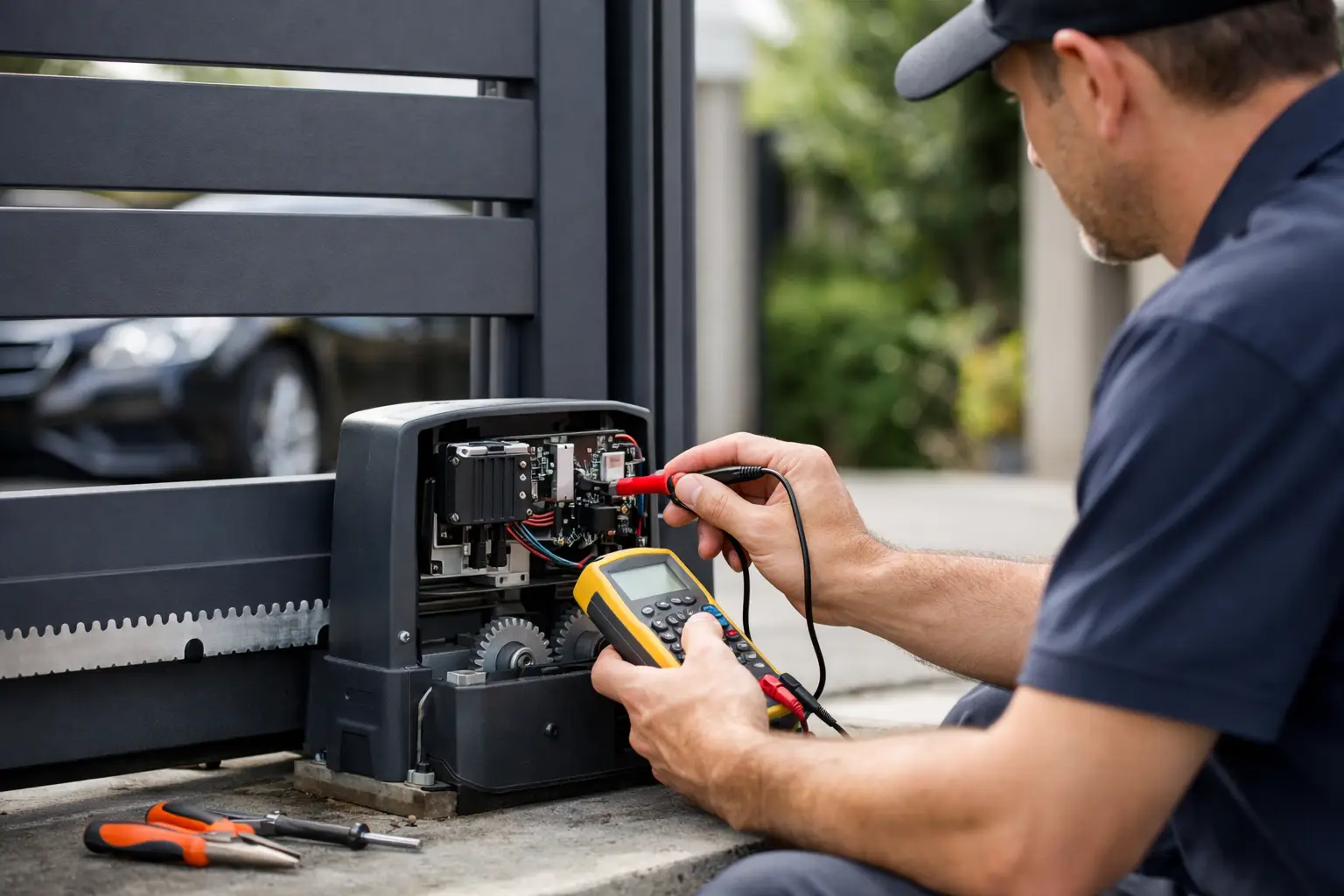
A gate that hesitates halfway, reverses without warning or fails to respond to a remote is more than an inconvenience. It can leave a driveway, private estate or commercial entrance unsecured. Knowing how to maintain electric gates helps protect the system’s reliability, safety and working life – while identifying faults before they become an urgent call-out.
Most routine care is straightforward, but gate automation combines moving machinery, electrical controls and safety equipment. Homeowners and site managers can carry out visual checks and basic cleaning. Adjustments to motors, safety settings, control panels and electrical wiring should be left to a qualified gate automation specialist.
Start with regular visual checks
A short inspection every month is often enough to spot the early signs of wear. Open and close the gate while standing clear of its path, then watch for movement that is slow, jerky, unusually noisy or uneven. A healthy automated gate should travel smoothly and stop predictably at its open and closed positions.
Look closely at hinges, posts, brackets, fixings and gate leaves. Timber gates can swell or twist after prolonged wet weather, while metal gates may develop corrosion around welds, joints or damaged paintwork. Even a small change in the gate’s alignment can place extra load on an actuator or sliding gate motor.
Check the surrounding area as well. Soil, leaves, gravel and plant growth can affect the gate’s travel path, particularly on rural properties and exposed driveways. A clear opening is essential for safe operation.
Keep tracks, hinges and moving parts clean
Sliding gates rely on a clean, level track or guide arrangement. Sweep out leaves, stones, mud and grit before they build up. Small debris can cause a sliding gate to drag, jump or strain against its motor. In winter, clear ice and compacted snow before operating the system.
Swing gates need sound hinges and correctly secured mounting points. Remove surface dirt from hinges and inspect them for rust, movement or signs that the gate is dropping. Lubrication may be required, but use only a suitable product and follow the equipment manufacturer’s guidance. Applying grease to the wrong component can attract grit or interfere with sealed moving parts.
Underground gate operators deserve particular attention. Their foundation boxes and drainage arrangements should be kept free from standing water, silt and debris. Water ingress can damage an operator over time, especially where drainage has been neglected or the property sits in an exposed location.
Check safety devices every month
Safety is not an optional extra on an automated gate. Photocells, safety edges, obstacle detection and correctly configured controls reduce the risk of the gate closing on a person, vehicle or object.
Photocells are usually positioned on either side of the entrance. Wipe their lenses gently with a soft cloth to remove spider webs, dust, rain marks and road grime. A blocked or misaligned photocell may stop the gate working, or cause it to behave inconsistently.
Test the safety function in accordance with the system’s instructions. For example, breaking the photocell beam during closing should stop or reverse the gate, depending on its configuration. Safety edges should also respond correctly when compressed. Do not use hands, feet or a person to test a closing gate. Use an appropriate non-damaging object and keep well clear of the moving gate.
If the gate does not stop or reverse as expected, take it out of service where possible and arrange professional attention. Do not attempt to override safety devices to keep the gate operating. This can create a serious risk and may leave the property owner responsible if somebody is injured.
Maintain access controls and power supplies
Remote controls, keypads, intercoms and vehicle detection systems need occasional attention too. Replace remote batteries when their range becomes noticeably shorter, rather than waiting for complete failure. Keep spare remotes stored securely and remove access from lost or unreturned fobs promptly.
For keypads, clean the face carefully and check that buttons respond consistently. Intercom cameras should be wiped clean so visitors can be seen clearly, while audio quality should be checked from both the gate and the property. On commercial sites, review user access regularly so former staff, contractors or tenants do not retain entry permissions.
A gate control cabinet should remain dry, secure and free from insects or condensation. Avoid opening electrical enclosures unless you are competent and authorised to do so. Visible damage to cables, loose conduit, scorch marks, repeated tripping or a burning smell all require an electrician or gate automation engineer without delay.
Know when a gate needs adjustment
Electric gates are designed to work with a particular gate weight, travel distance and resistance level. If the gate leaf has sagged, the track has shifted or a hinge has worn, the automation may compensate for a while – but the motor will be working harder than intended.
Warning signs include the gate stopping before it reaches its end position, striking posts, scraping the ground, making grinding noises or requiring repeated remote presses. You may also notice the system tripping its obstacle detection when there is no obstruction. These issues are rarely solved by simply increasing force settings. Raising the force can reduce the system’s ability to detect an obstruction and should only be considered by a competent engineer after the mechanical cause has been assessed.
The same applies to closing speeds, limits and motor settings. A gate may appear to need a quick adjustment, but incorrect programming can affect safety performance and cause further wear. Professional diagnosis is generally quicker and more cost-effective than replacing a damaged motor or gearbox later.
Seasonal care makes a difference
British weather places different demands on automated gates throughout the year. In autumn, falling leaves and wet debris can block sliding tracks, drainage channels and photocells. Winter brings frost, pooled water and stiffened moving parts. Never force a frozen gate open or closed with the remote, as this can overload the operator.
Spring is a good time to inspect gate structures for movement after wet ground and high winds. Trim back hedges, branches and climbing plants that may interfere with photocells or the travel path. During dry summer periods, check for dust buildup around tracks and ensure wooden gates have suitable protection against drying, splitting or movement.
Properties near the coast may need more frequent checks because salt-laden air accelerates corrosion. Commercial entrances with frequent vehicle movements also benefit from a closer maintenance schedule than a lightly used domestic driveway.
Arrange professional servicing at sensible intervals
Routine checks do not replace professional servicing. A planned service allows a specialist to inspect the mechanical condition, electrical components, safety devices, force settings, foundations and access controls as a complete system.
For most domestic gates, an annual service is a sensible starting point. Gates used several times each day, shared private entrances, schools, business premises and industrial sites may need servicing every six months or more often. The right interval depends on the gate type, usage level, environmental exposure and the age of the installation.
A proper service should not be limited to oiling hinges. It should include testing safety functions, checking gate alignment and mechanical wear, reviewing electrical connections, assessing motors and controls, and confirming that the gate operates as intended. Keep a record of servicing and any repairs, particularly where several people manage a commercial or residential site.
What not to do when maintaining electric gates
There are a few common mistakes that cause avoidable damage. Do not continue operating a gate that is visibly dragging, damaged or behaving unpredictably. Do not bypass photocells, safety edges or limit switches. Avoid pressure washing motors, control panels, underground operator housings or intercoms, as high-pressure water can force moisture into vulnerable areas.
It is also wise not to treat every noise with lubricant. A new squeak, clunk or grinding sound may indicate worn hinges, a misaligned gate or a problem with the drive mechanism. Covering the symptom can delay the repair while the underlying fault becomes worse.
If your system has a manual release mechanism for a power cut or emergency access, make sure responsible users know where it is and how it works. Check the release key is available, secure and not corroded. Only use the release method described for your particular automation system.
Reliable access starts with early action
A well-maintained electric gate should provide convenient, controlled access without becoming something you have to think about every day. The moment operation changes – whether that is a slower movement, an unexplained reversal, water around an underground motor or a safety device that no longer responds – arrange an inspection rather than waiting for a complete failure.
For property owners and site managers across the South of England, Crabtree Electrical Gates can provide specialist support for automated swing gates, sliding gates, underground systems and integrated access control. A timely service visit can keep a small issue from becoming a security problem at the entrance to your property.
0 Comments