
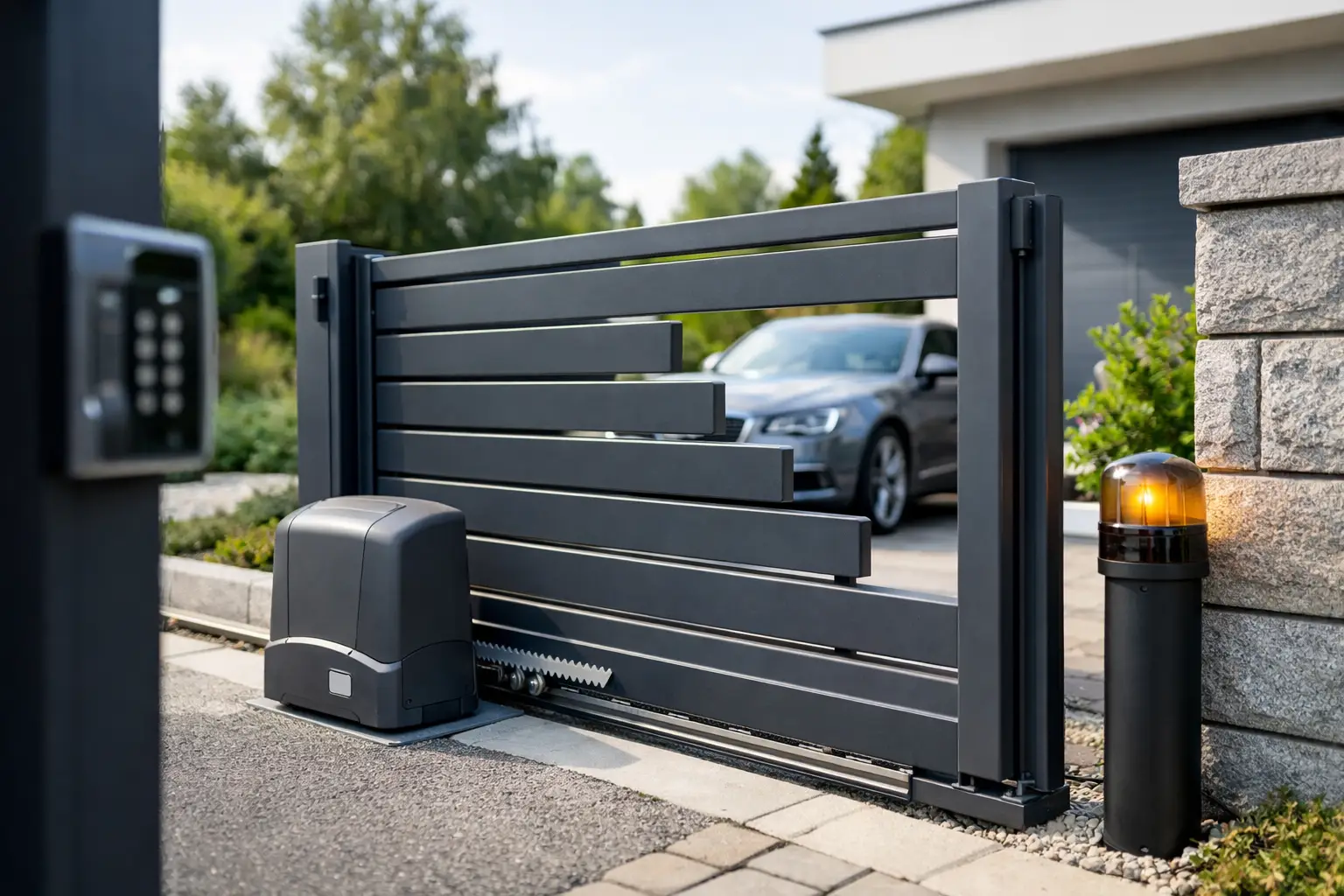
A gate that has to be wrestled open in the rain tends to lose its appeal quite quickly. For many property owners, the top benefits of electric gates become obvious the first time they arrive home late, need to control access properly, or want better security without changing the character of the entrance.
For homes, estates and commercial premises alike, an automated gate is not just a convenience feature. It is a practical access control system that can improve day-to-day use of the property while also helping with security, safety and presentation. The right setup depends on the site, the level of traffic, and how you want the entrance to function, but the advantages are clear when the system is properly specified and installed.
The top benefits of electric gates for homes and businesses
The main reason people enquire about gate automation is usually security, but that is only part of the picture. The top benefits of electric gates also include easier access, better control over visitors, improved privacy and a more professional appearance at the entrance.
That matters whether you are a homeowner with a private driveway, a business managing vehicle access, or an estate manager responsible for a larger site. In each case, automation gives you more control over who enters, when they enter and how the gate operates.
Better control over access
An electric gate creates a clear point of entry. That sounds simple, but it makes a real difference. Instead of an open driveway or yard where anyone can wander in, you have a controlled entrance that can be managed through remote fobs, keypads, intercoms, GSM entry, card access or ground loops.
For residential properties, that means fewer unwanted callers reaching the front of the house. For commercial sites, it means deliveries, staff and visitors can be managed more efficiently. The gate becomes part of a wider access control approach rather than just a boundary feature.
Stronger security at the perimeter
A properly installed automated gate acts as a visible deterrent. It does not make a property impossible to access, and any honest installer should say that no security measure is absolute, but it does raise the level of protection at the perimeter.
Most opportunistic intruders are looking for easy access. A gated entrance introduces delay, visibility and a physical barrier. Combined with intercoms, keypad access, lighting or CCTV, electric gates can significantly improve the security of both domestic and commercial premises.
The quality of the installation matters here. A well-designed system should suit the size of the opening, the usage level and the type of gate being automated, whether that is swing or sliding. Poorly matched automation can lead to reliability issues, and a security feature is only useful if it performs consistently.
Convenience is one of the biggest everyday advantages
People often focus on security first, but convenience is usually what owners appreciate most once the system is in place. Being able to open and close a gate from the vehicle saves time and avoids the inconvenience of stopping, getting out and handling a heavy gate manually.
That is especially useful in poor weather, on busy roads, on sloping driveways or where the entrance is awkward to manage by hand. If the property sees regular use, the time saved adds up quickly.
Easier entry for regular users
For family homes, this can mean simple access for multiple drivers without needing to leave the car. For commercial sites, it can reduce delays for staff vehicles and improve traffic flow at set entry points.
Different access methods can be chosen depending on how the site works. Some customers prefer a straightforward remote control setup, while others need keypads, intercom systems or vehicle detection loops to suit more regular traffic. There is no single right answer. The best arrangement depends on who uses the gate and how often.
Less hassle for larger or heavier gates
Some gates are substantial in size and weight, particularly on wider driveways, estates and commercial entrances. Manual operation can be impractical or simply unpleasant. Automation turns that into a simple process and reduces wear caused by improper handling.
This is one of those benefits that sounds minor until you live with it. Once a gate is automated properly, most owners do not want to go back to manual access.
Privacy improves without making the property feel closed off
Privacy is another strong reason people choose electric gates. A controlled entrance helps limit unnecessary access to private land and creates a clearer separation between public space and the property itself.
For homeowners, that can mean fewer uninvited vehicles coming onto the drive and less direct approach to the house. For rural properties or larger plots, it can also help define the entrance more clearly. For businesses, it helps direct visitors to the proper point of contact rather than allowing free movement around the site.
That said, privacy depends partly on the gate design as well as the automation. An open-bar style gate gives a different level of screening compared with a solid infill gate. Some customers want visibility out and kerb appeal first, while others prioritise a more enclosed entrance. The automation can work with either, but the final result should match the property and the practical need.
Safety features are built into modern systems
One of the more important top benefits of electric gates is improved safety when the system is designed and installed correctly. Modern gate automation should include appropriate safety devices to reduce risk during operation.
That may include photocells, safety edges, force limitation and controlled operating logic depending on the gate type and environment. These elements are not optional extras in any serious sense. They are part of creating a safe automated entrance.
Safer operation for families, visitors and staff
If children, pedestrians, delivery drivers or frequent visitors use the entrance, safety becomes even more important. A well-installed electric gate should operate predictably and include measures to detect obstructions and stop or reverse where required.
Commercial premises often need additional thought because of vehicle movements, site traffic patterns and multiple users. A domestic driveway may need something different from a busy yard or shared entrance. This is where specialist electrical and automation knowledge matters.
Electric gates can add value to the property
An automated gate can improve first impressions and support property value, particularly where the entrance is a visible part of the overall appearance. It gives the impression of a well-managed, secure and well-considered property.
For private homes, this can enhance kerb appeal and make the entrance feel more substantial. For higher-value properties, estates and managed sites, an electric gate often feels like a natural part of the overall standard of the premises.
It would be wrong to claim that every gate installation delivers the same return, because property value is influenced by many factors. Even so, buyers and occupiers do respond positively to features that improve security, convenience and presentation. A quality electric gate system can contribute to that.
Professional appearance matters for commercial sites
For businesses, electric gates are not only about keeping people out. They also help create a more organised and professional arrival point. A controlled entrance can improve the way customers, contractors and staff experience the site from the moment they arrive.
This is especially useful for yards, depots, offices, industrial premises and managed commercial locations where access needs to be clear and controlled. An automated gate with the right access system can support both security and daily operations without making the site feel difficult to approach.
The benefits depend on choosing the right system
Not every property needs the same solution. Swing gates may suit one entrance perfectly, while a sliding gate is the better option where space is limited or the ground level makes swing operation less practical. Underground automation may be preferred where appearance is a priority, while above-ground systems can be the right choice where ease of maintenance matters more.
Usage levels also make a difference. A gate serving a private home with light daily use should not be specified in the same way as a gate handling regular commercial traffic. Access control options should be selected with the same care. A simple remote system is fine for some sites, while others need intercom integration, coded entry or vehicle detection.
That is why a site-specific approach matters. The real benefit comes not just from having an electric gate, but from having one that suits the location and is installed to a professional standard.
For property owners across the South of England, that usually means speaking to a specialist who understands both the automation and the practical realities of how the entrance will be used. If you are weighing up whether electric gates are worthwhile, the answer is often yes, provided the system is designed around the property rather than forced into a one-size-fits-all setup.
A good electric gate should feel dependable from the first day – secure when you need protection, straightforward when you need access, and properly built for the way your property works.
0 Comments